As I have stated, our Safety Management System (SMS) revolves around four (4) fundamental elements:
1) Hazard Identification
2) Analysing those identified hazards using recognized methodologies
3) Assessing the risk(s) those hazards pose to people, businesses, and the environment
4) Mitigating those risks down to a tolerable level using the Hierarchy of Controls
With that said, Hazard ID is our first step into a functioning SMS, and thus, like with all elements of our SMS, we need a written program that DEFINES and QUANTIFIES hazards and their risks. Here is the Hazard ID written program I have used for decades in my SMS. It is a blend of approaches from OSHA and ISO SMSs.
A hazard is defined as a “source with a potential to cause injury and ill health.”
Hazards, therefore, need to be identified before the associated risks can be assessed.
Hazard identification should proactively determine sources, situations, or tasks (or combinations of these) arising from an organization’s activities that can potentially cause physical or psychological injury or ill health. Examples include:
- sources (e.g., moving machinery, radiation or energy sources, the introduction of new technologies and processes, work overload, poor management),
- situations (e.g., working at heights),
- tasks (e.g., manual handling or sustained work in a fixed position, high-stress roles, shift work, isolation) and
- work environments (e.g., confined spaces, extreme temperatures, volatile or hostile situations)
In identifying hazards, consideration should be given to different groups of workers, noting, for example, that hazards for different genders, age groups, or workers with disabilities can differ.
Hazard identification should consider reasonably foreseeable types of hazards in the workplace, including, for example:
- physical,
- chemical,
- biological,
- biomechanical (i.e., structure, function, and motion of the mechanical aspects of biological systems)
- technological,
- ergonomic, and
- natural phenomena
The organization should also identify hazards that can arise from
- reorganization or changes in processes,
- changes in knowledge, maintenance activities, and
- potential emergencies
Hazard identification includes looking into PAST INCIDENTS (including near misses) and how work is organized and actually done rather than how it should be done (e.g., Work as imagined vs Work as done).
It can also be valuable to learn from the experiences of other organizations, especially if they have similar processes.
The organization should establish a hazard identification process (including tools and techniques) relevant to its context and the scope of its OH&S management system. Tools and techniques should consider that workers with differing characteristics (e.g., gender, physical stature, age, cultural background, ethnicity) perceive and experience hazards differently. Care should be taken to ensure that a too-generic approach does not limit hazard identification.
Various sources of information for identifying hazards can be used, such as:
- Observations of behavior and work practices, monitoring and assessment of hazardous exposures (chemical and physical agents) workflow;
- OH&S legal requirements and other requirements (e.g., those that prescribe how hazards should be identified);
- incident reviews and subsequent analyses of underlying causes;
- monitoring data, occupational exposure and health assessments, records and sick days reports from previous audits, assessments, and reviews;
- input from workers, including complaints, interviews, and surveys;
- observations from safety inspections and field audits;
- process review and improvement activities in the workplace;
- information on the facilities, processes, and activities of the organization, including workplace design, site plans, and traffic plans (e.g., pedestrian walkways, vehicle routing);
- information on the work environment: heat, lighting, noise, air quality, vibration;
- process flowcharts and operations manuals;
- inventories of hazardous materials (raw materials, chemicals, wastes, products, sub-products);
- equipment specifications and maintenance records, product specifications, safety data sheets, toxicology and other OH&S data.
Hazard identification processes should be applied to routine and non-routine (e.g., periodic, occasional, emergency) activities and situations. Non-routine activities and situations include:
- facilities or equipment cleaning;
- plant or equipment start-ups/shutdowns;
- off-site visits (e.g., field trips, customer-supplier visits, prospecting, excursions);
- refurbishment;
- temporary arrangements.
- temporary process modifications;
- non-scheduled maintenance;
- utility disruptions (e.g., power, water, gas)
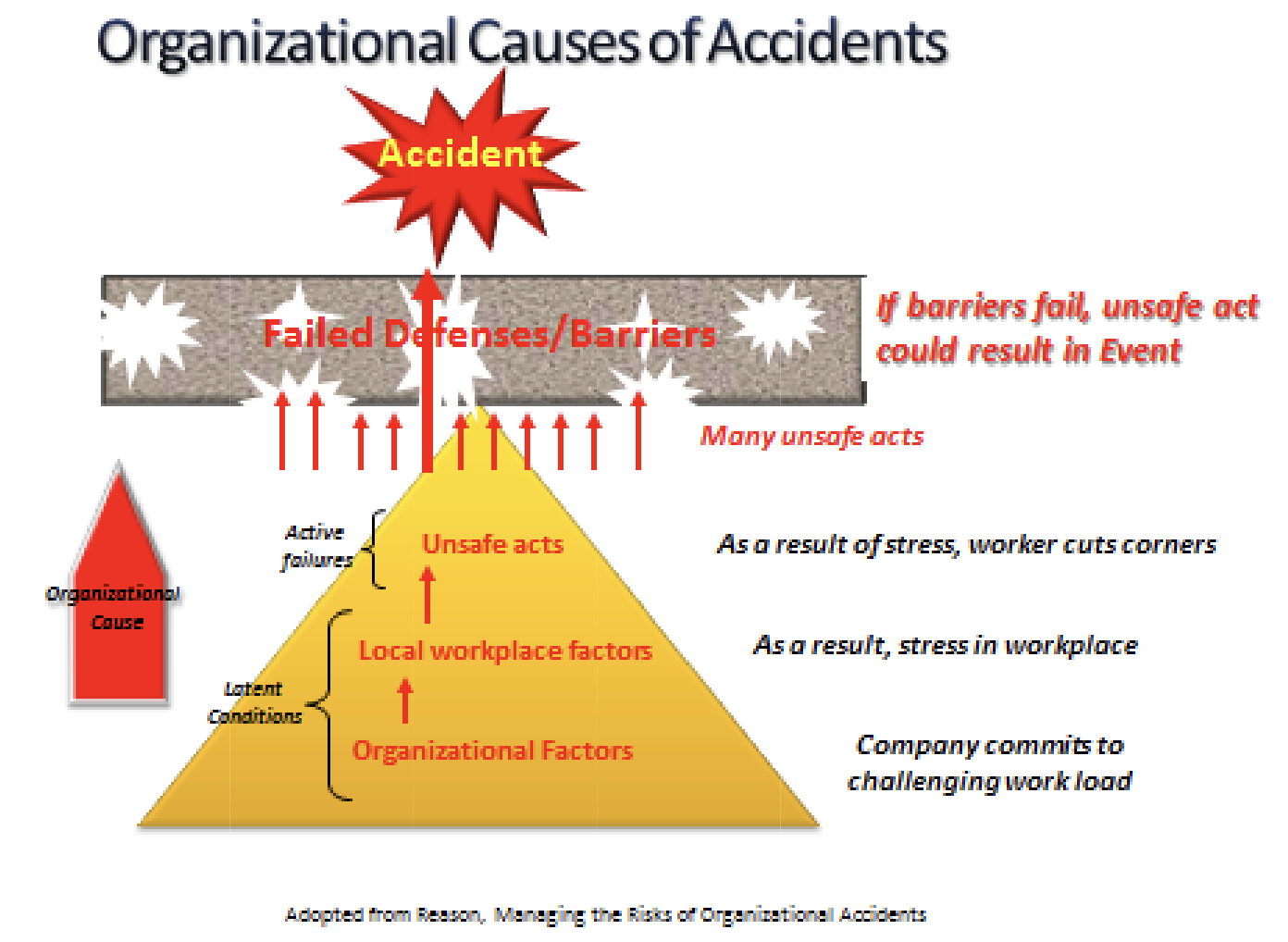
The hazard identification process should also take into account organizational conditions in the work environment, including:
- how work is organized;
- insufficient training;
- unhealthy workloads;
- inadequate resources;
- work hours;
- work patterns;
- inadequate communication;
- poor management of work;
- interruption of work;
- work cultures that do not support the OH&S management system
Hazard identification process(es) should take into account persons who have access to the workplace (e.g., customers, visitors, service contractors, delivery workers, as well as employees) and the hazards and risks arising from their activities or the use of products or services supplied to the organization by them. The hazard identification process(es) should also consider their degree of familiarity with the workplace and their behaviors.
Human factors should be considered when evaluating processes, equipment, and work environment hazards. Human factors should be considered whenever there is a human interface, and consider issues such as:
- ease of use,
- potential for operational errors,
- operator stress, and
- user fatigue
Human factors include:
- human behavior: temperament, habits, attitude;
- cognitive capabilities: understanding, attention;
- physiological capabilities and limitations: body characteristics, ergonomics, body characteristics (height, mass, body mass index (BMI)), health status (fitness level, stress level, hearing abilities).
In some instances, hazards can occur or originate outside the workplace that can impact individuals within the workplace (e.g., releases of toxic materials from neighboring operations). Where such hazards are foreseeable, these should be addressed.
For the hazard identification process(es) to be effective, the organization should use an approach that includes information from various sources, especially inputs from people who know its processes, tasks, or systems.
People competent in relevant hazard identification methodologies and techniques and with appropriate knowledge of the work activity should lead and manage the hazard identification process(es). Checklists can be used to remind what types of potential hazards to consider and to record the initial hazard identification. However, care should be taken to avoid overreliance on checklists because they are often a substitute for analytical and creative thinking about hazards and often do not account for non-routine or emerging hazards. Checklists should be specific to the work area, process, or equipment being evaluated and regularly updated.
When identifying potential emergencies, consideration should be given to emergencies that can occur during BOTH routine operations and non-routine conditions (e.g., operation start-up or shutdown, construction or demolition activities) such as:
- serious injuries requiring treatment or medical attention;
- fires and explosions;
- release of hazardous materials/gases;
- natural disasters, extreme/bad weather;
- loss of utility supply (e.g., loss of electric power);
- pandemics/epidemics/outbreaks of communicable disease;
- civil disturbance, terrorism, sabotage;
- workplace violence (e.g., physical assault);
- failure of critical equipment;
- traffic incidents;
- emergencies that have occurred in similar organizations or during similar activities.
When identifying potential emergencies, it can be relevant to consider:
- legal requirements;
- previous incidents and emergency experience;
- emergencies that have occurred in similar organizations or during similar activities;
- information related to incident investigations posted on the websites of regulators or emergency response agencies.
The hazard identification process(es) should include evaluating how emergencies can impact people within and/or near workplaces controlled by the organization.
Consideration should be given to those with special needs (e.g., people with limited mobility, vision, hearing, or capability). This can include employees, temporary workers, contractors, visitors, neighbors, or other public members. The organization should also consider potential impacts on emergency service workers while at the workplace (e.g., firefighters).