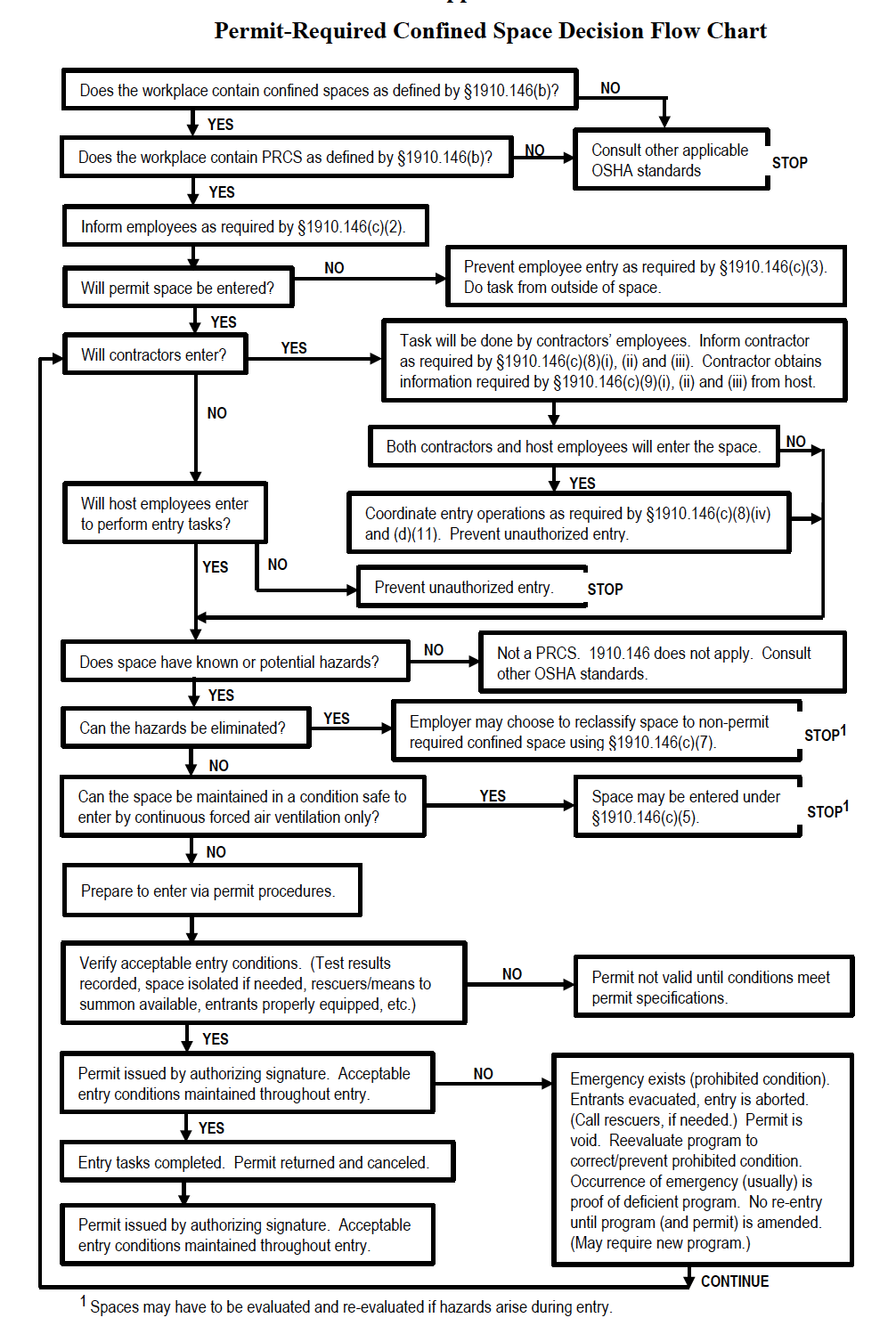
An Oklahoma City employer’s failure to follow federal safety procedures left a 30-year-old worker suffering fatal asphyxiation as they tried to make repairs inside a water tank at a McClain County well site in September 2023. Responding to the report of a fatality in Purcell, OSHA investigators determined the worker had entered a permit-required confined space to fix a leaking bulkhead valve in a production tank and then lost consciousness. Two co-workers entered the tank in a failed rescue attempt and suffered effects from exposure to low atmospheric conditions—neither sustained injuries.
OSHA investigators found that the employer failed to evaluate the tank for hazardous conditions – including testing the atmosphere – and did not use protective systems to prevent worker injuries, violating federal regulations.
Further investigation determined the remaining water in the tank contained compounds — including ethyl benzene, xylene, trimethylbenzene, isobutane, and other cyclic aliphatic compounds — and atmospheric readings inside showed low oxygen content, volatile organic compounds, and carbon dioxide, all of which can lead to asphyxiation.
OSHA issued 16 serious citations. Of these citations, 13 are related to failures that contributed to the worker’s death, including the following:
- Allowing employees to enter a confined space without an atmospheric evaluation or a required permit.
- Not providing flame-resistant personal protective equipment
- NOTE: these FRC citations are an example of “instance-by-instance” citations vs. “grouping”; four employees were involved, and OSHA issued serious citations for all four employees being exposed to the flammable atm without the aid of FRC.
- Failing to have testing and ventilation equipment space entry programs in place.
- Not training employees to establish proficiency in confined space hazards.
- Failing to ensure those authorized to enter the space knew the hazards, signs, or symptoms of exposure.
Citation 1 Item 1
Type of Violation: Serious; $6,452
29 CFR 1910.132(a): Protective equipment was not provided when necessary whenever hazards capable of causing injury and impairment were encountered.
On or about September 20, 2023, and at times prior thereto, employee 1, Head Roustabout, wore clothing that was not flame-resistant when working in areas where hydrocarbons were present. The employee was exposed to the hazard of fire.
Citation 1 Item 2
Type of Violation: Serious; $6,452
29 CFR 1910.132(a): Protective equipment was not provided when necessary whenever hazards capable of causing injury and impairment were encountered.
On or about September 20, 2023, and at times prior thereto, employee 2, Head Roustabout, wore clothing that was not flame-resistant when working in areas where hydrocarbons were present. The employee was exposed to the hazard of fire.
Citation 1 Item 3
Type of Violation: Serious; $6,452
29 CFR 1910.132(a): Protective equipment was not provided when necessary whenever hazards capable of causing injury and impairment were encountered.
On or about September 20, 2023, and at times prior thereto, employee 3, Roustabout, wore clothing that was not flame-resistant when working in areas where hydrocarbons were present. The employee was exposed to the hazard of fire.
Citation 1 Item 4
Type of Violation: Serious; $6,452
29 CFR 1910.132(a): Protective equipment was not provided when necessary whenever hazards capable of causing injury and impairment were encountered.
On or about September 20, 2023, and at times prior thereto, employee 4, Roustabout, wore clothing that was not flame-resistant when working in areas where hydrocarbons were present. The employee was exposed to the hazard of fire.
Citation 1 Item 5
Type of Violation: Serious; $6,452
29 CFR 1910.146(c)(1): The employer did not evaluate the workplace to determine if any spaces were permit- required confined spaces.
On or about September 20, 2023, and at times prior thereto, the employer did not evaluate and determine if the oil/gas wellsite tanks were permit-required confined spaces. The employees entered the confined spaces and were exposed to the hazard of asphyxiation.
Citation 1 Item 6
Type of Violation: Serious; $6,452
29 CFR 1910.146(c)(4): When the employer decided that its employees would enter permit spaces, the employer did not develop and implement a written permit space entry program that complied with 29 CFR 1910.146.
On or about September 20, 2023, and at times prior thereto, the employer had not developed and implemented a written confined space program. Employees entered into confined spaces and were exposed to the hazard of asphyxiation.
Citation 1 Item 7
Type of Violation: Serious; $6,452
29 CFR 1910.146(d)(2): Under the permit-required confined space program required by 29 CFR 1910.146(c)(4), the employer did not identify and evaluate the hazards of permit spaces before employees entered.
On or about September 20, 2023, and at times prior thereto, employees entered production water tank when the employer had not evaluated the hazards prior to entry. The employees were exposed to the hazard of asphyxiation.
Citation 1 Item 8
Type of Violation: Serious; $6,452
29 CFR 1910.146(d)(4)(i):Under the permit-required confined space program required by 29 CFR 1910.146(c)(4), the employer did not provide, at no cost to the employees, testing and monitoring equipment needed to comply with 29 CFR 1910.146(d)(5).
On or about September 20, 2023, and at times prior thereto, employees were not provided with atmospheric testing and monitoring equipment to test the atmosphere prior to the tank entry. The employees were exposed to the hazard of asphyxiation.
Citation 1 Item 9
Type of Violation: Serious; $6,452
29 CFR 1910.146(d)(4)(ii): Under the permit-required confined space program required by 29 CFR 1910.146(c)(4), the employer did not provide, at no cost to the employees, ventilating equipment needed to obtain acceptable entry conditions.
On or about September 20, 2023, employees entered a permit required confined space and were not provided ventilating equipment to obtain acceptable entry conditions. The employees were exposed to the hazard of asphyxiation.
Citation 1 Item 10
Type of Violation: Serious; $6,452
29 CFR 1910.146(d)(9): The employer did not develop and implement procedures for summoning rescue and emergency services, for rescuing entrants from permit spaces, for providing necessary emergency services to rescued employees, and/or for preventing unauthorized entry.
On or about September 20, 2023, the employer did not develop and implement procedures for rescuing entrants from a permit required confined space. The employees made entry into a confined space and were exposed to the hazard of asphyxiation.
Citation 1 Item 11
Type of Violation: Serious; $6,452
29 CFR 1910.146(e)(1): Before entry was authorized, the employer did not document the completion of measures required by 29 CFR 1910.146(d)(3) by preparing an entry permit.
On or about September 20, 2023 and at times prior thereto, the requirements of generating a confined space entry permit were not complete prior to entering a confined space. The employees were exposed to the hazard of asphyxiation.
Citation 1 Item 12
Type of Violation: Serious; $6,452
29 CFR 1910.146(g)(3): The employer did not provide training that established employee proficiency in the duties required by 29 CFR 1910.146, Permit-required confined spaces, and did not introduce new or revised procedures, as necessary, for compliance:
On or about September 20, 2023, and at times prior thereto, employee 1, Head Roustabout, was required to enter oil/gas production tanks, permit-required confined spaces, to perform maintenance work. The employer did not ensure employee 1 received training to establish proficiency in the duties required by 29 CFR 1910.146. This exposed the employee to health hazards
Citation 1 Item 13
Type of Violation: Serious; $6,452
29 CFR 1910.146(g)(3): The employer did not provide training that established employee proficiency in the duties required by 29 CFR 1910.146, Permit-required confined spaces, and did not introduce new or revised procedures, as necessary, for compliance:
On or about September 20, 2023, and at times prior thereto, employee 2, Head Roustabout, was required to enter oil/gas production tanks, permit-required confined spaces, to perform maintenance work. The employer did not ensure employee 2 received training to establish proficiency in the duties required by 29 CFR 1910.146. This exposed the employee to health hazards
Citation 1 Item 14
Type of Violation: Serious; $6,452
29 CFR 1910.146(g)(3): The employer did not provide training that established employee proficiency in the duties required by 29 CFR 1910.146, Permit-required confined spaces, and did not introduce new or revised procedures, as necessary, for compliance:
On or about September 20, 2023, and at times prior thereto, employee 3, Roustabout, was required to enter oil/gas production tanks, permit-required confined spaces, to perform maintenance work. The employer did not ensure employee 3 received training to establish proficiency in the duties required by 29 CFR 1910.146. This exposed the employee to health hazards
Citation 1 Item 15
Type of Violation: Serious; $6,452
29 CFR 1910.146(g)(3): The employer did not provide training that established employee proficiency in the duties required by 29 CFR 1910.146, Permit-required confined spaces, and did not introduce new or revised procedures, as necessary, for compliance:
On or about September 20, 2023, and at times prior thereto, employee 4, Roustabout, was required to enter oil/gas production tanks, permit-required confined spaces, to perform maintenance work. The employer did not ensure employee 4 received training to establish proficiency in the duties required by 29 CFR 1910.146. This exposed the employee to health hazards.
Citation 1 Item 16
Type of Violation: Serious; $6,452
29 CFR 1910.146(h)(1): The employer did not ensure that all authorized entrants knew the hazards that could be faced during entry, including information on the mode, sign or symptoms, and consequences of the exposure:
On or about September 20, 2023 and at times prior thereto, authorized entrants were not aware of the hazards, signs, or symptoms of exposure. The employees were exposed to the hazard of asphyxiation.