Eye Protection Video
Dramatic examples showing eye protection by any safety goggles or regular glasses compared to goggles stamped ANSI Z87. Title on label ” Eye Protection.” An L & I WISHA production. Permission is granted to duplicate this tape in its entirety only for non-commercial purposes.
Copyright: 2003 Time: 7 min.
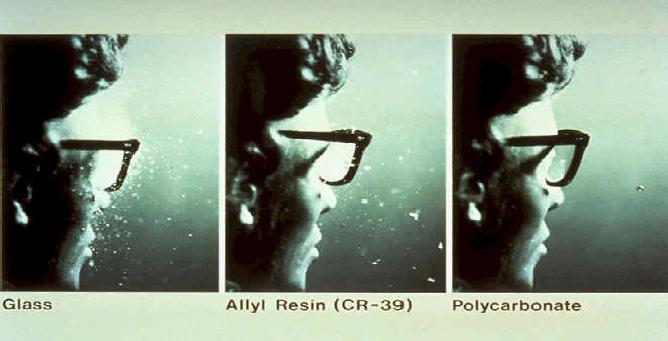
The BIG DIFFERENCE
“Street Glasses”
vs.
“ANSI Approved Safety Glasses”
Workplace Eye Safety
from the American Academy of Ophthalmology
Each working day in the United States, more than 2,000 employees sustain job-related eye injuries. Of these, 10 percent to 20 percent will be disabling because of temporary or permanent vision loss. This is due to the significant eye hazards present within many workplace settings that can lead to eye injury, vision loss, disability and blindness.
Up to 90 percent of all job-related eye injuries can be prevented, so use eye protection whenever there is a chance that machines or activities could present a hazard from flying objects, chemicals, radiation or a combination of these or other dangers.
Although computer screens may cause uncomfortable eyestrain and dry eye symptoms, they don’t permanently damage vision. To determine the cause of your discomfort, see your Eye M.D. for a complete eye exam. You may need to wear glasses when working at a computer or your prescription may need updating. In addition, an ergonomic evaluation of your workstation may identify problems that could lead to eyestrain.
While computer eyestrain may be uncomfortable, construction, automotive repair and manufacturing work can be physically hazardous to your eyes and vision. These occupations have the highest rate of workplace eye injuries.
Many of those injured didn’t think they needed to wear eye protection or were wearing eyewear inappropriate for the job. Safety eyewear must have “ANSI Z87.1” marked on the frame or lens. Check with your Eye M.D. to learn about the eyewear appropriate for your occupation.
UPDATE on the new ANSI Z87.1 Rating for Safety Glasses
In order to receive the ANSI (American National Standards Institute) Z 87.1 rating, safety glasses undergo extensive testing. According to the 1989 standard, they must be able to withstand the high mass impact of a 17.6 oz. ball being dropped from 51.2″. Additionally, there must be zero penetration from high velocity impact at 150 fps. All safety glasses receiving this rating have met the requirements for prism imbalance, refractive power, haze, transmittance and U.V. protection.
ANSI UPDATE on the New Safety Glasses Standard
ANSI Z87.1-2003
The new standard is a voluntary standard and there is no requirement that manufacturer or end user comply with it unless it is mandated by the United States Department of Labor – OSHA. However, in the past, most manufacturers have chosen to comply with revisions to the Z87.1 Standard. Currently, OSHA requires (29 CFR 1910.133) that eye protectors comply with the 1989 version of the Z87.1 Standard, and eye protection devices now in use may continue to be used. **All of the protective eyewear we sell already complies with the performance requirements of the new standard. The new marking requirements will be phased in over time by each manufacturer.**
1. Two Levels of Protection:
Basic and High
LENSES: The new standard designates that lenses will be divided into two protection levels, Basic Impact and High Impact as dictated by test criteria. Basic Impact lenses must pass the “drop ball” test, a 1″ diameter steel ball is dropped on the lens from 50 inches. High Impact lenses must pass “high velocity” testing where 1/4″ steel balls are “shot” at different velocities.
Spectacles: 150 ft./sec.
Goggles: 250 ft./sec.
Faceshields: 300 ft./sec.
FRAMES: Now, all eyewear/goggle frames, faceshields or crowns must comply with the High Impact requirement. (This revision helps eliminate the use of “test lenses”, and assures all protectors are tested as complete – lenses in frame – devices). After making an eye hazard assessment, employers (safety personnel) should decide on appropriate eyewear to be worn, although High Impact would always be recommended. All of our spectacles are High Impact protectors.
2. Now, Products Must Indicate
Impact Protection Level.
To identify a device’s level of impact protection, the following marking requirements apply to all new production spectacles, goggles and faceshields. Basic Impact spectacle lenses will have the manufacturer’s mark, i.e. an AOSafety product will have “AOS” and a Pyramex product will have a “P” etc. Goggles and faceshields will have AOS and Z87 (AOS Z87). High Impact spectacle lenses will also have a plus + sign, (AOS+) or “P+” etc. All goggle lenses and faceshield windows are to be marked with the manufacturer’s mark, Z87, and a + sign (AOSZ87+).
Note: Lenses/windows may have additional markings. Shaded lens may have markings denoting a shade number such as 3.0, 5.0 etc. Special purpose lenses may be marked with “S”. A variable tint lens may have a “V” marking.
3. Sideshield Coverage Area Increased
Sideshield coverage, as part of the lens, part of the spectacle, or as an individual component, has been increased rearward by 10-millimeters via a revised impact test procedure. While side protection in the form of wraparound lens, integral or attached component sideshield devices is not mandated in this standard, it is highly recommended. Further, OSHA does require lateral protection on eye protection devices wherever a flying particle hazard may exist, and flying particle hazards are virtually always present in any occupational environment. All of our non-prescription safety spectacles meet the requirements of OSHA and the new Z87.1 for side protection.
4. No Minimum Lens Thickness Requirement For High Impact Lenses.
The new standard does not have a “minimum lens thickness” requirement for High Impact spectacle lenses. The previous standard required a 2-millimeter “minimum”. However, the protective advantages of wrap-around lenses and the many other advancements in eyewear design, have eliminated this need.
Note: Glass lenses still fall into the Basic Impact lens category. The “minimum lens thickness” of 3 millimeters remains in effect for this category.
New markings
Perhaps the most visible change will be the way that Z87.1-2003-compliant plano eye protection products will be marked. As with the old standard, all removable lenses, both plano and non-plano, must bear a permanent manufacturer’s logo or mark. A brand new requirement is that high-impact lenses will be marked with a plus sign (+). One-piece plano spectacles, like typical plant visitor eyewear, require only one mark: either “Z87” or “Z87+”, whichever is applicable. This mark can appear on the frame, temple or lens. Here’s where the new standard may have some safety professionals scratching their heads. They may wonder how to tell the difference between an old-standard Z87 protector and a new-standard Z87 protector. It’s an important difference, because new-standard Z87 protectors offer only basic-impact protection. Basic- and high-impact non-plano lenses must meet many of the same performance requirements as plano lenses. Basic-impact non-plano lenses need to bear only the manufacturer’s mark or logo. High-impact non-plano lenses will be identified with a “+”. Under the new standard, non-plano frames that meet Z87.1 performance requirements will bear the mark “Z87-2”. The new standard attempts to clarify possible confusion by requiring basic-impact protectors to bear warning labels “. . . to alert the user when the lens(es) of a protector meet(s) only the basic impact requirements. . .” The label or tag is to be removed only by the user. But after the warning label is gone, there may be no way to tell the difference. Under the new standard, manufacturers who make plano protective eyewear will find little incentive to make basic-impact models, as workers tend to opt for the highest level of protection available. It is quite conceivable that Z87 plano products will become a thing of the past.
SIDEBAR: What to look for:
All lenses must bear the manufacturer’s mark or logo. A plus sign (+) is also required for high-impact lenses. All frames must bear the manufacturer’s mark or logo. Frames complying with the new standard must be marked “Z87”. All dual-lens non-plano frames must be marked “Z87-2”.
Eye injuries of all types occur at a rate of more than 1,000 per day. Each year some 100,000 of these will be disabling because of temporary or permanent vision loss. A recent survey by the Bureau of Labor Statistics found that three out of five workers who suffered an eye injury wore no protection. And, of those who did, 40 percent wore the wrong kind. You should wear safety eyewear whenever there is any chance that machines or operations present the hazard of flying objects, chemicals, harmful radiation or a combination of these or other hazards. Anyone working in or passing through areas that pose eye hazards should wear appropriate protective eyewear at such times. What is the difference between glass, plastic and polycarbonate safety lenses?
Industrial-thickness glass, plastic and polycarbonate lenses meet or exceed the requirements of the eye protection standard. In general, each type of lens does offer certain advantages and disadvantages. Glass lenses provide good scratch resistance and can withstand chemical exposure. They can also accommodate a broad range of prescriptions. But glass is heavy and can be uncomfortable. Plastic and polycarbonate lenses are lighter weight, protect against welding splatter, and are not likely to fog. Unless specially coated, these lenses are not as scratch resistant as glass. They also cannot accommodate as wide a range of prescriptions as glass lenses. Polycarbonate lenses are superior to glass and many other plastics in strength and impact resistance. Experts believe that proper eye protection could have prevented or reduced the severity of injury in at least 90 percent of all accidents. In addition, the Wise Owl Program, sponsored by Prevent Blindness America, has recognized more than 84,000 people in the U.S. whose sight was saved in an accident because they wore eye protection. EYE PROTECTION WORKS!
To learn more about protecting your eyes at work, contact Prevent Blindness America or the Prevent Blindness Affiliate near you.
10 Ways to Prevent Eye Injuries at Work
Good vision is priceless! Luckily, 90 percent of all workplace eye injuries are preventable with the use of proper safety eyewear. Despite the good news, the Bureau of Labor Statistics reports that eye injuries in the workplace cost over $467 million annually. Adding indirect costs such as legal fees, judgments, and training replacement workers, places the estimated total above $934 million each year.
Nearly one million Americans have already lost some degree of sight to an eye injury. With over 365,000 work-related eye injuries still occurring each year, Americans could use a few tips on how to prevent eye injuries in the workplace!
- ASSESS! Conduct a thorough analysis of plant operations. Inspect work areas, access routes and equipment. Examine eye accident and injury reports. Identify operations and areas that present eye hazards.
- TEST! Uncorrected vision problems contribute to accidents. Incorporate vision testing in your pre-placement and routine physical examinations of employees.
- PROTECT! Select protective eyewear designed for a specific operation or hazard. Protective eyewear must meet the current standards referenced by the Occupational Safety and Health Act of 1970 and subsequent revisions.
- PARTICIPATE! For maximum protection against eye injury, establish a 100 percent mandatory program that requites eye protection throughout all operations areas of your plant. Experience shows this kind of program prevents more injuries and is easier to enforce that one limited to certain departments, areas or jobs.
- FIT! Workers cannot be expected to use their protective eyewear unless it fits properly and comfortably. To ensure the eyewear is satisfactory, have it fitted by an eye care professional or someone trained to do this. Provide the means for maintenance and require each worker to be responsible for his or her own eyewear.
- PLAN FOR AN EMERGENCY! Establish first-aid procedures for eye injuries. Make eyewash stations accessible, particularly where chemicals are used. Train employees in basic first aid and identify those with more advanced first-aid training.
- EDUCATE! Conduct ongoing educational programs to establish, maintain and reinforce the need for protective eyewear. Add eye safety to your regular employee education/training programs and include it as a large part of new employee orientation.
- SUPPORT! Management support is a key ingredient in successful eye safety programs. All management personnel should set an example by wearing protective eyewear whenever and wherever required.
- REVIEW! Continually review and, when necessary, revise your accident prevention strategies. Aim for the elimination of all accidents and injuries.
- PUT IT IN WRITING! When all elements of your safety program have been established, put them in writing. Display a copy of the policy in areas frequented by employees, and include a review of the policy in new employee orientation.
10 Things You Should Know About Jump-Starting a Battery
We should all be aware of how to safely jump-start our car’s battery. Follow these 10 suggestions when getting your car back on the road.
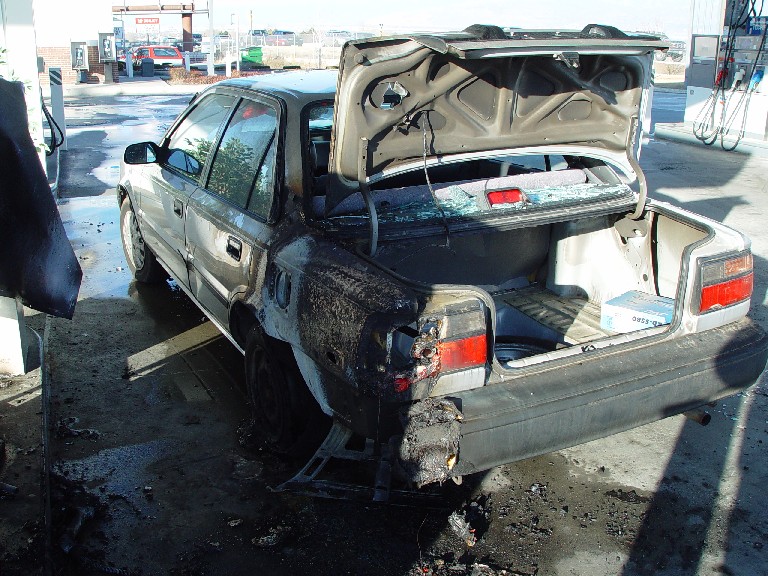
- Always wear a pair of splash-proof polycarbonate goggles with the designation Z-87 on the frame. This certifies that your goggles are meant for activities such as automotive repair.
- Batteries contain hydrogen and oxygen, two flammable and explosive gasses. Never smoke or operate anything that may cause a spark when working on a battery. The gasses may ignite and cause the battery to explode.
- Check your battery for damage such as cracks, corrosive materials and loose wires as often as you have your oil changed.
- Make sure you have a pair of jumper cables that are rust and corrosion free and have no exposed wires. (Never use electrical tape to cover exposed wires.)
- Make sure you buy a battery that is recommended in your owner’s manual.
- Never throw an vehicle battery in a garbage dumpster or leave it in a parking lot, especially if it is cracked or damaged. Have it disposed of properly.
- Never jump-start your battery if your vehicle’s fluids are frozen.
- When buying a new battery make sure that its terminals are sturdy and large enough to allow the clamps of a pair of jumper cables to attach easily when jump-starting.
- Always call a professional if you think there might be trouble you can’t handle, or you can’t remember how to jump-start a vehicle.
- Prevent Blindness America offers a battery safety sticker that lists the correct steps to take when jump-starting a dead battery. To receive one, call us at 1-800-331-2020.
To learn more about battery safety, please contact Prevent Blindness America or the Prevent Blindness affiliate near you.
First Aid for Eye Emergencies
Specks in the Eye
- DO lift upper eyelid outward and down over the lower lid.
- DO let tears wash out speck or particle, or use an eye wash.
- DO—if the speck doesn’t wash out—keep eye closed, bandage lightly and see a doctor.
- DO NOT rub the eye.
Blows to the Eye
- Prior to getting emergency medical care:
- DO gently apply small cold compresses without pressure immediately to reduce pain and swelling.
- DO seek emergency medical care in cases of pain, reduced vision or discoloration (black eye), which could mean internal damage to the eye.
Cuts and Punctures of the Eye or Eyelid
- DO bandage lightly without pressure and see a doctor at once.
- DO NOT wash out the eye with water.
- DO NOT try to remove an object stuck in the eye.
To learn more about first aid for eye emergencies, contact Prevent Blindness America or the Prevent Blindness Affiliate near you.
Treating an Eye Injury
If you do sustain an eye injury, see an Eye M.D. (ophthalmologist) or visit the nearest emergency room right away, even if the injury seems minor at first. A serious eye injury is not always immediately obvious. Delaying medical attention can cause the damaged areas to worsen and could result in permanent vision loss or blindness.
Do not rub the eye. If any tissue is torn, rubbing may cause more damage.
Shield the eye from pressure or rubbing action by taping or securing the bottom of a foam cup or similar type of shield against the bones surrounding the eye (brow, cheek and bridge of nose).
Do not apply ointment or medication to the eye. These medications may not be sterile and could make the eye area slippery, which could slow the Eye M.D.’s examination.
To treat cuts or punctures to the eye, bandage the eye without any pressure and seek emergency medical care immediately. Do not attempt to wash the eye or remove any object stuck in the eye. A paper cup held over the injured eye can help protect it until you can get to your Eye M.D. or emergency room.
In case of a chemical burn to the eye, immediately flush the eye with clean water and seek emergency medical treatment right away.
To treat a blow to the eye, gently apply a small cold compress to reduce pain and swelling, but don’t apply any pressure. Remember that even a light blow can cause a significant eye injury. If a black eye, pain or visual disturbance occurs even after a light blow, immediately contact your Eye M.D. or emergency room.
To treat sand or small debris in the eye, use eyewash to flush the eye out. Do not rub the eye. If the debris doesn’t come out, lightly bandage the eye and see an Eye M.D. or visit the nearest emergency room.
Avoid giving aspirin, ibuprofen or other non-steroidal, anti-inflammatory drugs. These drugs thin the blood and may increase bleeding. Also, the pain associated with an eye injury is often excruciating and a non-prescription medication may not help. Do not delay help by waiting for a painkiller to take hold. Go directly to an Eye M.D. or emergency room.
EYE PROTECTION IN THE WORKPLACE
U.S. Department of Labor Program Highlights
Fact Sheet No. OSHA 92-03
Every day an estimated 1,000 eye injuries occur in American workplaces. The financial cost of these injuries is enormous–more than $300 million per year in lost production time, medical expenses, and workers compensation. No dollar figure can adequately reflect the personal toll these accidents take on the injured workers.
The Occupational Safety and Health Administration (OSHA) and the 25 states and territories operating their own job safety and health programs are determined to help reduce eye injuries. In concert with efforts by concerned voluntary groups, OSHA has begun a nationwide information campaign to improve workplace eye protection.
Take a moment to think about possible eye hazards at your workplace. A 1980 survey by the Labor Department’s Bureau of Labor Statistics (BLS) of about 1,000 minor eye injuries reveals how and why many on-the-job accidents occur.
WHAT CONTRIBUTES TO EYE INJURIES AT WORK?
Not wearing eye protection. BLS reports that nearly three out of every five workers injured were not wearing eye protection at the time of the accident.
Wearing the wrong kind of eye protection for the job. About 40 of the injured workers were wearing some form of eye protection when the accident occurred. These workers were most likely to be wearing eyeglasses with no side shields, though injuries among employees wearing full-cup or flat-fold side shields occurred, as well.
WHAT CAUSES EYE INJURIES?
Flying particles. BLS found that almost 70% of the accidents studied resulted from flying or falling objects or sparks striking the eye. Injured workers estimated that nearly three-fifths of the objects were smaller than a pin head. Most of the particles were said to be traveling faster than a hand-thrown object when the accident occurred.
Contact with chemicals caused one-fifth of the injuries. Other accidents were caused by objects swinging from a fixed or attached position, like tree limbs, ropes, chains, or tools which were pulled into the eye while the worker was using them.
WHERE DO ACCIDENTS OCCUR MOST OFTEN?
Craft work; industrial equipment operation. Potential eye hazards can be found in nearly every industry, but BLS reported that more than 40% of injuries studied occurred among craft workers, like mechanics, repairers, carpenters, and plumbers. Over a third of the injured workers were operatives, such as assemblers, sanders, and grinding machine operators. Laborers suffered about one-fifth of the eye injuries. Almost half the injured workers were employed in manufacturing; slightly more than 20% were in construction.
HOW CAN EYE INJURIES BE PREVENTED?
Always wear effective eye protection. OSHA standards require that employers provide workers with suitable eye protection. To be effective, the eyewear must be of the appropriate type for the hazard encountered and properly fitted. For example, the BLS survey showed that 94% of the injuries to workers wearing eye protection resulted from objects or chemicals going around or under the protector. Eye protective devices should allow for air to circulate between the eye and the lens. Only 13 workers injured while wearing eye protection reported breakage.
Nearly one-fifth of the injured workers with eye protection wore face shields or welding helmets. However, only six percent of the workers injured while wearing eye protection wore goggles, which generally offer better protection for the eyes. Best protection is afforded when goggles are worn with face shields.
Better training and education. BLS reported that most workers were hurt while doing their regular jobs. Workers injured while not wearing protective eyewear most often said they believed it was not required by the situation. Even though the vast majority of employers furnished eye protection at no cost to employees, about 40% of the workers received no information on where and what kind of eyewear should be used.
Maintenance: Eye protection devices must be properly maintained. Scratched and dirty devices reduce vision, cause glare and may contribute to accidents.
WHERE CAN I GET MORE INFORMATION?
Your nearest OSHA area office. Safety and health experts are available to explain mandatory requirements for effective eye protection and answer questions. They can also refer you to an on-site consultation service available in nearly every state through which you can get free, penalty-free advice for eliminating possible eye hazards, designing a training program, or other safety and health matters.
Don’t know where the nearest federal or state office is? Call an OSHA Regional Office at the U.S. Department of Labor in Boston, New York, Philadelphia, Atlanta, Chicago, Dallas, Kansas City, Denver, San Francisco, or Seattle.
The National Society to Prevent Blindness. This voluntary health organization is dedicated to preserving sight and has developed excellent information and training materials for preventing eye injuries at work. Its 26 affiliates nationwide may also provide consultation in developing effective eye safety programs. For more information and a publications catalog, write the National Society to Prevent Blindness, 79 Madison Ave., New York, NY 10016-7896.
EYE PROTECTION WORKS!
BLS reported that more than 50% of workers injured while wearing eye protection thought the eyewear had minimized their injuries. But nearly half the workers also felt that another type of protection could have better prevented or reduced the injuries they suffered.
It is estimated that 90% of eye injuries can be prevented through the use of proper protective eyewear. That is our goal and, by working together, OSHA, employers, workers, and health organizations can make it happen.
This is one of a series of fact sheets highlighting U.S. Department of Labor programs. It is intended as a general description only and does not carry the force of legal opinion. This information will be made available to sensory impaired individuals upon request. Voice phone: (202) 523-8151. TDD message referral phone: 1-800-326-2577.
AMERICAN NATIONAL STANDARDS INSTITUTE
STANDARD FOR EMERGENCY EYEWASH
AND SHOWER EQUIPMENT ANSI Z358.1-1990
This standard requires the following:
1. The water in the eyewash station shall be potable (drinkable).
2. A controlled flow of water must be provided to both eyes simultaneously at a velocity low enough not to be injurious to the user.
3. There shall be no sharp projections anywhere in the operating area of the unit.
4. Nozzles shall be protected from airborne contaminants. The removal of such protection shall not require a separate motion by the operator when activating the unit.
5. Eyewash equipment shall be capable of delivering to the eyes a minimum of 1.5 litres (.4 gallons) per minute for 15 minutes.
Note: Medical and industrial experiences have shown that the initial first aid treatment for chemical splash should be to wash the eyes for 15 minutes prior to medical treatment. Most Material Safety Data Sheets recommend this, or state that eyes must be flushed with copious amounts of water. Data sheets shall be consulted for additional recommendations.
6. There shall be sufficient space around the eyewash equipment to allow eyelids to be held open with the hands, while the eyes are being flushed.
7. The control valve shall be: – capable of being quickly located and operated – capable of being fully activated in one second or less and –designed to remain on until intentionally shut off.
8. The eyewash unit shall be in an accessible location as close to the hazard as possible, but with a travel/ distance no greater than 30.5 metres (100 feet) and require no greater than 10 seconds to reach.
9. The eyewash unit shall be identified with a highly visible sign. The area around or behind, or both, shall be painted a bright color, and shall be well lit.
10. Water nozzles shall be positioned between 83.8 cm (33 inches) and 114.3 cm (45 inches) from the floor.
11. Plumbed eyewash units shall be activated weekly to flush the line and verify proper operation. Self contained units shall be inspected according to manufacturers’ specification.
12. All employees who may be exposed to eye injury shall be instructed in the proper use of emergency eyewash units.
13. Self-contained units containing a reservoir of flushing fluid shall be constructed of materials that will not corrode. The flushing fluid shall be protected from airborne contaminants.
14. Outdoor units shall be freeze protected.
APPENDIX FROM STANDARD
– For information purposes only: Water temperature in units should be maintained at between 15 and 35 degrees C (60 to 90 degrees F).
Approved eyewash units may be part of eye-facewash and/or emergency shower units. Depending on the types of hazards present, these options may be preferable to single purpose eyewash units.
Note: Personal Eyewash Equipment, such as squeeze bottles, can support but not replace proper eyewash stations. The first few seconds following an eye injury are often critical to keeping injury to a minimum. A personal eyewash unit may be kept in the immediate vicinity of employees working in a potentially hazardous area. The main purpose of these units is to supply immediate flushing. With this accomplished, the injured individual may then poceed to a permanent facility and flush the eyes for the required 15 minute period.
EYE SAFETY
BULLETIN NO. 104a
Accidental exposure of the eyes to chemical substances in any form can result in irritation, temporary or permanent vision impairment, or blindness. The provision of engineering controls and personal eye protection that minimize the possibility of eye exposure to harmful chemical substances is the best protection against eye injury in the workplace. To supplement these, the availability of proper emergency equipment for the treatment of eyes exposed to hazardous substances is an essential safety precaution.
Under the Workplace Safety and Health Act, the Manitoba Workplace Safety Division requires employers to provide approved emergency eyewash equipment, in conjunction with effective eye protection programs in any workplace where there is a risk of eye injury from exposure to hazardous chemical substances. Such emergency eyewash equipment must meet the requirements identified in the American National Standards Institute (ANSI) Standard for Emergency Eyewash and Shower Equipment Z358.1-1990.
ANSI approved emergency eyewash equipment is designed to function quickly and effectively under a set of typical circumstances. When a person’s eyes are accidentally exposed to a hazardous chemical substance, the following is likely to occur:
1. A degree of panic may set in and the person will not always think or react in a clear fashion;
2. Vision is immediately impaired, so that the person cannot clearly see where they are going or what they are doing;
3. Assistance may not be immediately available.
Regardless of the situation or circumstance, emergency treatment must be available immediately. Every second lost could lead to permanent damage. Proper emergency eyewash equipment could save someone’s eyesight.
Consumer Product Safety Commission
Safety Commission Warns About Eye Injuries From Welding
CPSC Document #5109
The US. Consumer Product Safety Commission estimates that 10,800 eye Injuries related to welding equipment were treated in hospital emergency rooms in 1988 (the latest year for which Information is available). Electric arc welding equipment was the product most frequently involved in eye injuries. Many of those injured were bystanders who were watching someone else use welding equipment. Eye damage can happen quite a distance away from the welding and does not require much more than a second to occur.
Most types of welding give off radiation that can burn the eye. The ultraviolet and infrared radiation given off from electric arc welding can cause painful and even more serious eye injuries. Such burns can be permanent and can threaten eyesight.
When welding, both the person doing the welding and any bystanders should wear protective face shields with filtered glass for protection against the glare of the electric arc.
Eye injuries from flying hot metal and slag particles may also be serious and need proper medical attention. Clear glass goggles or safety glasses with side shields should be worn under the face shield for protection immediately after welding when chipping with a hammer or brushing loose particles from the weld bead. All parts of the body should also be protected to prevent burns to other areas such as the neck, arms, body and legs.
The U.S. Consumer Product Safety Commission protects the public from the unreasonable risk of injury or death from 15,000 types of consumer products under the agency’s jurisdiction. To report a dangerous product or a product-related injury, you can go to CPSC’s forms page and use the first on-line form on that page. Or, you can call CPSC’s hotline at (800) 638-2772 or CPSC’s teletypewriter at (800) 638-8270, or send the information to [email protected]” data-mce-href=”mailto:[email protected]“>[email protected]. Consumers can obtain this publication and additional publication information from the Publications section of CPSC’s web site or by sending your publication request to [email protected]” data-mce-href=”mailto:[email protected]“>[email protected]. If you would like to receive CPSC’s recall notices, subscribing to the email list will send all press releases to you the day they are issued.
This document is in the public domain. It may be reproduced without change in part or whole by an individual or organization without permission. If it is reproduced, however, the Commission would appreciate knowing how it is used. Write the U.S. Consumer Product Safety Commission, Office of Information and Public Affairs, Washington, D.C. 20207