A post I made on another board about a discussion on what makes an ATM hazardous…
Just exceeding a PEL does not make the atm hazardous under the PRCS std.
You are correct that OSHA has stated an atmosphere that contains a substance at a concentration exceeding a permissible exposure limit intended solely to prevent long-term adverse health effects is NOT considered to be a hazardous atmosphere on that basis ALONE.
This statement is based 100% on the response time and the effect of exposure, as OSHA also states that there are situations where exceeding the PEL of a chemical like Chlorine would constitute a “hazardous atmosphere”. In the preamble, where OSHA explains its rationale in using section (c)(5) for alternative entry methods, they state,
“The 8-hour time-weighted average PEL for chlorine, under Table Z-1, is 0.5 parts per million. This chlorine concentration would be considered hazardous under the definition of “hazardous atmosphere”. Under the guideline, the measured concentration of chlorine should not exceed 0.25 parts per million after ventilation in order for the procedures specified in paragraph (c)(5)(ii) of the final rule to be acceptable”.
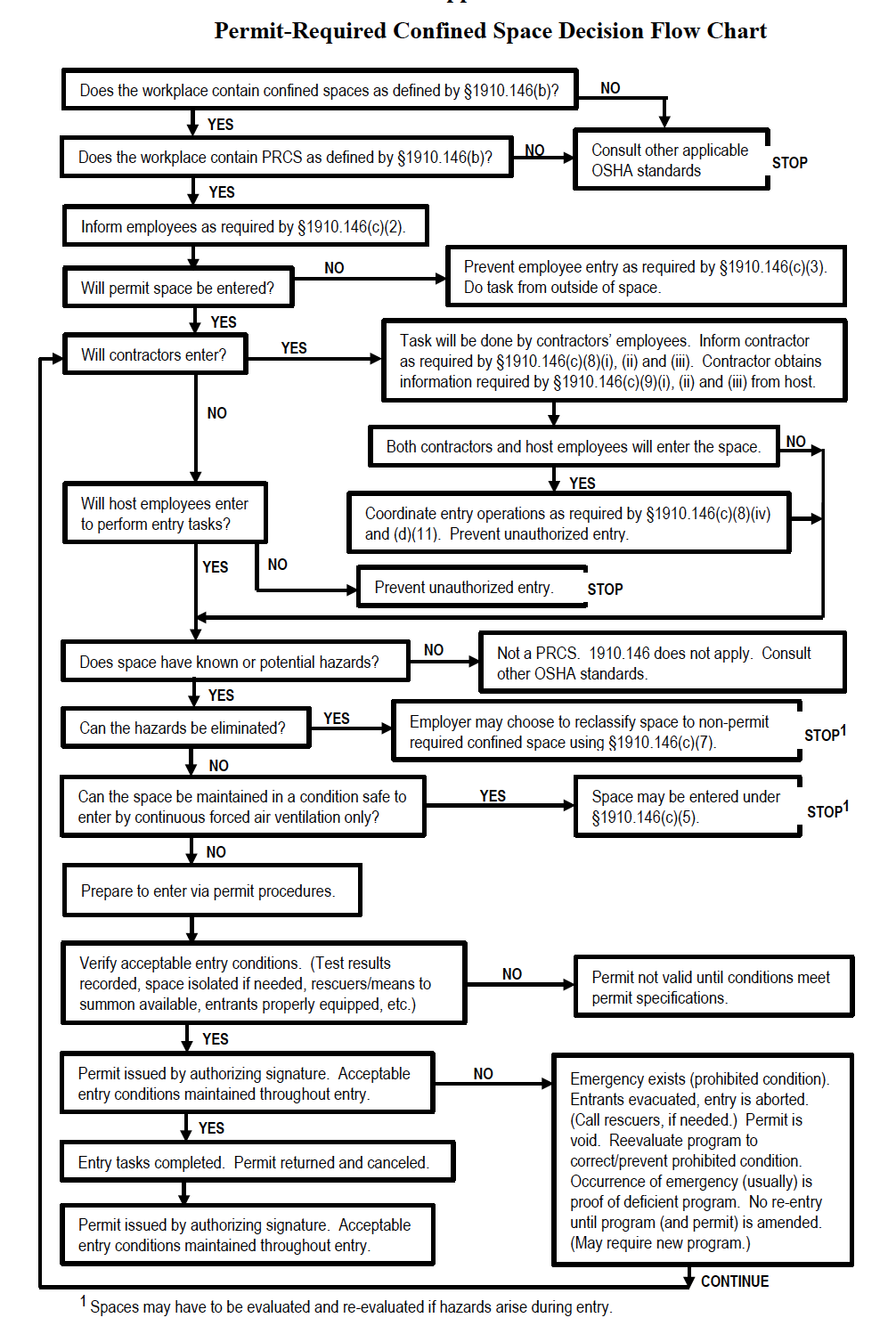
Again, this is ALL based on response time and the impact of the exposure. It all boils down to whether or not the atmosphere can expose employees to the risk of death, incapacitation, impairment of the ability to self-rescue, injury, or acute illness. I should have said that if the entrants wear respirators to protect them from such an atm, even if it is below the PEL, then the space can not be reclassified, as there is still the “potential” for a hazardous atm.
I was leaning too far in my original response and relying on my current and past practices, where if the entrant needed any additional PPE to enter the space, then it was not “reclassified” in my book. When he stated they wear respirators, it clicked in my head that if they are using respirators for anything beyond “nuisance” issues, then there is a hazard, and thus the space cannot be reclassified.