
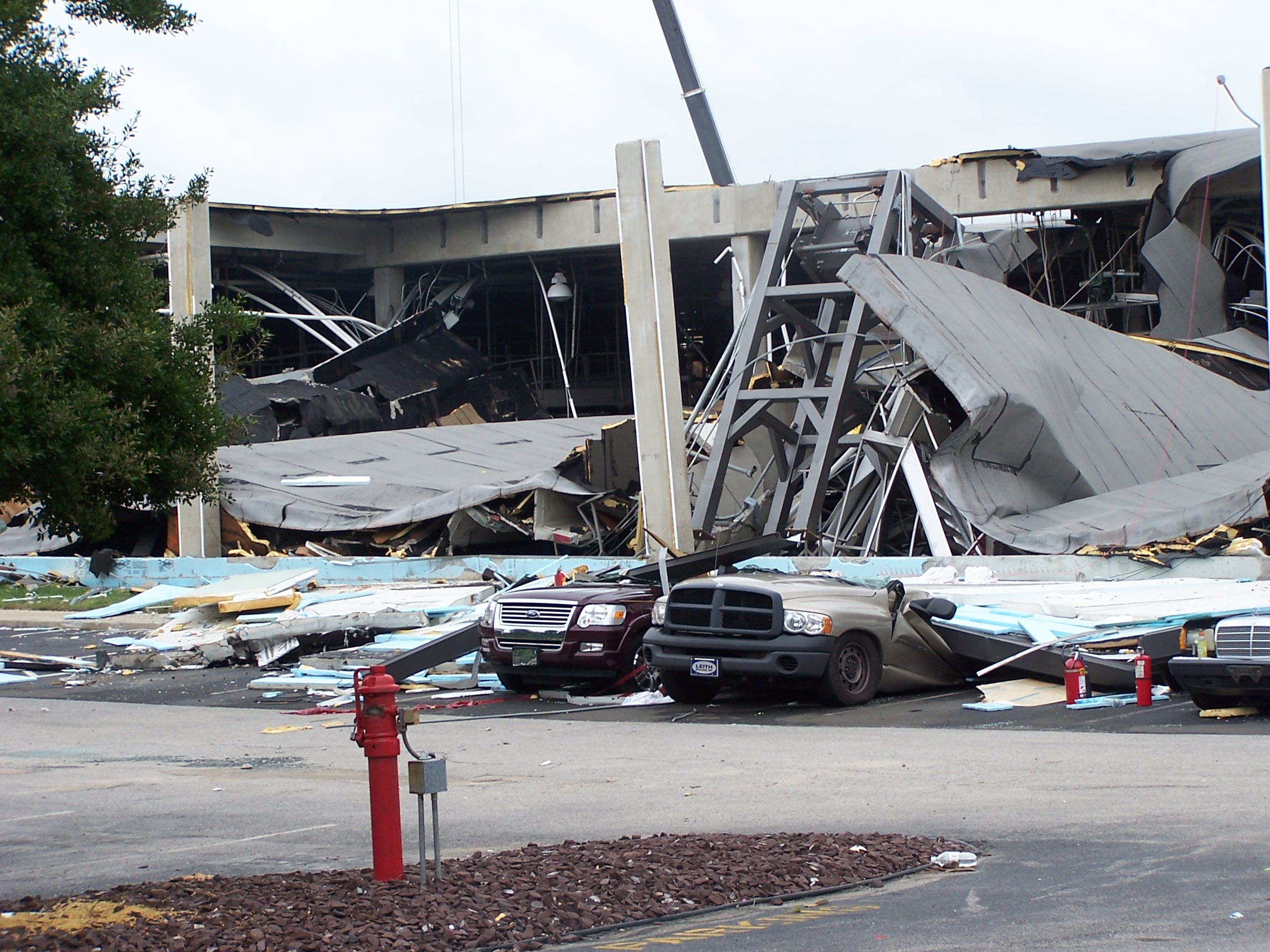
SAFETY IS MORE than satisfying OSHA compliance – IT IS ALL ABOUT PEOPLE! ConAgra closing Garner plant, hundreds left unemployed ConAgra stopped production at its Garner facility this past Friday, extinguishing about 750 jobs since the explosion – the shutdown comes after a deadly explosion at the Slim Jim plant in 2009 that killed four people – ConAgra had been a part of the community for well over 40 years.
ConAgra is donating its plant and land to the city of Garner. The part of the plant that was not destroyed by the 2009 explosion could serve another food manufacturer and there’s enough land for three other businesses. In 2009, about 750 people worked for ConAgra in Garner.
Here is language from the NC-OSHA citations…
on 6/9/09, from approximately 9:30 A.M. until 10:30 A.M., a contractor was attempting to light the Maxi-Miser on demand natural gas fired water heater. The contractor removed the pressure gauge on the 3/8 inch pilot line and opened the supply valve multiple times that allowed a pressurized air mixture containing natural gas to be released in an enclosed room that contained ignition sources including unclassified electrical equipment such as motors and circuit panels.
The final OSHA settlement was just shy of $75,000…which is less than just one annual salary at the plant!
I have always tried to use these types of tragedies to demonstrate that we are ALL THIS SAFETY GAME TOGETHER! EVERY WORKER has to be on the lookout for unsafe practices and unsafe working conditions and INTERVENE when they see it! Thinking or having the attitude that it is “NONE OF MY BUSINESS” or worse yet “NOT MY JOB” to intervene may just cost them their job! If killing four workers is not bad enough, now we just made 750 jobs disappear and this economy does not need any help in this area! Also, OSHA citations in these types of accidents have the LEAST IMPACT and proof positive that OSHA citations after a fatality play a VERY SMALL ROLE in changing behavior in comparison to what these workers are enduring now!
Another LESSON to be learned…EVALUATE YOUR CONTRACTORS and SUPERVISE their work. It was a contractor installing a hot water heater that caused the explosion. This facility was a PSM/RMP facility (39,000 pounds of NH3), but I could never find details to know if the contractor went through a safety evaluation or if the facility did like so many facilities still do today…attempt to segregate contractors at the facility into PSM contractors and Non-PSM contractors. The specific work being done on the day of the explosion was inside a single room that may have been segregated from other areas. However, if your facility is PSM/RMP covered, and a word of advice to facilities not covered by PSM/RMP, we need to EVALUATE ALL your contractors who will be allowed to work inside the fence line. “Incidental contractors” (as defined by OSHA) may even need to have some level of review AND training if they are entering areas that are IN, ON or ADJACENT to the covered process area(s). I have found some crazy happenings during my time as a safety manager and now an auditor by “incidental contractors”. Just because their work is supposed to be “incidental” to process safety, does NOT mean they can not create significant hazards to the process within their work. I always had a policy that if they were “incidental” they were NEVER allowed to enter a process boundary. We moved all the vending machines, stopped using commercial rugs in the control rooms so the “rug guy” did not have to enter the area, etc., so that if a contractor was IN, ON, or ADJACENT to a process they were evaluated and working under a Contractor Work Permit. It would be doubly sad if this were the case and the contractor involved had not gone through any type of evaluation. NOTE: I checked the OSHA citations and could not find any PSM related citations and could not locate the NH3 reportable release report on the NRC website to see how much ammonia was released; I do know they lost their entire charge, but they sent it to waste water ponds on site.
The last lesson to be learned from this incident is the VALUE of a LINE BREAK/PROCESS OPENING PERMIT. Still today, facilities struggle with this type of program and permit. It is required for PSM/RMP covered processes, but SHOULD BE applied to all hazardous processes. OSHA does NOT have a specific standard for what has to be in a Line Break program/permit and I think this causes the confusion. The program should be applied to ALL OPENINGS of a PROCESS, including opening drains, vents, etc. I have always used it on ALL hazardous processes, including steam, gas, material with a pH less than 5 or greater than 9, flammability of 3 or higher on the NFPA 704 scale, any material normally operating at 50 psi or higher, etc. Just like this incident, we get TOO COMFORTABLE with those materials that are not covered under PSM. We put so much effort and attention on the PSM/RMP covered chemicals and processes that we tend to drop our guards when working with something we have at out house! Natural Gas is not covered because it is PIPED IN and there is never suppose to be over 10,000 pounds on site at any given time. But as evident in this incident, even a pipeline fed material can accumulate in an uncontrolled fashion and present life threatening hazards! I have not been able to find any estimates of how much natural gas was involved in the explosion. The explosion was not what killed the workers; the explosion forced the walls out and the ceiling came crashing down.
So… contractors, line break permits, and EMPLOYEE INTERVENTION… Bottom line, this incident, like all others could have been prevented.
NOTE: the contractors doing the work were inside a room that was not visible to the majority of other workers in the area. I am IN NO WAY blaming any worker(s) for this incident, only trying to help others understand that when a worker reports an unsafe act/condition and it is one that they COULD HAVE intervened and stopped/corrected, they should NOT BE ALLOWED to state “hey I am just reporting it, it is not my job to do anything else”. That type of attitude could land them in the same boat as these unfortunate Conagra workers. Employees need to know that they will be supported when they intervene in unsafe acts and conditions and that it is their duty and responsibility to intervene. We have to be in this battle together or we may never reach our goals of an injury free workplace.