
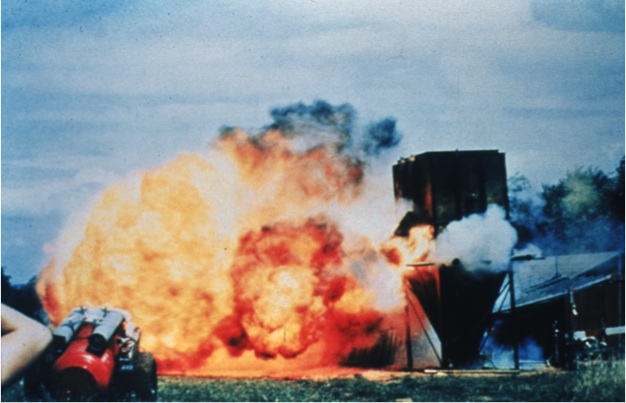
 Combustible Dust was not included in Table 5003.1.1(1) because of the inherent difficulty in establishing a maximum allowable quantity (MAQ) and determining if and when the MAQ had been exceeded. An occupancy with an uncontrolled combustible dust hazard is classified in Group H-2 in accordance with Section 307.4 of the International Building Code (IBC), with the exception of certain woodworking uses classified as Group F-1.
Many spaces with uncontrolled combustible dust hazards should be classified in Group H-2. However, others may fall into Group F or S, depending on the specifics of the process and the safety controls provided for the process. Accordingly, beginning in the 2012 edition of the code, a new row in Table 5003.1.1(1) added combustible dust to the MAQ table so the code user would not miss this important hazard category.
Note q directs the code user to pertinent sections in this code and the IBC to determine if a dust hazard exists by an engineering evaluation. The content of Note q is also included in IBC Section 307.4. This approach places the responsibility on the building owner to determine whether a dust hazard exists. Modifications to
Chapter 22 of this code and Section 426 of the IBC now require any recognized combustible dust hazard to be controlled, whether new or existing. As a result, the requirement to classify as a Group H-2 occupancy will no longer be applicable to new construction and will eventually be eliminated in existing occupancies as they are brought into compliance with these requirements.