
Do you see it? The safety system. It’s right there in front of your eyes.
This is a PSM-covered process involving flammable liquids. And what we are seeing is an air line made of plastic. This is intended to melt in a fire scenario, which would release the air, and the Fail-Safe-CLOSED valve will close.
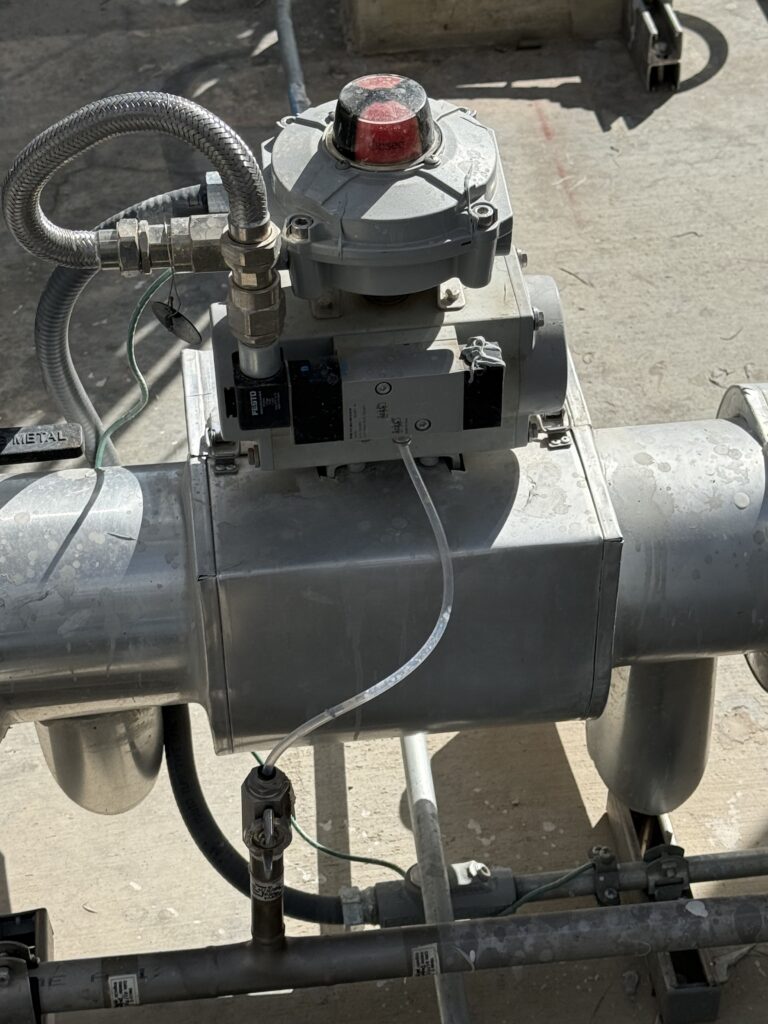
We see this “design” often, and every time I take issue with it, but apparently, I am in the minority with this concern. I expect the valve to be an “Approved” fire safety valve that has an engineered fusible link. An actual engineered system that comes with an “approval” from a Nationally Recognized Testing Laboratory (NRTL). Now I am sure that eventually the “plastic tube” will melt in a fire, but are we confident that this melting would release the air from the system?
Have you ever melted a pressurized plastic tube?
But the tale of the plastic tube gets even better. One cold winter day, the facility experienced excessive moisture in its plant’s system, and several tubes failed due to freezing. The air compressor driers had failed, allowing moisture to build up in the system, and the weak link was these plastic tubes in the flammable liquid process.
When maintenance began discussing a solution, it was recognized that other units did not use plastic tubing, but rather metal tubing. And these metal tubes had frozen, but did not fail like the plastic. So, what do you think the plan was to fix the plastic tubes from failing?
No, it wasn’t to fix the air dryers! Instead, they focused on replacing all the plastic tubes that supplied air pressure to the control valves, including the emergency shut-off valves located under the bulk storage tanks. This was in February 2022. Fast forward to February 2025, and they overflowed a storage tank (reasons other than being discussed here), leading to a small pool fire. Luckily, this event was not a failure of the tank or piping, because the metal tubing supplying the air to the emergency shut-off valves did NOT melt away, and the emergency shut-off valves did NOT close as intended in a pool fire scenario.
No MOC was done, as the maintenance team did not recognize this tubing as part of the PSM programs or that a change to the tubing would impact process safety. After all, other units had metal tubing for air connections to control valves, and they worked far better than the plastic (in cold weather). The plastic tubing was never viewed as part of a “safety system” by anyone, other than a single process engineer. There was no documentation or specification for the plastic tibing.
Even during the post-incident review, personnel (including most of the unit engineers) were puzzled as to why their emergency shut-off valves did not close until an ERT commander hit an estop. In some jurisdictions, the AHJ may not permit this setup without detailed documentation showing the melting point of the plastic tubing and confirming its intended function is for “fire safety.” But when the AHJ does allow the plastic tubing, it is IMPERATIVE that the tubing be listed in the PSI as part of a “safety system”. A few clients specify the tubing must be RED in color, as well as other performance parameters. This color coding is then widely communicated as to its purpose and significance. A couple of clients who chose to continue using plastic tubing have taken it a bit further and have “tagged” their color-coded plastic tubing as a piece of PSM-covered equipment. The tag states the tubing specification, allowing personnel to recognize it as critical to safety and understand what constitutes a “replacement in kind” for the tubing. Each piece of tubing has a unique identifier and is entered into the CMMS with an annual inspection and 5-year replacement (even the UV-protected tubing!).
Wheter we use plastic tubing or a fusible link, these devices are CRTICIAL to our mitigation efforts in a flammable liquids process and must be managed as such.