
A lot of folks are angry that they have been forced from their homes, especially over a holiday weekend when families travel to visit families. I understand their anger, and I applaud the OCFA for their communication efforts to explain their decisions. So, for those of you who do not live and work in the emergency response arena, I thought it would be helpful to explain the LIMITATIONS the OCFA faces regarding RELIABLE DATA.
The go-to book for an emergency response, even for those in Fixed-Facilities, is the DOT Emergency Response Guide (ERG). This booklet is the BASIS for all Hazardous Materials training levels, starting at the AWARENESS LEVEL. But with this great guide come many limitations, especially when dealing with HAZMATs carrying the “P” designation. In my years of dealing with Hazardous Materials, we like to say “P” stands for “PUCKER” as it should make the hairs on the back of your neck stand up. As I wrote about back in 2025, during the East Palestine, Ohio train derailment, these hazardous materials pose a very unique and rare hazard – POLYMERIZATION. The DOT ERG will identify those hazardous materials that carry this ultra-hazard with a “P” designation; however, the ERG does little to help the Incident Command develop a sound Incident Action Plan. It simply manages it as a “Flammable Liquid” with a special “P” designation.
So let’s take a journey through the ERG for MMA:

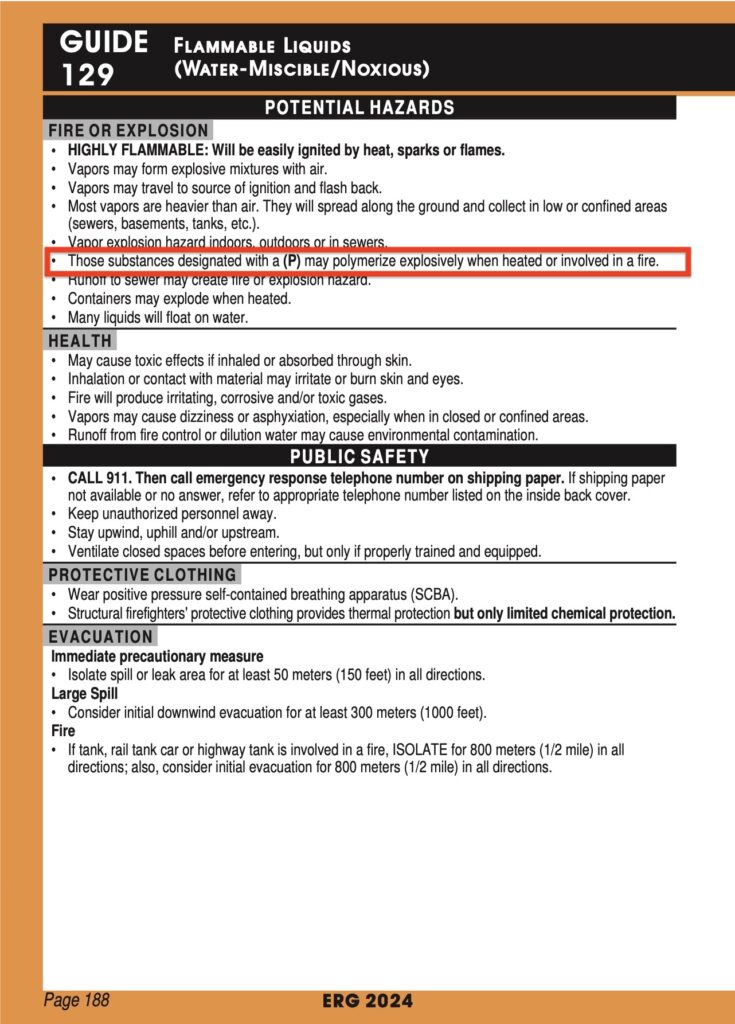
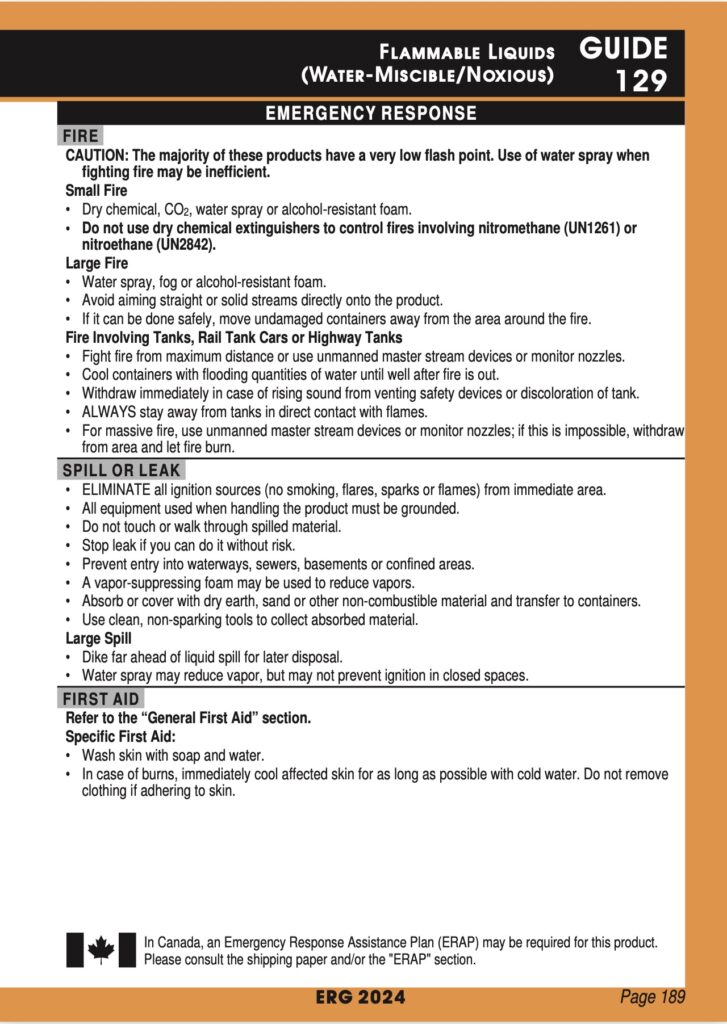
We can see the “P” Designation highlighted. But we turn to Guide # 129 – Flammable Liquids (Water-Immiscible), and we can see that it mentions the Polymerization Hazard, but offers no assitance on how to manage the “P” hazard.

Page 345 states:
The letter (P) following the guide number in the yellow and blue sections identifies materials that present a polymerization hazard under certain conditions.
For example: UN1092 – Acrolein, stabilized GUIDE 131P.
First responders at the scene of a dangerous goods incident should not solely rely on this guidebook. Always seek specific information about any material in question as soon a possible. To do so:
- Contact the appropriate emergency response agency listed on the inside back cover.
- Call the emergency response telephone number on the shipping paper.
- Consult information on or accompanying the shipping paper.