
Many have seen a gauge such as the one below. It will be on an Acetylene Cylinder. But how many know why the gauge scale is RED in color from 15 psig and higher?
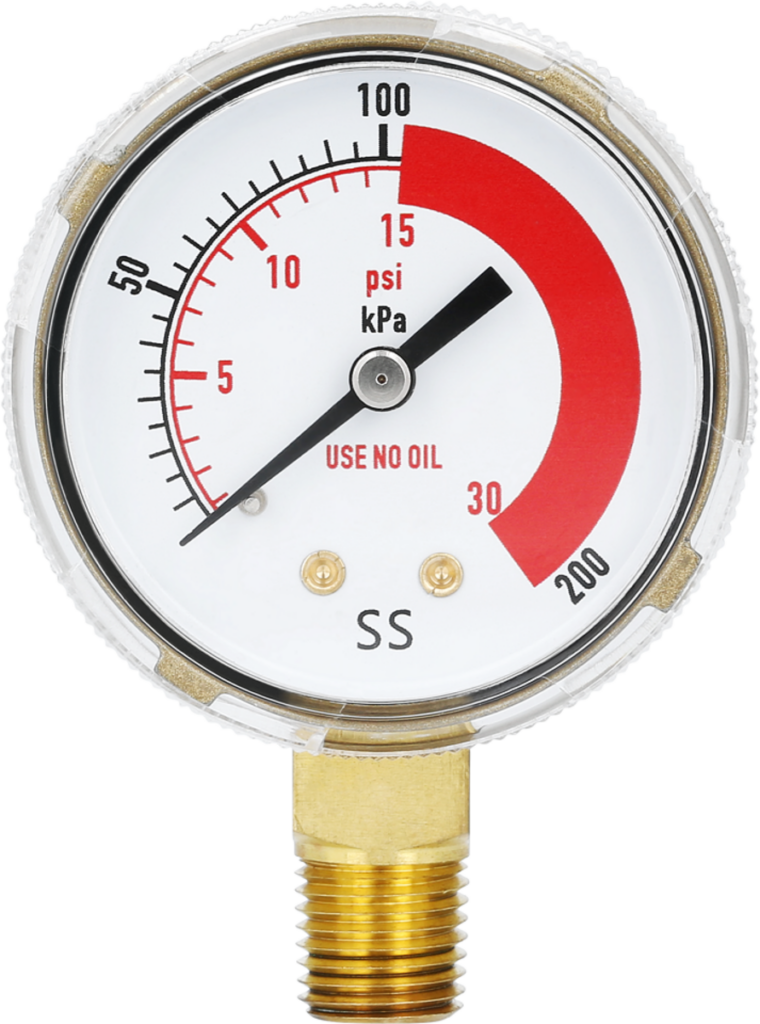
Acetylene becomes unstable and dangerous above 15 psig because its molecular structure, which is a highly energetic triple bond. It becomes prone to violent, self-sustaining decomposition (dissociation) into hydrogen and carbon black. This exothermic reaction generates intense heat, causing the gas to explode without needing oxygen or an external spark.
Key Reasons for Instability Above 15 PSIG:
Molecular Structure: Acetylene (C2H2) holds a high amount of energy in its triple bond.
Violent Decomposition: Beyond 15 psig, acetylene molecules can dissociate spontaneously, releasing significant heat and further increasing pressure, leading to an explosion.
Auto-Ignition: At pressures nearing 30 psi, the gas can reach temperatures high enough to auto-ignite.
Safety Limits: Industry standards (like ANSI) mandate that regulators be capped at 15 psig to prevent this dissociation.
Storage Solution: Acetylene is safely stored in cylinders at high pressures, but only because the cylinders are filled with a porous, acetone-soaked material that keeps the molecules separated.
Laying an acetylene cylinder on its side is unsafe because it allows the internal solvent (acetone) to escape, leading to unstable gas, potential regulator damage, and fire hazards. The cylinder MUST remain upright to keep the acetone covering the porous filler material, preventing the dangerous accumulation of acetylene.
Solvent Loss: Acetylene is dissolved in acetone. Lying down causes the liquid acetone to migrate, which can result in the acetone being released into the regulator and hoses when used.
Acetylene Instability: Without proper solvent coverage, the acetylene becomes unstable and can decompose, leading to high-pressure pockets inside the cylinder.
Damage to Equipment: Acetone can degrade hoses and destroy seals inside regulators, causing leaks.