
Ammonia release results in facility evacuation and temporary shutdown (CUI)

Pipe leak picture 1

Incident overview

An ammonia release occurred in the mezzanine area at an industrial food processing facility, which resulted in the evacuation of the facility and temporary shutdown of the ammonia plant.
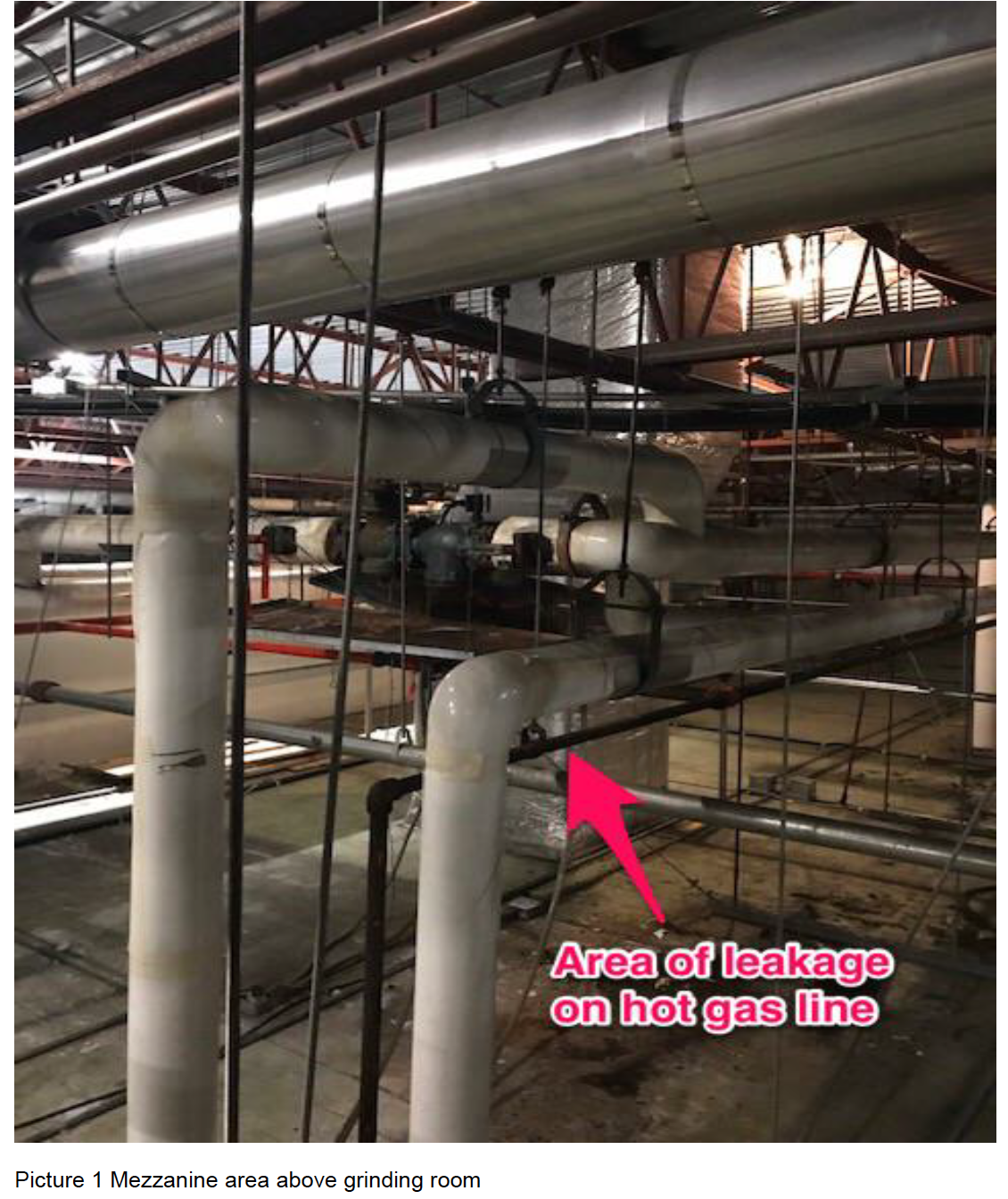
Pipe leak picture 1

Site, system, and components

The industrial food processing facility has designated refrigerated rooms to keep food from spoiling.  During a refrigeration cooling cycle, liquid ammonia travels through piping to an evaporator. The evaporator is part of the refrigeration system designed to produce the refrigeration by vaporization. Frost build-up occurs as a result of the vaporization effect on the evaporator coils which obstructs the flow and volume of air required to cool the space. Hot ammonia gas is piped to the evaporator which is designed to defrost the evaporator coils during a defrost cycle. Refrigerant piping is insulated to increase thermal efficiency which may include a vapor barrier type of insulation on certain applications to protect against surface condensation and ice buildup.


Failure scenario(s)

During an evaporator defrost cycle, condensation formed on the hot gas line pipe.  A section of hot gas pipe was insulated with a fiberglass material that did not have a
vapor barrier and retained the moisture from condensation that was occurring during the defrost cycle.

The fiberglass insulation material maintained a wet saturated condition that created an environment of corrosion attack from the contact of moisture to the carbon steel
pipe.  The slow process of the insulation absorbing the condensate created by the hot gas line during the defrost cycle caused thinning and degradation of the metal from the effects of corrosion. Over time, this caused an opening in the wall of the pipe where ammonia was able to escape to the space. (see picture 3&4 below)

Pipe Leak Pic 3  Pipe Leak Pic4


Facts and evidence

Contractor Witness statement

  • The contractor stated that the original pipe was painted red to color code the hot gas line.
  • The contractor removed insulation and stated the insulation was heavy in weight from the absorption of moisture.
  • Fiberglass insulation not usually applied to ammonia systems in cold environments.
  • Other hot gas lines that serve other evaporators in the building have a Styrofoam vapor barrier type of insulation which protects against condensation and
    moisture absorption.
  • Calculated amount of ammonia released from the system was 125lbs.
  • The contractor stated that when the system was started up for testing after repairs and new hot gas pipe installed that condensate formed on the line before new insulation with vapor barrier was applied. Water droplets formed on the pipe which dripped on the ground, confirming that the line, if not insulated, formed condensation.

Contractor safety bulletin hazard alert

  • The contractor that maintains the facility issued a company internal safety bulletin that indicated similar issues observed at other facilities they service.
  • There is a chance that ammonia refrigeration piping systems that have fiberglass insulation pose potential risks from corrosion in cold environments.

Company incident report

  • Piping installed in 1996.
  • Non-insulated lines are inspected monthly/annually.
  • Insulated lines likely have not been inspected since installation.
  • Moisture underneath the insulation is unable to be identified by visual inspection.

Pictures

  • Location of the leak in the mezzanine area (see picture 1)
  • Corroded pipe (see pictures 3&4)
  • Pipe hangers are of similar material to the pipe. (see picture 2)
  • Pipe hangers were also corroded and were enclosed within the insulation. (see picture 1)
  • Area of leak showed signs of metal thinning compared to the rest of the line. (see picture 2)
  • Pinhole leak size of approximately 4mm diameter at the bottom end of the pipe. (See picture 4)
  • Hot gas line in question was insulated using fiberglass insulation.
  • Removed insulation had signs of rust and metal flakes from pipe on the inside of the insulation. See picture 5

Pipe Leak Pic2 

Pipe Leak Pic5

Scroll to Top