
Bonnet gasket leaking from chiller isolation valve to oil pot (10 pound release)

Isolation Valve 43

Incident overview

The bonnet gasket on the isolation valve between the brine chiller and the oil pot leaked approximately 10 lbs ammonia into the mechanical room. Two (2) refrigeration technicians had completed draining oil from the oil pot and when the isolation valve was closed the bonnet gasket leaked ammonia into the brine chiller insulation. The ammonia detection alarm did NOT (it was turned off as normal practice – but not in the SOP!) activate and the arena was closed to the public at the time of the event.
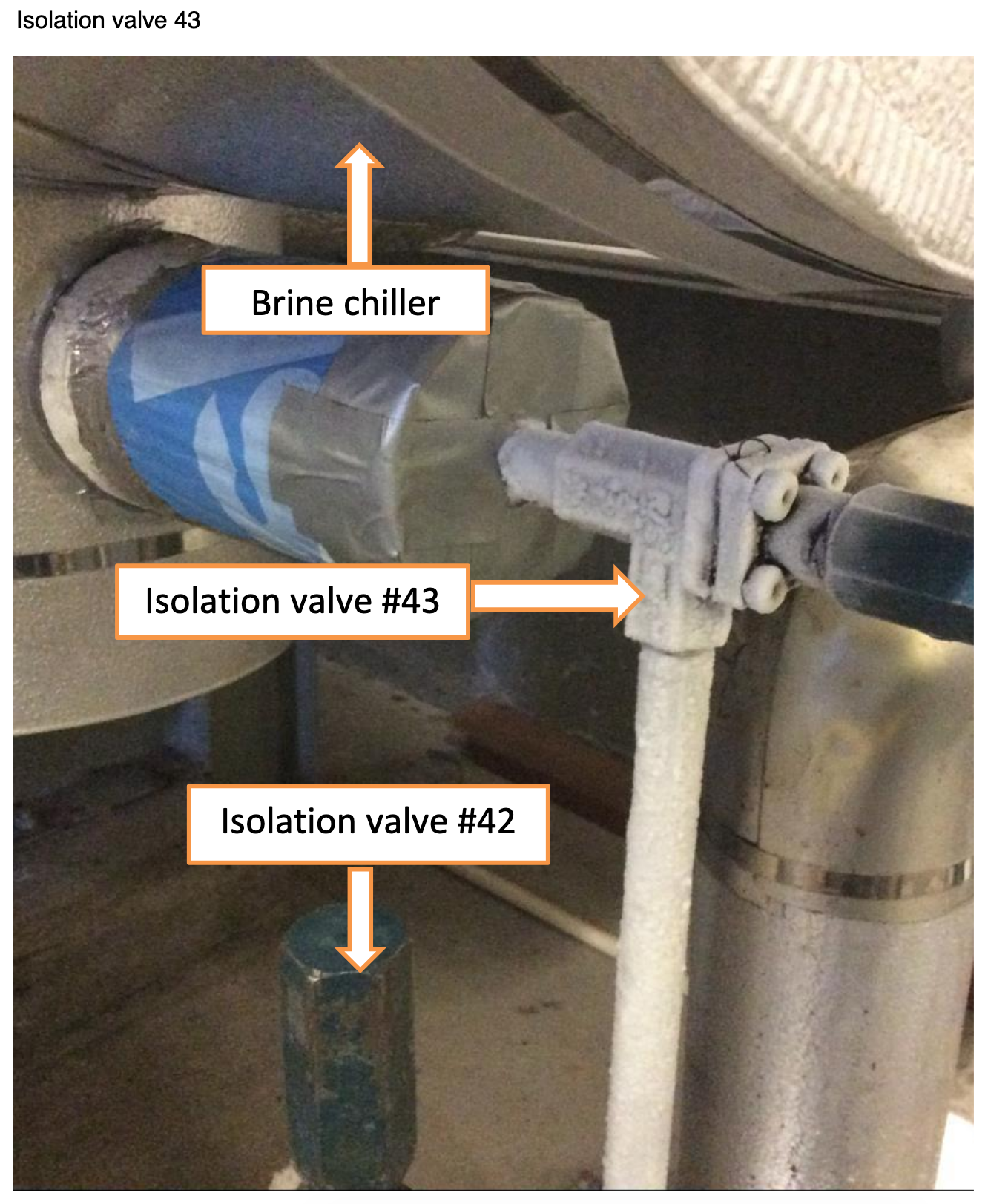
Isolation Valve 43

Site, system, and components

The refrigerant plant is an indirect closed surface system, critically charged, risk assessed public assembly arena using R717 ammonia as the refrigerant. There are two
compressors totaling 119kw. Oil draining of the brine chiller through the oil pot is part of the regular maintenance occurring 3 times per year.


Failure scenario(s)

The bonnet gasket on isolation valve #43 between the brine chiller and the oil pot leaked ammonia due to the loose bonnet bolts which caused the bonnet gasket to
leak liquid ammonia. Isolation valve #43 is usually coated with built-up ice which requires additional force to operate.


Facts and evidence

At approximately 12:30 pm, two refrigeration technicians completed draining oil from the oil pot from the brine chiller. When isolation valve #43 was closed liquid ammonia leaked from the bonnet gasket.

Ammonia also gathered into the surrounding insulation which became saturated with ammonia gas.

When the employees smelled a strong presence of ammonia the plant was shut down, the ventilation fans were turned on to high, the mechanical room was evacuated, and the fire department and refrigeration contractor were called. The plant was closed to the public at the time of the incident.

The ammonia detector did not activate as it was turned off prior to the employees draining oil

The refrigeration contractor determined that the ammonia leaked from the bonnet gasket. The four bolts that tighten the gasket between the bonnet and the body were loose and required tightening to correct the leak. No leak was determined on the valve stem.

The valve is usually coated with built-up ice and the refrigeration technicians stated that the valve is difficult to operate due to the ice conditions. 

Additional force is usually required to operate the valve which can result in the loosening of the bonnet bolts.

The valve tag had turned green which indicated previous leakage and the refrigeration technicians confirmed that they had detected ammonia previously.

There was NO record of maintenance for the isolation valve

The ammonia detector was turned OFF prior to draining the oil from the oil pot to avoid nuisance alarms which is NOT part of the written oil draining procedure. With the detector off the ammonia concentration could not be determined.


Causes and contributing factors

It is probable that the contributing factors of isolation valve #43 bonnet gasket leaking was the continuous use of additional force in opening the valve when the valve had
ice build-up, the employees not noticing the leak getting worse over a period of time, and with the ammonia detector turned off during the oil draining procedure the
ammonia levels could not be determined if the ammonia concentration was increasing.


Source: https://www.technicalsafetybc.ca/alerts/ammonia-leaks-refrigerant-plant

Scroll to Top