
Corrosion Under Insulation (CUI) leads to NH3 release

Pipe Pinhole

Incident overview

There were no injuries or property damage due to the Ammonia release from the pinhole in the 1” piping to the Hydro Cooler Surge Drum. The Ammonia vapor set the leak detector on at 50 ppm which activated the alarms. The Ammonia Vapor was drawn in from the outside of the building where the leak occurred by the inlet air louvers by the continuous vent fan. The affected area of the 1” piping to the Surge Drum was isolated by a valve and the Refrigeration Compressor Shutdown. The area of piping was covered by insulation and stripped back to expose the pinhole in the pipe. The local BSO was contacted for inspection with approval to replace piping by pressure welding the joints.
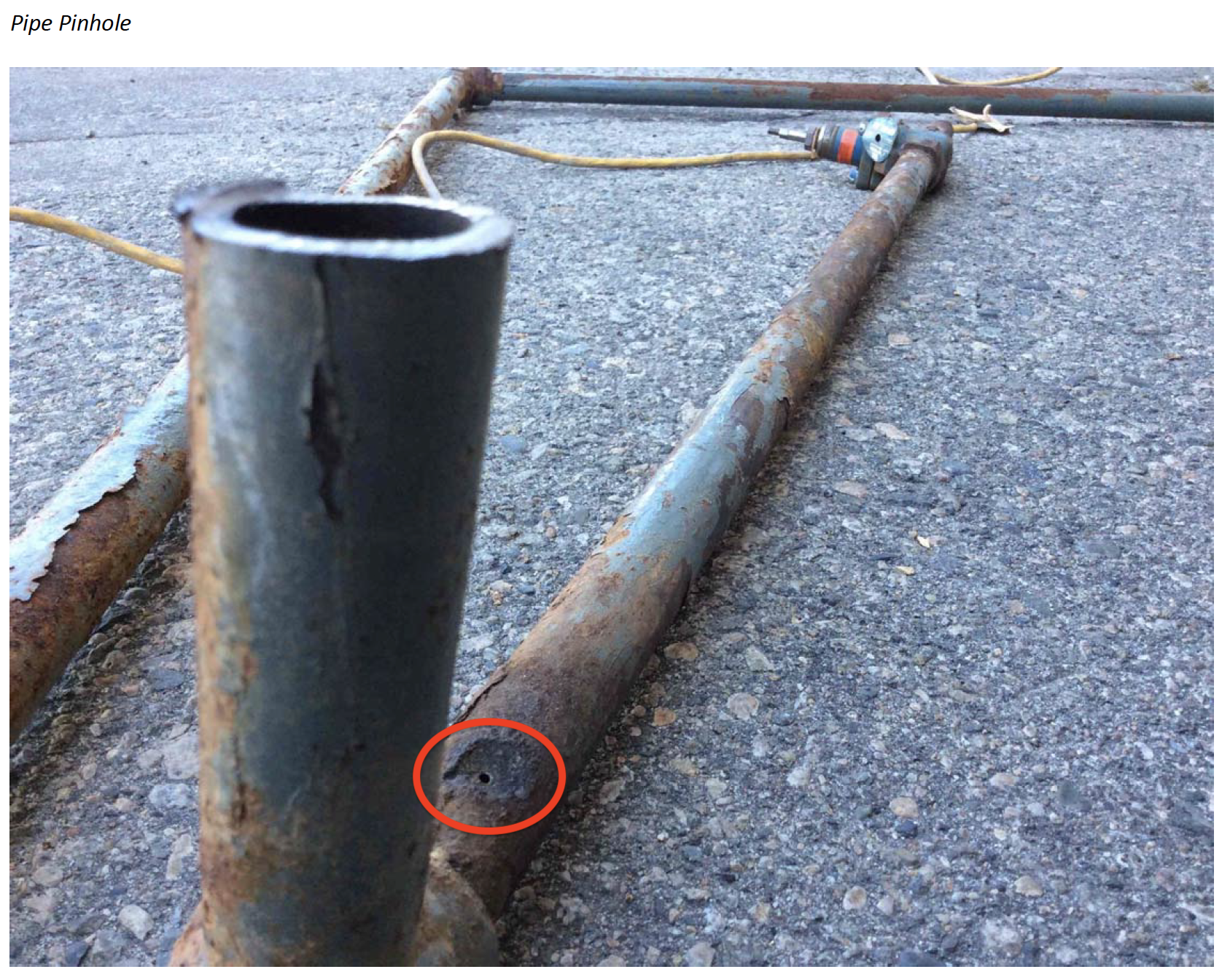
Pipe Pinhole

Site, system and components

Commercial cooling warehouse Fruit Packing plant. Piping filled with Ammonia (NH3) has some piping flowing along the outside of the building. The 1″ NPS supply line at the hydrocooler surge drum changes state from a gas to a liquid. The Liquid piping line freezes the outside of the piping during operation. When the Refrigerator Compressor is shutdown the piping thaws. The outer layer of the steel piping starts to corrode over time. This is a common and normal operation of a Refrigeration Plant. The Ammonia Leak detector reacted within the set parameters, and set‐off an Alarm at 50 ppm. The machine room air louvers fully opened and the vent fan was at high speed. The liquid valve was manually closed inside the machine room that feeds this hydro‐cooler and the vapor stopped. The Refrigeration Compressor was shut down by the Refrigeration Operator within the normal procedures.


Failure scenario(s)

The conditions of the temperature changes and insulated piping allowed for external corrosion in the piping. Then a pinhole in the pipe occurred and an Ammonia leak resulted.


Facts and evidence

The daily packing of the cherry cooler equipment was in full process with normal conditions.

Ammonia leaked from a pinhole in the 1″ NPS supply line at the hydro‐cooler Surge Drum with an operating pressure of 140 psi. and 50 lbs of Ammonia was released into the atmosphere. The ammonia vapor set off the Ammonia Leak detector at 50 ppm in the machine room, probably drawn through the inlet air louvers by the continuous vent fan.

The area of piping is a liquid Ammonia supply line that runs along the outside of the Building and creates condensation because of the cold temperature of the Ammonia.

There was insulation covering the 1” piping that created corrosion from the outside of the pipe to the inside, this created the pinhole in the piping for a leak to occur.

The area of piping was insulated from the original piping Installation and the cause of (CUI) corrosion under insulation.


Causes and contributing factors

The cold temperatures of the Ammonia liquid supply line that was insulated created condensation between the 1” piping and the insulation. The wet insulation soaked with moisture had no place for drainage and could not dry. In most cases, the Ammonia supply liquid line is exposed and no insulation is required. Most piping is painted to prevent corrosion and maintained over the operating years of the refrigeration plant.


https://www.technicalsafetybc.ca/sites/default/files/BP%205618019.pdf

Scroll to Top