
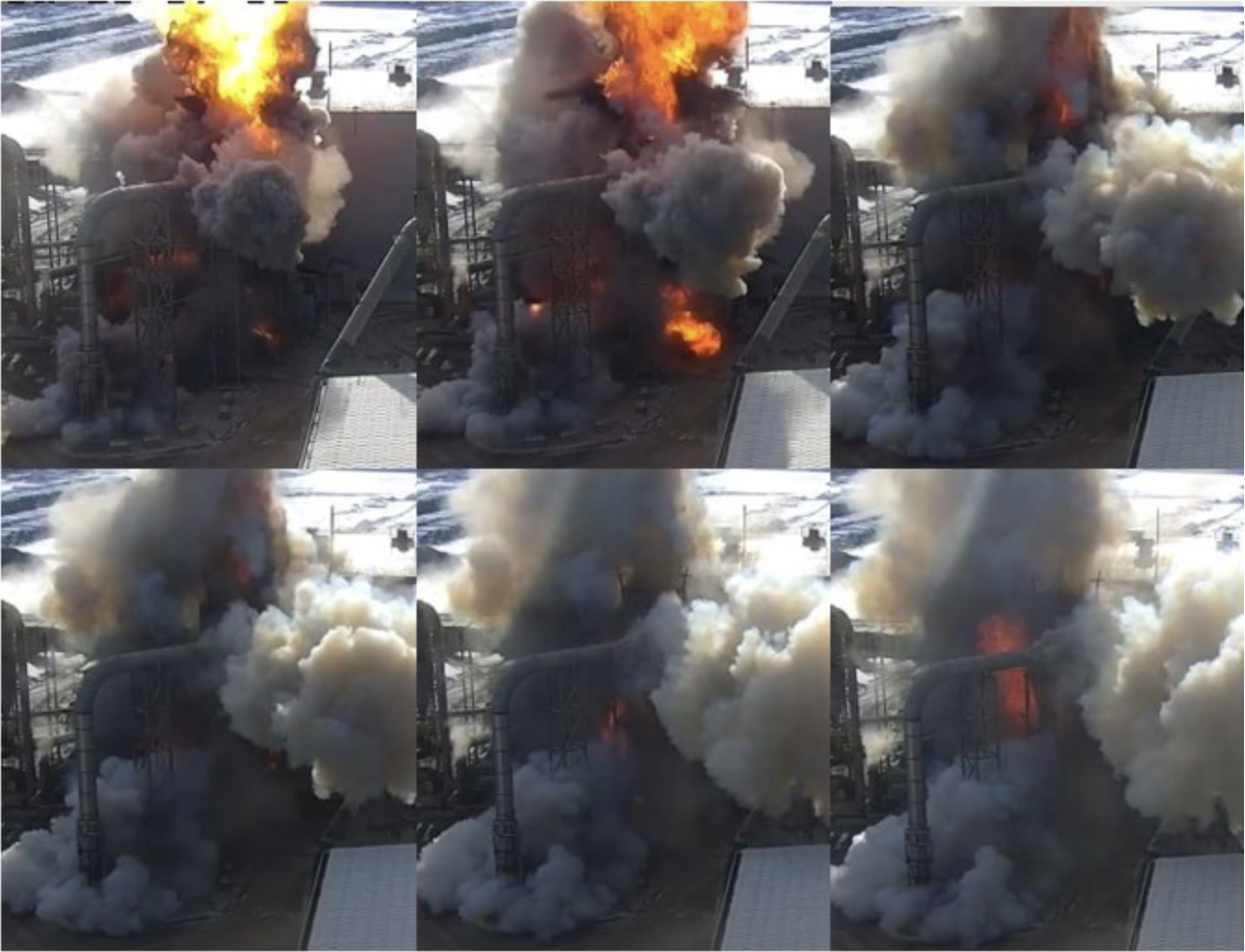
 On November 25, 2020, an explosion and fire occurred at an industrial facility in Houston BC. The facility utilizes a system incorporating a large natural gas-fired air heater to dry wood fiber material for the purpose of wood pellet production. The facility had recently been experiencing issues with operating conditions with the dryer system. The system was producing abnormal temperature spikes, irregular responses to operator controls, and pulses of positive pressure in areas automated to maintain negative pressure conditions. The issues were communicated within the operations team and were being investigated by facility staff and management. Plant operators made decisions to stop and restart the gas burner 3 times within an 18-hour period to alleviate the upset system conditions. During the third burner restart, an explosion occurred approximately 5 minutes after the main burner ignition. The explosion originated at the natural gas-fueled air heater and created a secondary explosion and fireball in the dust collection equipment. Three employees were injured, and the facility sustained major damage during the explosion.
Technical Safety BC conducted an investigation in coordination with WorkSafeBC and other parties.