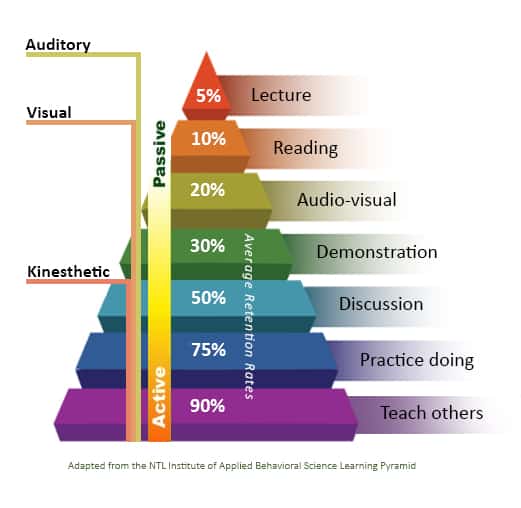
 As safety professionals, we typically spend a great deal of time training workers. However, the time we are given to conduct this training is shrinking; so we need to be SMART in how we develop our content AND deliver it. The “learning pyramid” has been around as long as I have been alive and it is very accurate. The earliest such representation is believed to originate in a 1954 book called Audio-Visual Methods in Teaching. A pyramid model was developed by the National Training Laboratories Institute in the early 1960s.
For more on training delivery methods…