The 2027 edition of NFPA 30 introduces significant structural and technical updates designed to improve clarity, streamline protection requirements, and integrate emerging safety technologies. Here are the primary changes professionals need to know.
Centralized Definitions and Terminology
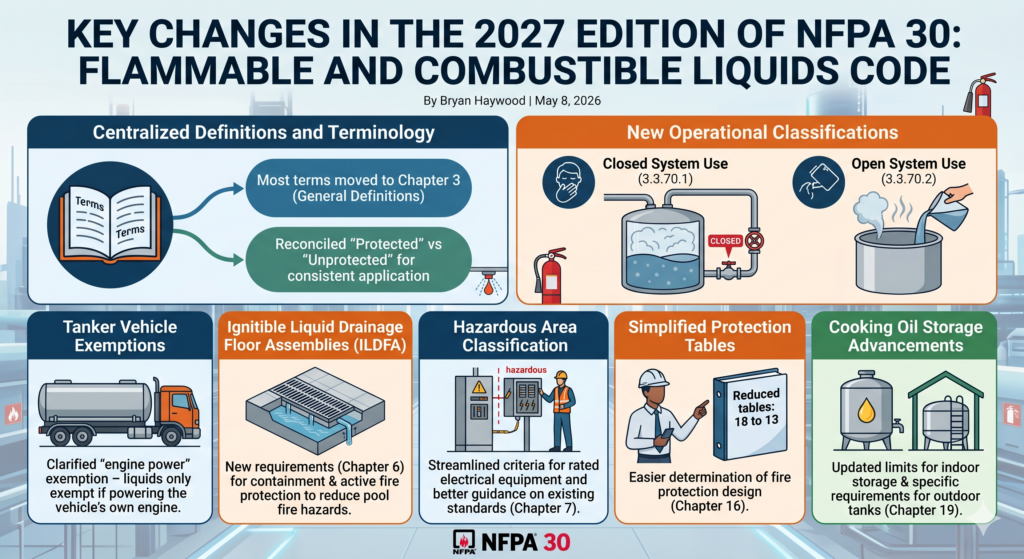
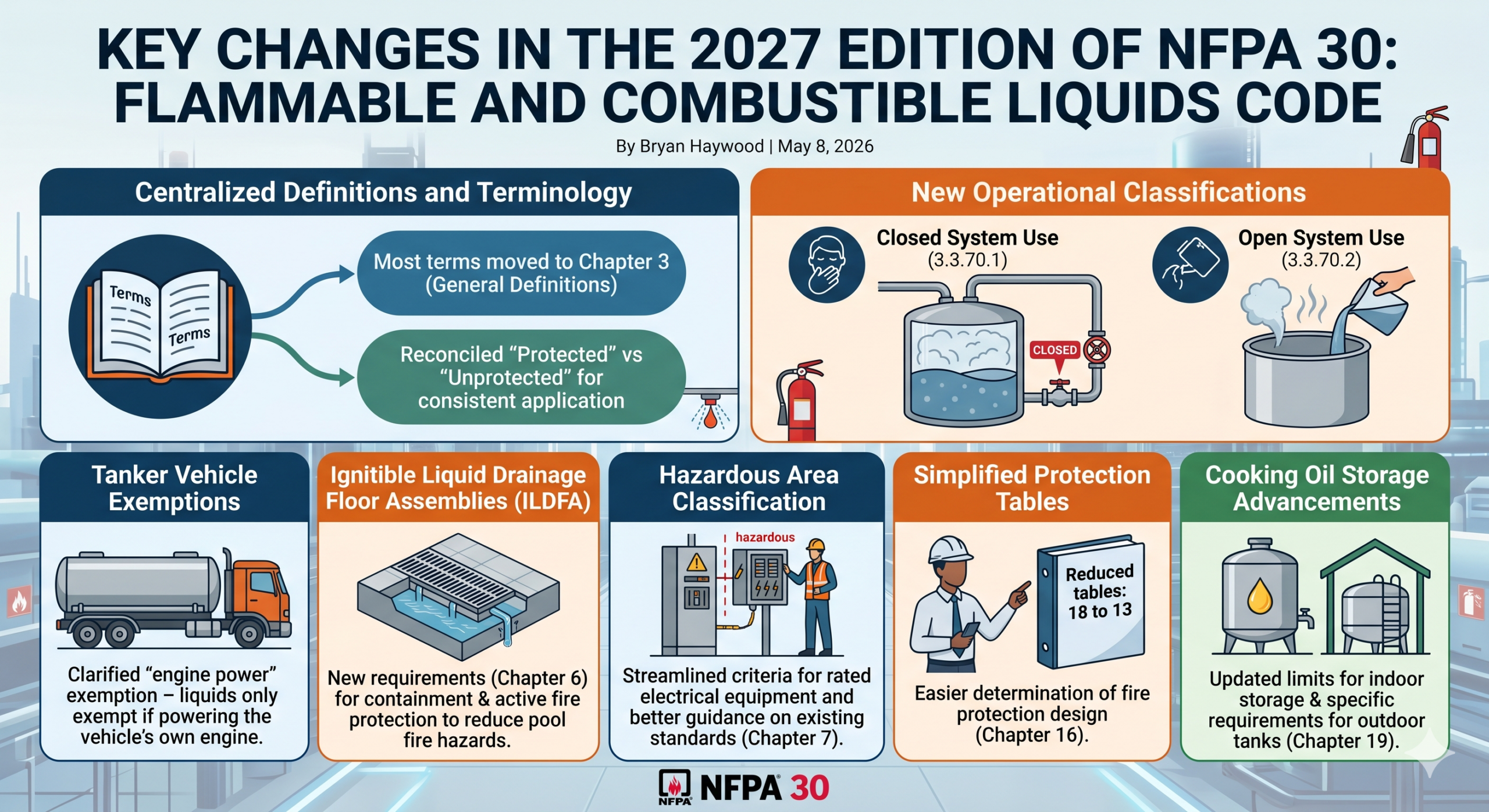
To improve document flow and reduce redundancy, chapter-specific definitions have been eliminated. Most terms have been moved to Chapter 3 (General Definitions) or integrated directly into the relevant technical requirements.
A major focus of this edition was reconciling the terms “protected” and “unprotected.” Previously, these terms held varying interpretations depending on the chapter. The 2027 code provides standardized usage to ensure consistent application across all occupancy and storage types.
New Operational Classifications
The code now explicitly defines how ignitible liquids are handled within a facility, which dictates the required level of fire protection and ventilation.
Closed System Use (3.3.70.1): Operations where liquids remain in vessels that are not exposed to the atmosphere. Vapors are contained within the system during normal operations and are not released into the ambient room environment.

Open System Use (3.3.70.2): Operations where liquids or their vapors are continuously exposed to the atmosphere (e.g., open-top blending or pouring).
Tanker Vehicle Exemptions & Scope
Revisions in Chapters 1 and 9 clarify the “engine power” exemption. The code now explicitly states that ignitible liquids contained in tanks on vehicles (such as tanker trucks) are not exempt from NFPA 30 requirements unless those liquids are being used solely to power the vehicle’s own engine.
Ignitible Liquid Drainage Floor Assemblies (ILDFA)
Chapter 6 introduces new requirements for ILDFA technology. These specialized floor assemblies are designed to provide both containment and active fire protection by quickly removing spilled ignitible liquids from the floor surface, significantly reducing the pool fire hazard in a facility.
Hazardous Area Classification
Chapter 7 has been revised to simplify the classification of electrical areas. The update:
- Streamlines the criteria for determining where rated electrical equipment is mandatory.
- Provides better guidance on utilizing existing industry standards to justify classification levels.
Simplified Protection Tables
In one of the most practical updates for engineers, the protection tables in Chapter 16 have been consolidated. The number of tables has been reduced from eighteen to thirteen, making it easier to determine the correct fire protection design (such as sprinkler density and container orientation) for stored liquids.
Cooking Oil Storage Advancements
Revisions in Chapter 19 address the growing use of bulk cooking oil systems. These updates help both end-users and AHJs (Authorities Having Jurisdiction) interpret:
- Maximum quantity limits for indoor storage.
- Specific safety requirements for outdoor cooking oil storage tanks.