
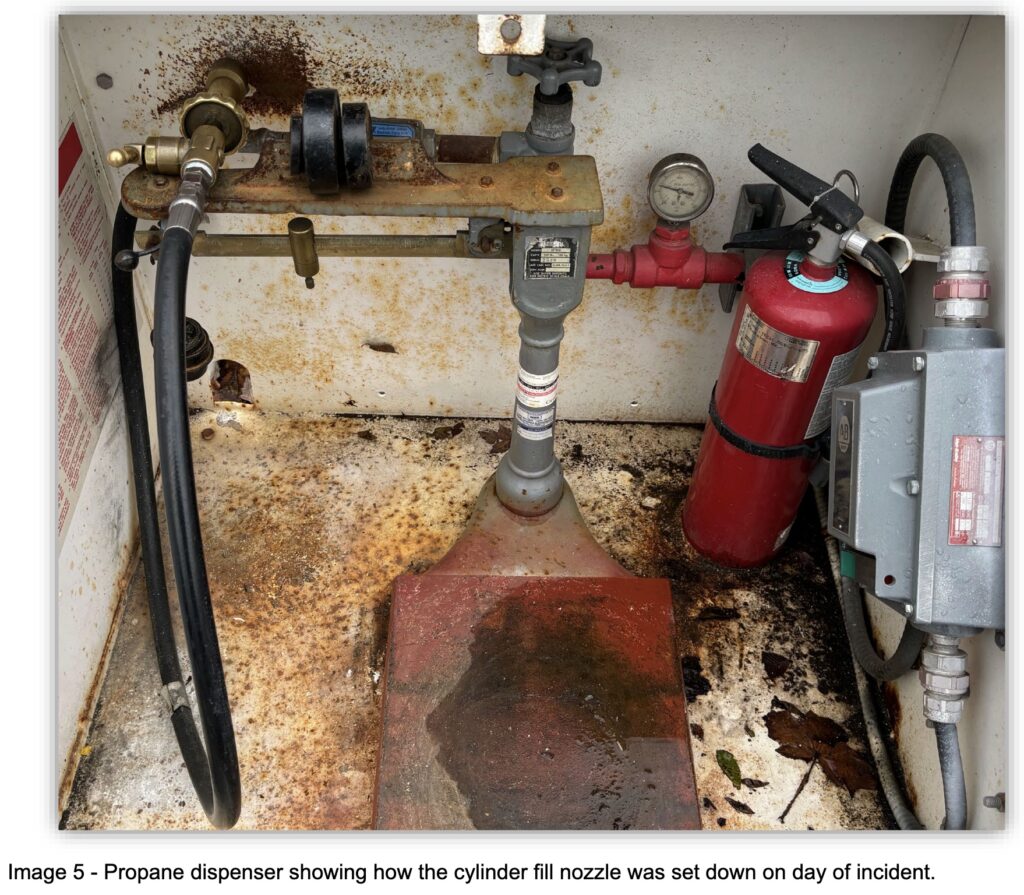
After filling a propane cylinder at a service station, the attendant placed the filling nozzle on top of the propane piping to hand the cylinder to the customer. The nozzle dropped. The impact with the ground reopened the control valve and resulted in an uncontrolled release of liquid propane. The dispenser lacked the required excess flow valve to control or slow the propane flow. The attendant was able to shut off the propane flow to the dispenser, and the propane eventually dissipated before coming into contact with any source of ignition.
When propane cylinders are filled, liquid propane is pumped through the propane piping system into the filler nozzle. Propane dispensers are required to be equipped with an excess flow valve designed to stop the flow of propane should an uncontrolled release of propane occur at any time during the filling process.
Propane is typically used as a vapour but stored and transferred as a liquid. Liquid propane expands 270 times in volume when it vaporises. The propane cylinder fill system uses a pump to draw liquid propane from a 1000 US Water Gallon (USWG) storage tank, pumping it through a system of piping and valving to a delivery hose and cylinder fill nozzle which transfers the liquid propane into propane cylinders to fill them.
The liquid propane outlet in the storage tank used to supply liquid to the pump has an internal safety control (ISC) shutoff valve installed in it. The operation of the ISC valve is controlled with a manual actuator located in the cylinder fill cabinet. Excess flow valves are safety valves used in propane filling systems. They are designed to stop the flow of fuel and protect against leaks in the event of a pipe break or hose rupture. They are piped inline, are directional, and permit flow of liquid or gas in both directions, but only protect against excessive flow in one direction. They use a spring-loaded disk that closes when excessive flow is sensed, closing off the main flow of fuel (Image 5 and Image 6). The discs have a small hole to allow for pressure to equalize if the valve activates. When pressure is equalized on both sides of the valve, the spring will reset the disc, allowing for flow again. Excess flow valves come in a variety of flow rates and must be properly sized to protect against the anticipated flow rate of the downstream piping or hoses. The CSA B149.2 propane gas code states that any line utilized for propane flow shall have a flow rate greater than the design flow rate of the excess-flow valve protecting the line.
The propane cylinder fill hose uses a threaded nozzle and a quick-acting valve, which allows flow of fuel when the valve handle is raised. When the handle is raised, it remains open on its own until it is manually closed.
Container refill centers are required to be equipped with a clearly identified and readily accessible means to shut off the propane system and electrical power to the propane pump and propane dispenser during an emergency. Gas code states that propane shall only be transferred from one container to another by a person who is the holder of a certificate recognized by the authority having jurisdiction.
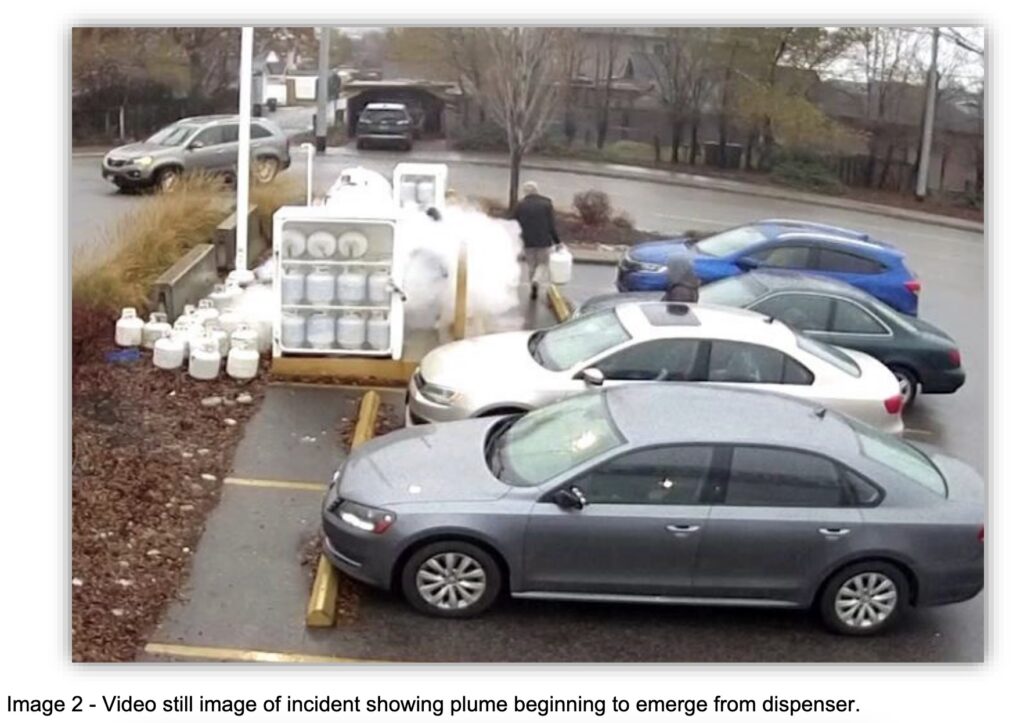
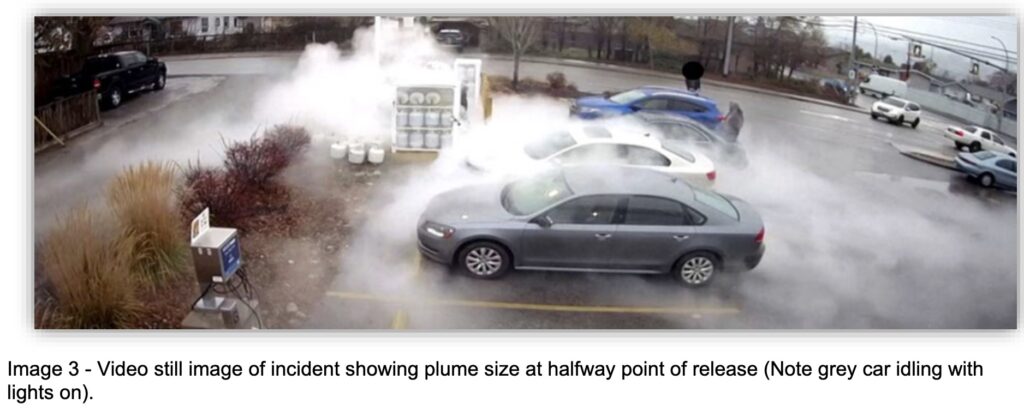
Security camera footage
- The attendant was filling a tank and setting down the propane filling nozzle before turning to give the customer their propane cylinder.
- The attendant then turned back to the dispenser and attempted to stop the flow of propane from the tank, which was obscured by the plume of propane vapor.
- The release occurred for roughly 40 seconds before the propane was shut off to the dispenser.
- Vehicles were observed idling and driving by near and within the plume of flammable propane vapour.
CLICK HERE for the full report