
This week I received a call from a client who had yet another visit from OSHA regarding COVID-19 complaints, but this time the CSHO was an experienced safety professional who peeled that onion back a few more layers and thus she was recommending a serious violation of HAZCOM related to the COVID-19 safety program. What she found and how she found it is something all facilities should be aware of and managing properly…
As the CSHO was touring the facility, she kept seeing these small bottles at each work station. She recalled the facility stating in the opening conference that each employee was provided their own bottle of hand sanitizer. She noticed each workstation/cube are had one of these bottles:
NOTE: some were pink and some were blue, but they were all these same bottles.
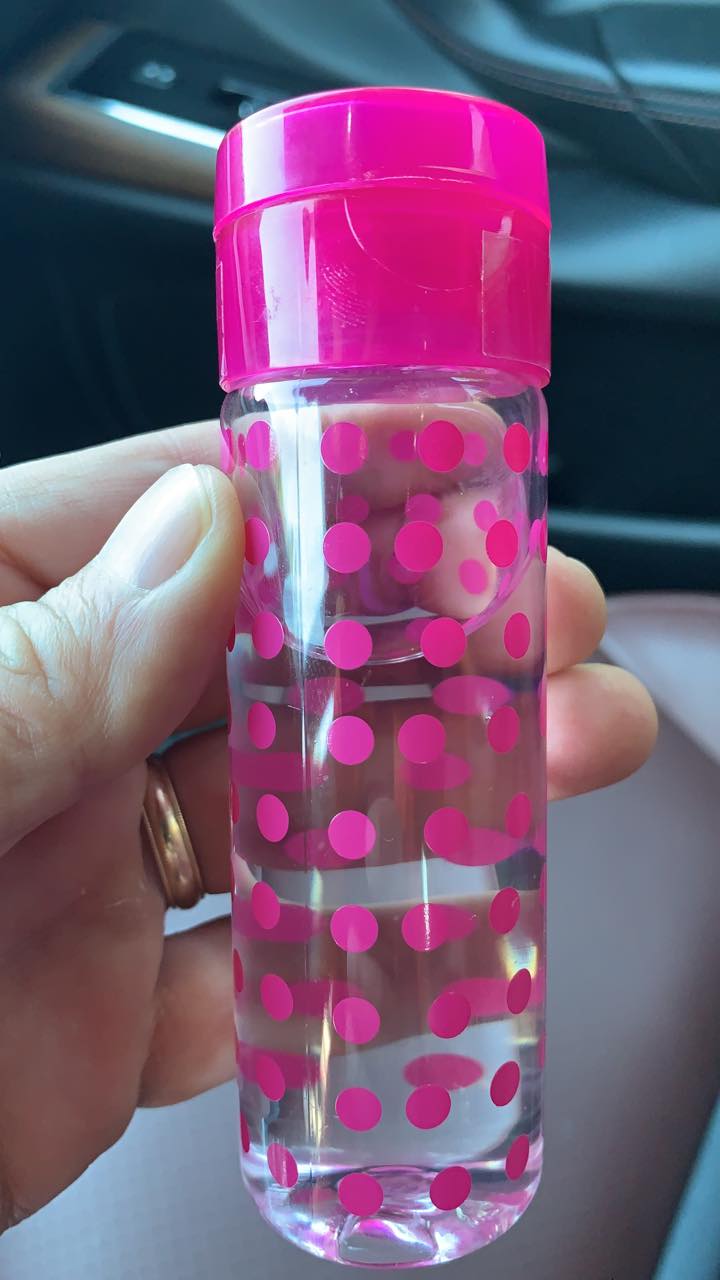
The CSHO just casually asked what was the alcohol used and what percentage was the alcohol in the sanitizer. No one from the facility team accompanying her during her tour knew either answer. This led her to ask to see the original container of hand sanitizer from which these little bottles are filled. They took her to the “parts room” where they found three (3) pallets that contained forty-eight (48) 2-Liter containers EACH of the hand sanitizer. The team stated the CSHO took out her phone and started using her calculator for some reason. Do you know what she was calculating?
It turns out the alcohol used in the hand sanitizer was ethanol – she wanted to be sure it was NOT methanol! But the concentration of the alcohol was 80%; making the hand sanitizer a Category 2 Flammable Liquid. When she saw the three (3) pallets full of this 80% alcohol she immediately shifted from HAZCOM and into Flammable Liquids safety (1910.106). And as I have written about several times, when dealing with these flammable liquids, even when they are hand sanitizers, there are limits we have to work within. The CSHO was trying to establish the amount of Category 2 flammable liquid that was in the room (not a room designed for bulk storage of flammables) to ensure the facility had not exceeded:
1910.106(e)(2)(ii)(b) The quantity of liquid that may be located outside of an inside storage room or storage cabinet in a building or in any one fire area of a building shall not exceed:
…
1910.106(e)(2)(ii)(b)(2) 120 gallons of Category 2, 3, or 4 flammable liquids in containers
I can assure you that she was doing her math to see how many gallons these 2L containers like this hold:
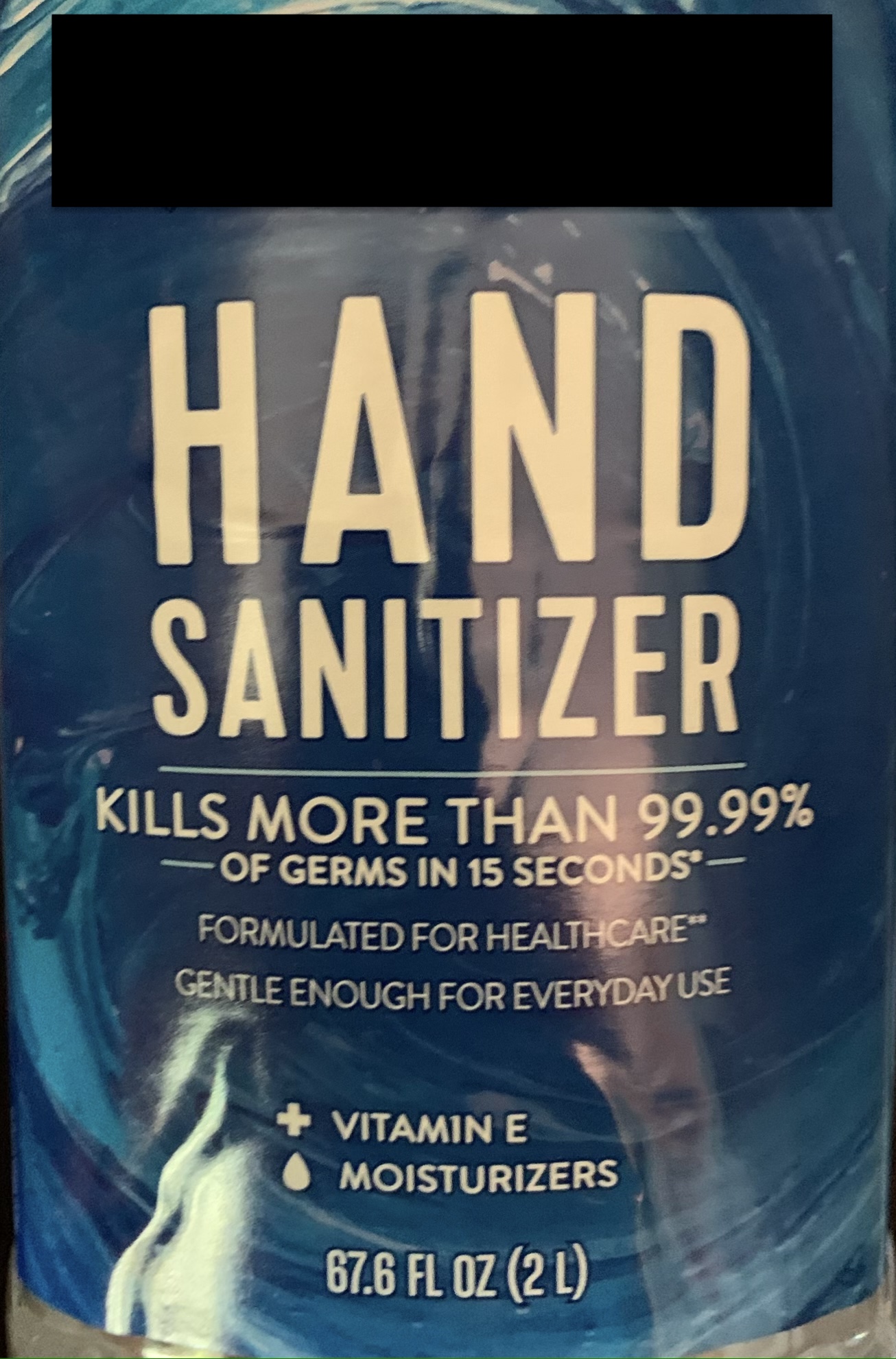
My bet is she was first converting Liters to Gallons. A 2L container is the same as 0.52 gallons. With 144 2L containers of this Category 2 flammable liquid that equates to 75 gallons – well under the 120 gallons allowed. So the ONLY citation she recommended was the HAZCOM labeling violation regarding the small secondary containers.
The lawyers are going to challenge the citation if the AD issues it by using these defenses:
1) 1910.1200(b)(6)(ix) Any consumer product or hazardous substance, as those terms are defined in the Consumer Product Safety Act (15 U.S.C. 2051 et seq.) and Federal Hazardous Substances Act (15 U.S.C. 1261 et seq.) respectively, where the employer can show that it is used in the workplace for the purpose intended by the chemical manufacturer or importer of the product, and the use results in a duration and frequency of exposure which is not greater than the range of exposures that could reasonably be experienced by consumers when used for the purpose intended;
2) 1910.1200(f)(8) The employer is not required to label portable containers into which hazardous chemicals are transferred from labeled containers, and which are intended only for the immediate use of the employee who performs the transfer. For purposes of this section, drugs which are dispensed by a pharmacy to a health care provider for direct administration to a patient are exempted from labeling.
Both of these may have merit, but now that lawyers are involved, either way, this will be a costly compliance error that should have been recognized long before OSHA arrived. And just for those wondering, at the close-out meeting, the CSHO made it perfectly clear that just because the previous CSHO did not find the small bottles is not a defense for the facility.