











In process safety, we spend a lot of time discussing the PRIMARY containment systems; however, our secondary containment systems play a vital role in our PROTECTION and MITIGATION layers of protection. Of course, we want to keep the tiger in its cage, but we also need to be prepared for the day it gets loose, and this is where our secondary containment systems come into play. With all that said, let’s...
Read More
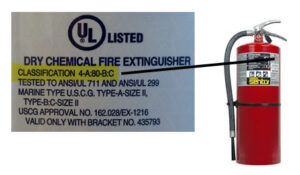
It never ceases to amaze me how businesses will cut corners in fundamental safety protections. Recently, I came across fire extinguishers that were not “approved” by a Nationally Recognized Testing Laboratory (NRTL). This was discovered during a 5-year REVAL PHA after the facility suffered a failure of one of its extinguishers that caused damage to some PSM/RMP piping. The investigation...
Read More
Following the investigation of a natural gas explosion in Loudon County, Virginia, in 1998, the National Transportation Safety Board (NTSB) recommended (Recommendation P-01-002) that PHMSA require that excess flow valves be installed in all new and renewed gas service lines, regardless of a customer’s classification, when the operating conditions are compatible with readily available valves.
Natural...
Read More
When we encounter a manufacturing facility that has been pulled into OSHA’s PSM or EPA’s RMP, we are almost certain to find the same design features for the emergency stop functions (i.e., E-Stops). Most of these facilities are shocked to learn there is a big difference between the location of an E-Stop on a machine or conveyor and one on a hazardous materials process.
If we think about...
Read More
I believe in Excess Flow Valves and Check Valves, even though I have seen them fail more often than work as hoped. However, these failures are “human failures” in the incorrect design (e.g., sizing and placement) of the process where these valves are utilized. The valves are highly reliable when they are DESIGNED, INSTALLED, and TESTED per the manufacturer’s requirements/recommendations....
Read More
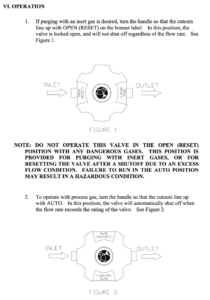
Some Excess Flow Valves (EXFVs) models can be placed into a position that would render them useless in their intended function. I have encountered this scenario more than once during my PHAs, Investigations, Audits, etc. There are not many manufacturers that incorporate this failure mode in their designs, but there a couple that do; and for those that do, I HIGHLY RECOMMEND these valves be placed into...
Read More
What prevents excess flow valves from closing when the line breaks? There are plenty of things that can prevent EFVs from operating as designed. These include design failures, mechanical failures due to poor or no maintenance, and “human failures.”
1. Not a Clean Break
For one or a combination of the following reasons, excess flow valves have been prevented from closing...
Read More
I am aware that NFPA 58 applies to LPG installations; however, with the “dumbing-down” of many RAGAGEPs, I am always looking for the BEST DESIGN for my process safety functions. I do wish the IFC would define/quantify where remote activation stations must be, as they did decades ago.
But for now, I use NFPA 58, which states:
6.13.4 Remote Shutdown Station.
6.13.4.1 At least one...
Read More
Is your facility using Building Information Signs for emergency responders? This requirement from the International Fire Code (IFC) is rarely adopted by states, but this is a great thing, especially when coupled with a Knox-Box access. Here is how the Fire Service – Building Information Signs are supposed to look and say…
J101.1 SCOPE
New buildings shall have a building...
Read More
The simple explanation of what is happening…
Styrene (Stabilized) is shipped with an “inhibitor.” This inhibitor is TIME and TEMPERATURE dependent. Should the inhibitor expire and/or the solution exceed its safe temperature, the inhibitor weakens, and the Styrene will begin to polymerize (chemical reaction), which is an EXOTHERMIC reaction with “run-away” potential....
Read More
Once again, a great friend and former colleague invited me to discuss safety and culture at his new workplace with his C-Suite team. As usual, he was spot on in his thinking about safety. He has been with this organization for nine months and has recognized that in those nine months, every aspect of the business has been discussed, except…
Yep, Safety!
This is a publically traded company...
Read More
This is one of my favorite videos to use in my SMS Training courses (with approval from HR). Some of the scenes are over-the-top fake graphic scenes, but they are so over-the-top that I hope adults can handle them.
The video mocks Lagging Indicators and Pizza Parties, which most of us have come to recognize as ways to manage safety poorly. Unfortunately, this still happens in many workplaces (e.g.,...
Read More