











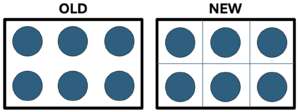
In the old days, the secondary containment around flammable liquid storage tanks could be a single system in which all the storage tanks sat. Today, that is NOT the case. Both NPFA 30 and IFC Chapter 57 require secondary containment to be designed so that an LOPC from one tank cannot affect the other tanks around it. They use the word “subdivided” to specify this.
…
HomeRead...
Read More

If your team is focused on an event’s probability or likelihood, you’re NOT doing SIF!
The Serious Injuries and Fatalities (SIF) model is intended to IDENTIFY events that have opportunities to cause life-altering injuries and death. And yes, most of these will (hopefully) have LOW frequencies/probabilities. So, to justify NOT responding to these LOW frequency – HIGH severity events...
Read More
The purpose of barrier[/controls/safeguards] management is to make the kind of implicit controls explicit: to be clear about exactly
what controls are relied on to prevent incidents,
to understand their characteristics,
to have an understanding of how reliable they can be expected to be, and
to know what needs to be done to ensure the controls are implemented and continue to function throughout...
Read More
Eight people, including five (5) contract workers and three (3) fire service personnel, were admitted to the hospital after they inhaled chlorine gas following a leakage at a water treatment plant.
…
HomeRead More »
Read More
Respondent operated a facility (the “Facility”) to manufacture chlorine, bleach, and hydrochloric acid. Respondent produced, used, or stored more than 2,500 pounds of chlorine at the Facility and was subject to the requirements of CAA § 112(r)(7). Respondent produced, used, or stored hydrogen at the Facility and was subject to the requirements of CAA § 112(r)(1). Respondent was subject to Program 3...
Read More
In terms of Fire and Building Codes, we have five (5) recognized areas associated with handling hazardous materials. We refer to these high-hazard areas/occupancies as “Group H”. High-hazard Group H occupancy includes, among others, the use of a building or structure, or a portion thereof, that involves the manufacturing, processing, generation or storage of materials that constitute...
Read More
During a recent design review, we encountered some questionable “normal breathing” designs. I have always used the simplest of tests to ensure the tank has ADEQUATE venting during filling and emptying. Although OSHA allows the designer to use API 2000 (1968) or “other accepted standards,” the simplest test is that the VENTING capability MUST be as large as the filling or withdrawal...
Read More
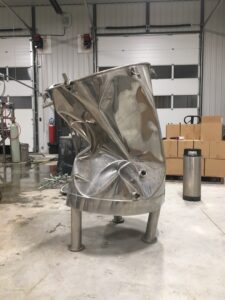
“We were doing some cleaning at the end of yesterday. I boiled some water in the HLT to pump through the heat exchanger. At the end of the day, there were 40-50 gal left in our 3bbl HLT. I turned off the heat and went home for the night. The next morning, I came into the brewery to find an imploded HLT. I had clamped the lid on to keep humidity down in the building, and the cooling air/water...
Read More
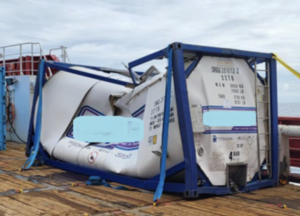
An ISO container, partly filled with Monoethylene Glycol (MEG), imploded on the back deck of a ship, spilling around two cubic meters (528 gallons) of MEG onto the deck and to sea and causing unrepairable damage to the tank itself. There were no injuries. The tank was a 26-cubic-meter tank containing ten cubic meters (6600 gallons) of MEG.
The implosion happened due to a vacuum created inside the tank...
Read More
OSHA has again found a large food manufacturer with a history of hazardous workplace safety practices in violation of dozens of safety and health hazards.
The producer of glass-pack, canned, frozen, refrigerated, freeze-dried, and snack food products under it’s brand, as well as other private labels, also operates eight other manufacturing plants, including five in Pennsylvania and one each in...
Read More
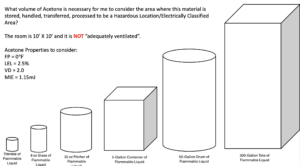
One mistake many businesses make is their assumptions about how their flammable liquids will behave once they are outside of their primary containment. I have seen companies spend millions of dollars to classify an area as a HAZLOC when it was not even close to being necessary, and I have seen some PSM businesses claim their 70,000-pound process does not need to be a HAZLOC.
One of my...
Read More
I will again reference my 30 years of teaching emergency response courses and the surprising lack of hazard awareness so many “certified technicians” lack. The one that get a lot of attention is the relationship between TOXIC and PHYSICAL hazards when the HAZMAT is both toxic and flammable. I have shared many tips over the years, but the following is one that every safety professional...
Read More