








I may be biased, but you would be hard-pressed to find a bigger fan and believer in TapRoot®. I love TapRoot®, but I reserve it for significant incidents.
5-Why’s is an excellent tool for less mature safety management systems (SMS). As I like to say, don’t blame the tool – look to the user for failures in applying/utilizing the tool. Rarely do I stop at 5-Whys when I am using the tool. ...
Read More
On August 27, 2016, at about 8:26 a.m., a railroad tank car sustained a 42-inch long crack in its tank shell shortly after being loaded with 178,400 pounds of liquefied compressed chlorine at the Axiall Corporation Natrium plant in New Martinsville, West Virginia. Over the next 2.5 hours, the entire 178,400-pound chlorine load was released, forming a large vapor cloud that migrated south along the...
Read More
As I prepare to implement a Behavior-Based Observation Process (BBOP) for a client, I am dusting off some of my old training content and postings. I had used this material since 1994 when I implemented Actively Caring as my first BBOP, and it is still my favorite model today. Although we have blended some other features into our own site-specific BBOP(s), the core of our BBOP is still entrenched...
Read More
Some years ago, a colleague asked me to help coach a management team at one of her locations that was trying hard in safety, but she feared they were going down a path that we had experienced decades earlier when we worked together; her as a Chem Ops unit manager and me as the site safety manager. In those days, leading indicators were just becoming a thing, and the old traditional “safety...
Read More
I think most businesses are familiar with “backup power” sources, from battery packs on exit signs and egress lighting to UPSs on servers for their IT needs. But for facilities that store, handle, and process hazardous materials AND with safety systems associated with the storage, handling, and processing of those HAZMATs, there are some additional requirements for Emergency and standby...
Read More
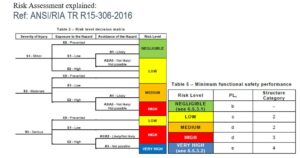
Information regarding OSHA Minor Servicing while working in General Industry.
The OSHA standard states:
1910.147(a)(2)(ii)(B)An employee is required to place any part of their body into an area on a machine or piece of equipment where work is performed upon the material being processed (point of operation) or where an associated danger zone exists during a machine operating cycle.
Note: Exception to...
Read More
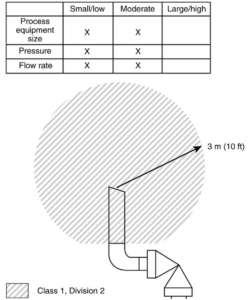
NFPA 497 has added TWO (2) NEW figures to establish classification areas around Pressure Relief Valve (PRV) vents. The classification areas of the sources in several figures in Section 5.11 have been removed to eliminate confusion. This change is significant in two (2) ways:
…
HomeRead More »
Read More
For the 2024 edition:
…
HomeRead More »
Read More
For the 2024 edition:
…
HomeRead More »
Read More
Several major revisions have been made to the 2024 edition of NFPA 58, Liquefied Petroleum Gas Code.
…
HomeRead More »
Read More
The 2024 edition includes a revision to change written hot work permits to documented hot work permits to address the use of new digital platforms used to issue permits. The biggest change is…
A requirement has also been added to allow the duration of the fire watch to be reduced to…
…
HomeRead More »
Read More
The 2024 edition includes the following changes:
…
HomeRead More »
Read More