













This is an excellent presentation by John S. Carroll, MIT Sloan School of Management at the NTSB Public Forum on Transportation Safety: Enhancing Safety Culture. His presentation does an excellent job of explaining where the term “safety culture” originated and how organizations shape their culture of safety.
CLICK HERE for the presentation
Read More
PLEASE READ NOW AND TAKE ACTION
Dear MSA Customer,
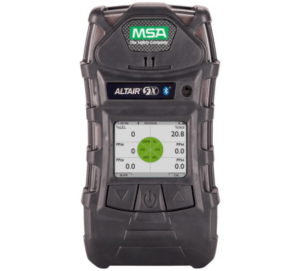
MSA is issuing this User Safety Notice to inform you of a PROCEDURAL UPDATE regarding usage of the Altair 5X PID gas detector.
MSA has determined that PID sensors manufactured from March 2020 to and including June 2023 may not respond to gas after being turned on due to the lamp of the sensor not lighting upon startup and the Altair 5X PID will not...
Read More
We don’t see this often, but the number of facilities that do not know of this fundamental OSHA/IFC/NFPA requirement for their fixed LPG storage tank(s) is sad. How one defines “high water table or flood conditions” is open for discussion as no one has reallty DEFINED or QUANTIFIED the phrase as of yet. The video below is most likely just a residential tank caught up in...
Read More

I keep using this tragedy as a teaching/learning tool. This officer was convicted and sentenced to 4-years in prison for aiding and abetting manslaughter for holding back the crowd during George Floyd’s murder.
TAKE THE POLITICS OUT OF IT and ask….
Why didn’t he step in and do something?
This is the difference between “latent organizational failures” and “active failures.”
For example, suppose a person...
Read More
The conditions that increase the risk of violations can differ from those that produce errors. Violations are often associated with time pressure, poor procedures, poor supervision, and shortages of equipment or spares. The table below shows some reasons people gave for not following procedures in one study.
…
HomeRead More »
Read More
Some error-producing conditions are more powerful than others. The table below shows estimates of how different conditions create the risk of error. Poor instructions or procedures are said to triple the rate of error. Lack of experience with the task is estimated to result in a 17-fold increase in the risk of error.
…
HomeRead More »
Read More
If we aim to learn from the error and to lessen the chances of it happening again, we need to consider the organizational context that surrounds the person’s action, including equipment, procedures, people, the environment, and management.
There are two aspects to managing error:
…
HomeRead More »
Read More
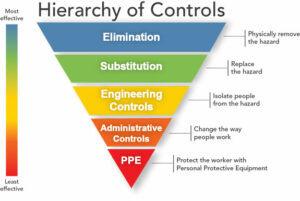
When an organization has identified hazards and established the risks those hazards pose, it must have a process(es) in place to ELIMINATE hazards, or where this is not possible, to reduce the risks associated with the identified hazard(s), using the hierarchy of controls.
At the top of the hierarchy of controls is ELIMINATION. This is the most effective way of managing risks associated with identified...
Read More
Earlier this year, I wrote about using the old ANSI/ASSE Z590.2-2003 (R2012) Criteria for Establishing the Scope and Functions of the Professional Safety Position standard when establishing the scope, function, role(s), and responsibilities of the organization’s safety professionals. This older standard does an excellent job of keeping things simple and provides a nice framework from which...
Read More
“It is important to establish the difference between leadership, which is acquired, and authority, which is assigned. An optimal situation exists when the two are combined. Leadership involves teamwork, and the quality of a leader depends on the success of the leader’s relationship with the team. Leadership skills should be developed for all through proper training; such training is essential...
Read More
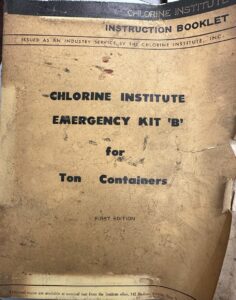
A little trivia/history for the Chlorine/CHLOREP ER fans…
What year was the first Emergency B-Kit available?
Hint: it is 2-weeks older than I am!
Answer below in images…
…
HomeRead More »
Read More
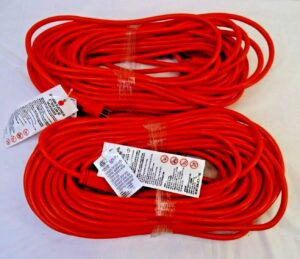
If there is one device that causes more electrical issues in workplaces, it has to be electrical extension cords. There are few audits in our 20+ years of business where we did not find multiple concerns around the use of electrical extension cords. These issues generally center around either their IMPROPER use or the cords being damaged in some way.
One of our sources to write our findings comes...
Read More