












This is from a state OSHA plan that has released its State Emphasis Program (SEP) for Heat-Related Hazards. In this SEP there are some great questions we can ask of our own Heat-Related Injury and Illness Prevention Plans to see if our plan is meeting basic OSHA compliance.
Here are a couple of KEY points to consider:
Is your facility able to measure Dry Bulb Temperature, and are you testing...
Read More
I am sure we could debate this topic all day, but it is a topic that “I do not play well with others” on. The idea is that if we shorten our written compliance programs or SMS elemental programs, it will cause more people to read them and use them more often. I say hogwash to this idea, and I believe in detailed written safety compliance and management programs. And I...
Read More
Every business will eventually reorganize work teams to meet the business’s needs. Sometimes, this will involve laying off workers when previous growth decisions were over-estimated, or the economy pulls back, and demand for products falls. Whatever the reason(s), every business will go through this regularly. But for those businesses that tout “Safety is #1” or...
Read More
I came across this healthcare research paper touting the value of using Root Cause Analysis (RCA) to improve patient safety, with an emphasis on LATENT ORGANIZATIONAL factors that play a role in accidents. There were so many incredible tidbits in the paper that I have summarized them below. Many of you reading this are NOT in healthcare, but this paper explains the benefits of using an...
Read More
An SMS forces an organization to examine its operations and the decisions around those operations.
An SMS allows an organization to adapt to change, increasing complexity, and limited resources.
An SMS promotes the continuous improvement of safety through specific methods to predict hazards from employee reports and data collection. Organizations will then use this information to analyze, assess, and...
Read More
Scenario: In your letter, you state that your client’s driver was driving a company vehicle, on the clock, and traveling on a public roadway.
The driver was traveling between service calls near an intersection when a four-car collision occurred as the result of another car coming from the wrong direction in the same lane.
After the accident occurred, the wrong-way motorist exited his car, shot...
Read More
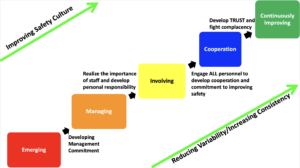
This safety and cultural assessment report documents FRA’s findings, recommendations, and methodologies resulting from the 60-Day Supplemental Safety & Cultural Assessment of Norfolk Southern Railway (NS). The Department of Transportation announced its intent to perform this assessment on March 7, 2023, in response to NS’s safety performance and the East Palestine, Ohio derailment which...
Read More
Admiral Rickover is the Father of Nuclear Safety in the U.S. Navy. He holds the Navy’s record for years of service, having served 60 years (1922 – 1982). He passed away 4 years later at the age of 86.
Admiral Rickover coveted the following “7 Rules” in developing, implementing, and managing his nuclear safety program for the Navy. A lot of businesses could...
Read More
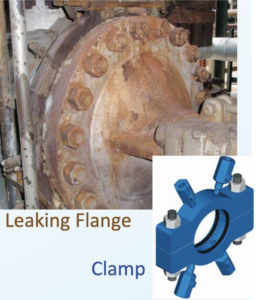
What Happened:
Two contractors re-injected the wrong clamp. The flange bolts failed, and the two contractors involved in the work died in the steam released. In the legal case, the judge focused on the possibility of human error. The company should have anticipated the possibility of this human error and concluded that the site did not sufficiently protect the workers from that.
Humans do make errors...
Read More
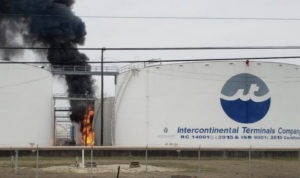
In the world of Human Factors, we have a saying, “failing safely,” which translates into… all humans make mistakes – it’s our job to identify those error/mistake traps and design work to lessen those error opportunities. In Process Safety we used to use the phrase “cascading failures”, which is the opposite of “failing safely.” In a...
Read More
Earlier this year, a member of the SAFTENG FaceBook group posted a question about this type of system being used in a warehouse within the USA. Many of us were caught off guard as it seemed very risky to drop the Oxygen level to 13% in an occupied space, even with all the alarms and such in place. Many of us are familiar with Fixed Systems like the old Halon systems in computer rooms in...
Read More
This is an excellent presentation by John S. Carroll, MIT Sloan School of Management at the NTSB Public Forum on Transportation Safety: Enhancing Safety Culture. His presentation does an excellent job of explaining where the term “safety culture” originated and how organizations shape their culture of safety.
CLICK HERE for the presentation
Read More