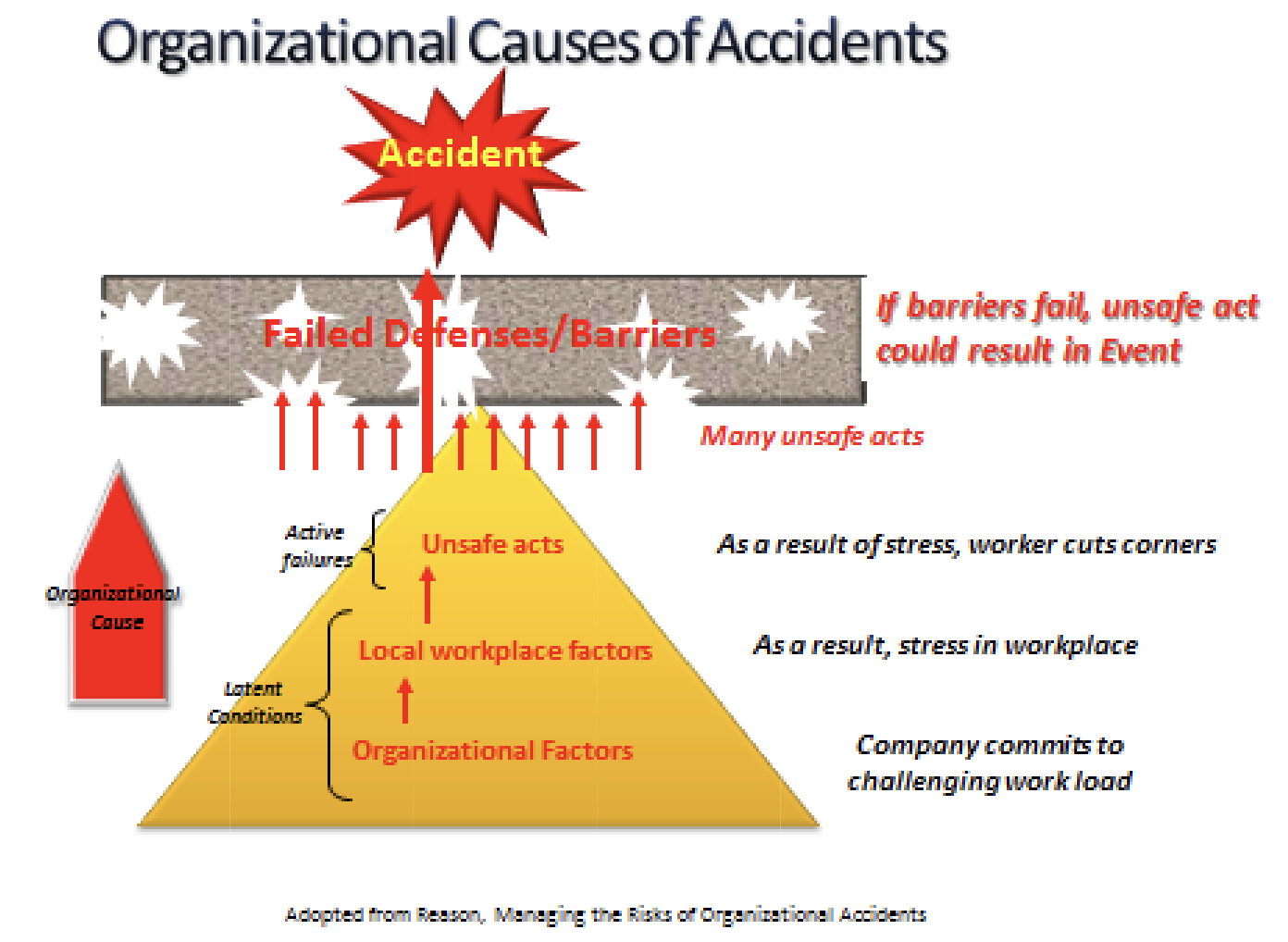
Every business will eventually reorganize work teams to meet the business’s needs. Sometimes, this will involve laying off workers when previous growth decisions were over-estimated, or the economy pulls back, and demand for products falls. Whatever the reason(s), every business will go through this regularly. But for those businesses that tout “Safety is #1” or “The safety of our workers is our top priority,” it is ALL ABOUT how these changes will be managed with the impact to the SAFETY PROCESS being the top consideration. And by this, I do not mean what it will do to the business’s Injury Rates and worker’s compensation rates, although, as a business, these have to be factored in. When the cuts are so deep, production becomes the sole focus of the “staffing realignment exercise.” Businesses will put on blinders to the impact their cuts will have on TWO very impactful elements of a safety process:
- OSH Training
- Employee Participation
I sarcastically joke that safety is always #1 when deciding which department gets cut first and the deepest; it is usually the safety department. But even in great organizations that genuinely care about the safety of their workers, I have seen cuts so deep that they made it impossible for workers to attend safety training and participate in the SMS activities.
Management will order the safety group to identify those courses that ONLY OSHA requires and then to pare down those courses to 15-30 minutes. They will even ask that we identify the specific work groups required for this training. It is also a time that management will begin to push Computer Based Training (CBT) so that workers can do the training during downtime. All of these decisions will impact SAFETY PERFORMANCE and CULTURE, and in some cases, the damages in both will linger for years after the cuts.
But the most significant damage for me will come from the lack of worker participation in the SMS functions. Cuts so deep that workers only have time dedicated solely to their primary functions, such as production and maintenance. The cuts are so deep that those remaining no longer have the time they can spend participating in SMS activities. This lack of participation sends the WRONG signal to the workforce. It will significantly impact the quality of the exercises if they continue to take place without the hourly workforce’s participation.
So when a business arrives at this juncture, it is an actual test of its commitment to the safety of its workforce. A reduction in staff will impact safety – the question is, how much impact on safety is the management team willing to accept and be able to sleep at night? Convincing themselves that saving jobs over the impact on safety is a typical “excuse” I hear often.
This year I have worked with a global business in their efforts to realign the business to meet the post-pandemic demand for their products. A lot changed during the pandemic, and the post-pandemic economy is very different from the pre-pandemic economy. The workforce demands have changed, and competition for particular skill sets in this industry has changed the pay structures, in-house training needs, etc. So this is a business that needed to cut costs and increase their workforce investment, all the while IMPROVING the safety performance (as they have not had a good run in safety the last 5-7 years). And yes, our first stop was the safety department – but this was NOT about cuts; it was about realigning the role of the safety team within the SMS and taking a deep dive into the safety training process.
We found that the safety team was not doing what safety teams needed to be doing inside a structured SMS, and OSHA compliance needs drove the safety training and not actual safety improvement needs. For example, the business had suffered seven (7) significant hot work fires in the past 10 years. The corporate HW program and permitting were revised after several of these events, and although the workforce employed at the time of the changes was trained on the specific changes, the vast majority of the facilities never went back and updated the new employee and annual Hotwork training content they offered at their facility level. This was a significant disconnect, meaning the business was “checking the box” regarding their annual Hot Work training. The question was asked…
“Does OSHA require annual HW training?“
but before I could even answer, the President of the business unit answered with a logical response.
“Who cares what OSHA requires, our past seven incidents dictate that we do HW training at least annually until our HW field audits provide us with data telling us otherwise.”
And, of course, that response took us down the path of
“Are we going to be able to continue doing all of these “field audits” after these cuts are made?“.
Can we see how these types of staffing cuts can lead us to a bad place if we do not sincerely consider the impact these staffing cuts will have on safety?
But the best part of this example led to significant improvements to the HW training program. No more would the training program discuss OSHA requirements; it now discusses the business requirements (of course, the business HW program exceeds 1910.252(a) requirements). The training is BUSINESS SPECIFIC, not based on OSHA language and slides from an OSHA 500 training course. And because of this change in content, we were able to improve the content and reduce the time needed to deliver more relevant content. This training revision should have occurred years ago and would have impacted HW safety performance long before their seven significant HW incidents.
The bottom line is, if a company touts its commitment to the safety of its workforce, when it comes time to make adjustments in staffing the impact these cuts will have on SAFETY is at the front of the discussion, rather than safety suffering the most from the cuts.