This safety and cultural assessment report documents FRA’s findings, recommendations, and methodologies resulting from the 60-Day Supplemental Safety & Cultural Assessment of Norfolk Southern Railway (NS). The Department of Transportation announced its intent to perform this assessment on March 7, 2023, in response to NS’s safety performance and the East Palestine, Ohio derailment which occurred on February 3, 2023.
The Federal Railroad Administration (FRA) conducted this Supplemental Safety Assessment of NS between March 15 and May 15, 2023. The Assessment included a review of operational elements and an evaluation of NS’ overall safety culture, focusing on ensuring the railroad is appropriately engaging its employees and management on safety issues to protect NS employees and the communities in which the railroad operates.
One little bitty 5-letter word is used 48 times in this report. Can you guess what that word is?
Hint: I have talked and written about this 5-letter word, and every time I discuss it, I also discuss another critical word: CREDIBILITY.
Yep, it’s TRUST. The 143-page assessment report uses the word TRUST forty-eight times.
Here are the other key points from the Norfolk Southern Safety and Cultural assessment. I would love to be a fly on the wall in the Board Rooms and C-Suites of the other Class 1’s this week. A real sign of cultural maturity is LEARNING from others. This report could be a head start for the other Class 1’s.
FRA performed focused inspections and investigations to evaluate regulatory compliance and assess how NS applies the 10 essential safety culture elements to the management and training of field employees.
Focused inspections and investigations prioritized the following eleven (11) operational elements:
- Track, signal, and rolling stock maintenance, inspection, and repair practices;
- Protection for employees working on rail infrastructure, locomotives, and rail cars;
- Communication between staff in the transportation, mechanical, and engineering departments;
- Operation control center procedures and dispatcher training relating to wayside detectors;
- Compliance with federal Hours of Service regulations;
- Evaluating results of operational testing of employees’ execution and comprehension of all applicable operating rules and federal regulations;
- Training and qualification programs available to all railroad employees, including engineer and conductor training and certification;
- Maintenance, inspection, and calibration policies and procedures for wayside defect detectors;
- Procedures related to all wayside defect detector alerts;
- Measures implemented to prevent employee fatigue, including the development and implementation of fatigue management programs, required as part of FRA’s Risk Reduction Program (RRP) rule; and
- Current status of the hazard and risk analysis required by the RRP rule
|
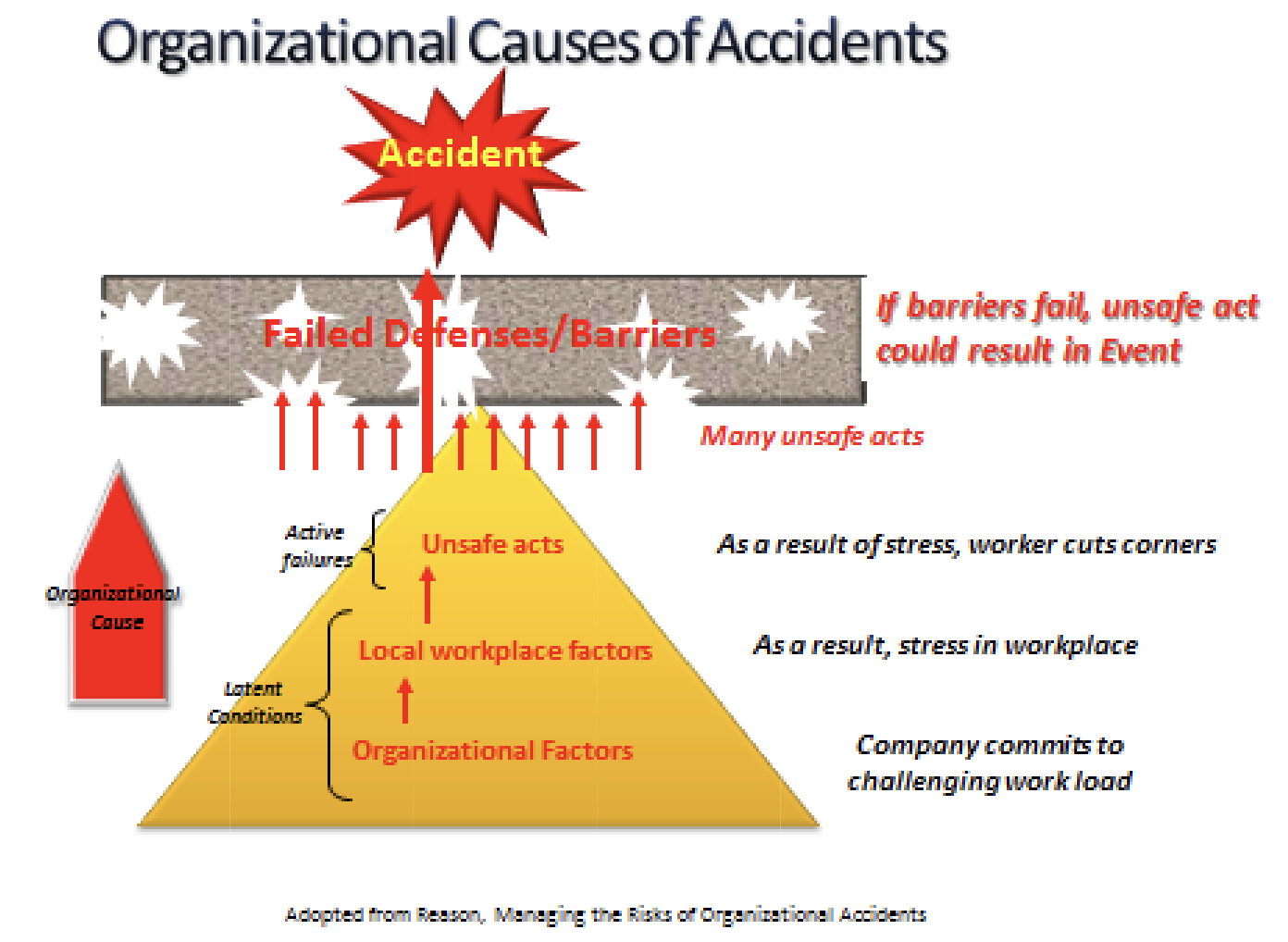
CRITICAL NOTE: It is worth pointing out that Fleming (2001) warns that his model is ONLY APPLICABLE to organizations that meet the following criteria:
|
As part of the focused inspection effort, where FRA found non-compliance with safety regulations, FRA is considering enforcement actions against NS. Still, this Assessment aims to explore aspects of the railroad organization and operations affecting safety in ways that are only sometimes addressed by rules and regulations.
Government regulations, industry standards, and company policies are important in creating a safe operating environment. However, even when taken together, these alone may not sustain safety in a dynamic environment. An organization’s safety culture binds these elements, creating a robust and adaptive safety environment. As such, this Assessment covers a broader scope than a regulatory inspection or a compliance audit.
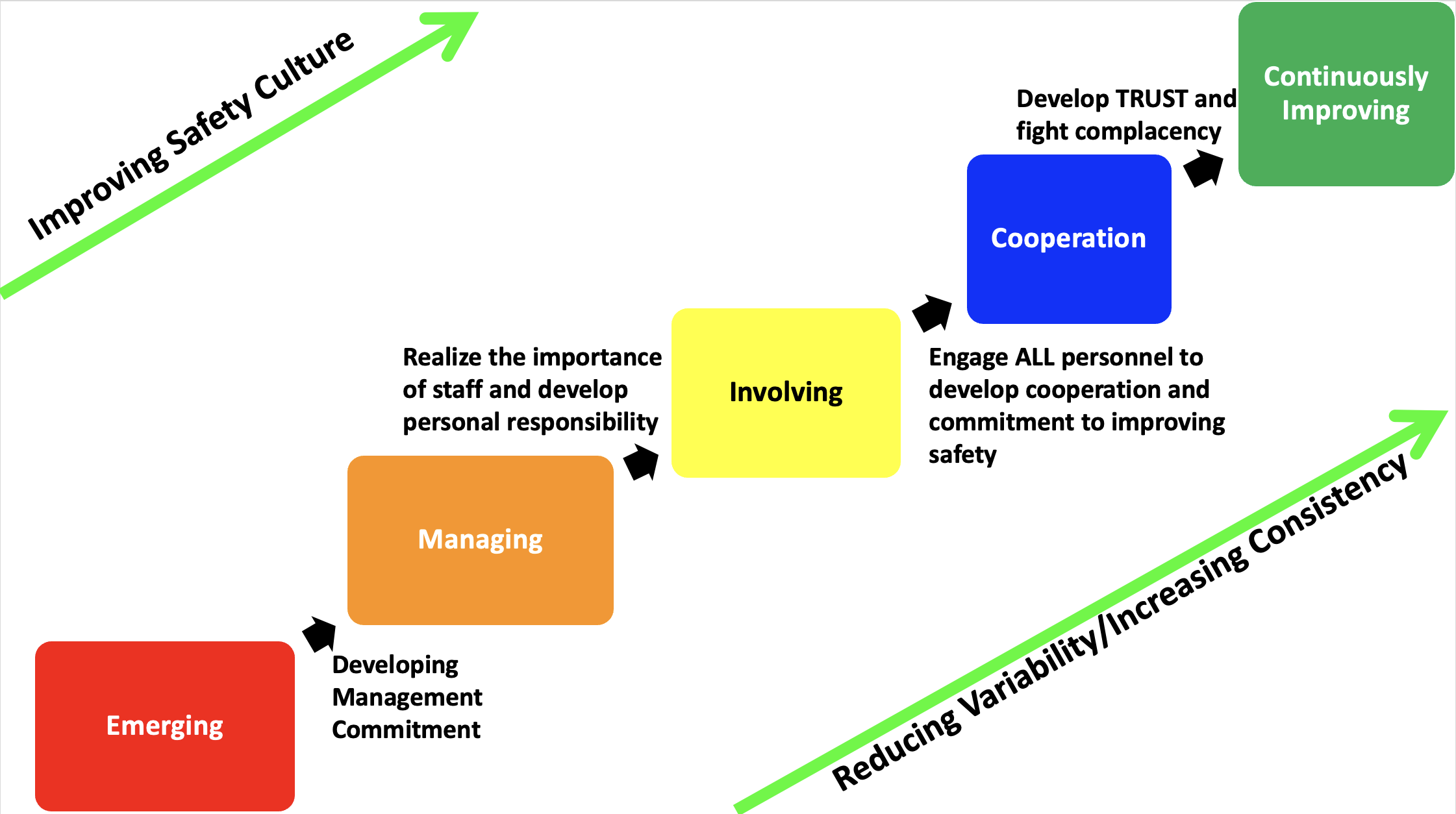
FRA evaluated NS’ safety culture using the Fleming Safety Culture Maturity Model (FSCMM) as a guide. FRA gathered baseline information on ten (10) essential safety culture elements, and using information from interviews, observations, recommendation follow-ups, and focused inspections, FRA used FSCMM to determine the relative maturity (advancement) of NS’ safety culture.
DOT defines safety culture as the shared values, actions, and behaviors that demonstrate a commitment to safety over competing goals and demands. The 10 key elements of a strong safety culture are condensed from several different safety culture models, all of which share these essential elements:
- Leadership is clearly committed to safety
Leaders across all layers of an organization model safety-first attitudes and behaviors, and employees learn what the accepted practices are by following examples set by leaders. - The organization practices continuous learning
Opportunities to improve safety are continuously sought out and implemented. Organizations are open to learning from accidents when they do happen, and willing to make changes to prevent such incidents in the future. - Decisions demonstrate that safety is prioritized over competing demands
The organization uses decision-making processes that demonstrate that safety is prioritized over competing demands. The organization will consistently choose safety over performance. - The reporting systems and accountability are clearly defined
Reporting systems and lines of accountability are in place so that safety issues can be promptly identified, fully evaluated, and corrected appropriately. - There is a safety conscious work environment
The organization exercises constant vigilance and an elevated awareness of the importance of safety. Employees are encouraged and provided opportunities to raise safety concerns using reporting systems and procedures. - Employees feel personally responsible for safety
Employees take more ownership in following safety procedures and are likely to speak up when they see other employees behaving in an unsafe manner. - There is open and effective communication across the organization
Employees feel comfortable communicating with their supervisors about safety issues and communicating with their peers when they see unsafe behaviors. The organization provides safety information in a way that is easy to find and understand. - Employees and the organization work to foster mutual trust
An environment of trust exists that facilitates open and honest communication about safety and minimizes fears of reprisal. - The organization responds to safety concerns fairly and consistently
The organization responds to safety concerns in a manner that is perceived by employees as fair, just, and consistent. - Safety efforts are supported by training and resources
The organization ensures that the personnel, procedures, and other resources needed to ensure safety are available, and that those who manage and operate the system have current knowledge that enables them to perform their jobs in the safest manner possible.
| Safety Culture Element | NS Maturity level |
| Leadership is clearly committed to safety | Managing → Involving |
| The railroad practices continuous learning | Managing → Involving |
| Decisions demonstrate safety is prioritized over competing demands | Managing |
| Reporting systems and accountability are clearly defined | Emerging |
| There is a safety-conscious work environment | Managing → Involving |
| Employees feel personally responsible for safety | Involving |
| There is open and effective communication across the railroad | Managing → Involving |
| Mutual trust is fostered between employees and the railroad | Emerging |
| The railroad is fair and consistent when responding to safety concerns | Emerging |
| Training and resources are available to support safety | Involving |
- The lowest levels of safety culture maturity are focused primarily on minimal compliance with relevant statutes, regulations, and industry standards or reactive efforts to prevent accidents.
- The highest levels of safety culture maturity focus on continuous learning and improvement.
- As an organization moves up the ladder to higher maturity levels, the safety culture becomes more robust, and safety improves.
- At the same time, all levels of the organization become more consistent, and all employees increasingly work together to avoid complacency.
Based on its assessment of NS’ safety culture and operational safety, FRA found the overall safety culture maturity at NS to be in the INVOLVING LEVEL. However, individual NS safety culture elements may be leading or lagging in maturity. This middle level of safety culture maturity reflects both the positive changes and renewed commitment shown by NS’ leadership to improve safety as well as the areas where NS continues to operate in a manner that is reactive and focused on compliance with minimum safety requirements of federal regulations and industry standards. FRA identified four cross-cutting safety culture findings, which offer the greatest potential for improving safety outcomes, and is making associated recommendations:
Finding 1: NS communications are not always open and effective and require improvement.
FRA found that communication challenges exacerbated hurdles to achieving safety culture goals in various contexts.
FRA recommends that NS:
- Evaluate the communications processes surrounding responses to wayside detector alerts and alarms to identify and eliminate gaps and delays.
- Develop a new (or refine existing) policy that outlines how information will flow throughout the organization.
- Review NS’ communication policy and update it as appropriate.
- Inform all levels of management and employees about NS’s communication methods and protocols to disseminate information.
- Clarify where specific information can be located and what (if any) information is available via more than one method.
- If older communications systems (e.g., oral briefings, posted signage) are being phased out or eliminated in favor of electronic communications, ensure all employees are aware of this change and able to access the electronic systems.
Finding 2: NS employees and the organization do not always work to foster mutual TRUST.
Varying levels of TRUST within the organization are related, and in some cases attributable to, deficiencies in communication.
FRA recommends that NS:
- Participate in the Confidential Close Call Reporting System (C 3 RS) to allow employees to anonymously report safety close calls without fear of discipline or enforcement.
- Continue to explore ways to increase TRUST.
- Review existing discipline programs and ensure their application is consistent across locations and managers.
- Develop and implement a policy for responding promptly and publicly to safety complaints.
- Engage with employees and solicit feedback on their perceptions of the current state of TRUST at NS and how that could be improved, and use that feedback to create action items designed to foster TRUST.
- Include employees, and their representatives, in as many processes as possible, including when required by regulation to consult with directly affected employees, such as with 49 CFR Part 271: Risk Reduction Programs and Fatigue Risk Management Program.
Finding 3: NS Training and resources are not always effective at supporting safety efforts.
FRA recommends that NS:
- Create additional opportunities for employees to complete both required “rules class” training and supplemental safety training courses offered by NS during on-duty hours. Consider taking concrete steps to set aside specific duty time for employees to participate in safety training opportunities.
- Explore additional methods for evaluating the effectiveness of training, and develop and implement corrective actions in response to any findings.
- Consider the methods that are used to administer training and explore the feasibility of offering more than one delivery method for trainings, to account for the differences in learning styles and preferences of adult learners. In the absence of alternatives to online training, utilize a variety of instructional methods, such as text, narration, video segments, interactive features, and the ability to apply what has been learned to engage with as many different types of learners as possible.
- Review the training offered to frontline supervisors and make changes, as needed, to ensure that frontline supervisors are trained in leadership skills and understand how they are empowered to do their jobs. Ensure that frontline supervisor training is of sufficient length, quality, and content to enable supervisors to lead their teams effectively and safely.
Finding 4: NS frequently focused solely on enforcing compliance with minimum safety standards.
FRA recommends that NS:
- Leverage partnerships with recently engaged safety culture consultants to review the findings and recommendations in this report. Identify the policies and actions that have led to the observed positive results and determine how these successes can be improved upon and how this information can be leveraged in other areas of the NS safety culture.
- Explore ways, including developing corrective actions for previous safety recommendations which may go beyond minimal regulatory standards, to move from systems that are reactive and focused on lagging safety indicators to those which are proactive and focus on leading safety indicators.
- Consider FRA’s findings when conducting hazard identification and risk analysis, as well as in the implementation of NS’ Risk Reduction Program and Fatigue Risk Management Program.
The information gathered as part of the safety culture assessment indicates that NS is currently in the INVOLVING LEVEL of safety culture maturity.
Some elements of the NS safety culture, including those clustered around communication and trust, are still in the EMERGING LEVEL. Developing a strong safety culture is a time intensive effort. Efforts focused on supervisor interactions with employees were observed to be at the higher end of the EMERGING LEVEL. as indicated by engagement and cooperation around common safety goals.
NS responses to FRA recommendations made as a result of the 2022 System Audit are illustrative of its safety culture maturity. Expressly, many initial responses to FRA recommendations indicated that NS would take no further action as NS believed those recommendations exceeded current regulatory requirements. This is consistent with EMERGING LEVEL. safety culture maturity, where the focus is on meeting minimal statutory and regulatory requirements.
However, in the months since the 2022 NS System Audit, FRA and NS have continued to work together on these recommendations and other safety issues. As a result of the collaboration, NS has revised its response to several FRA recommendations and is now exploring ways to implement those recommendations across its system. However, there are still audit recommendations that NS has indicated go beyond regulatory requirements and will not be addressed further. FRA will continue to reiterate those recommendations where NS has indicated they go beyond regulatory requirement as FRA believes implementing these recommendations is important for improved safety outcomes.
CLICK HERE for the full report
CLICK HERE to read more about the Fleming Culture Assessment Model used in this assessment (NOTE: SAFTENG membership required)