













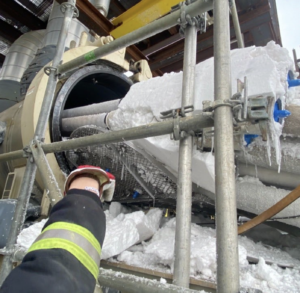
A natural gas processing plant is a facility designed to clean raw natural gas by separating impurities and various non-methane hydrocarbons and fluids to produce dry natural gas.
Processing raw natural gas begins at the inlet gas piping or gas stream of a natural gas processing plant. This piping delivers the raw natural gas to each processing vessel. Two of these processing vessels are an inlet gas-liquid...
Read More

The Washington State Department of Labor & Industries (L&I) is proposing updated workplace safety rules for petroleum refineries designed to prevent catastrophic events like the 2010 explosion that killed seven workers at the former Tesoro refinery in Anacortes.
The proposed update addresses what’s known as process safety management (PSM), which describes the way workplaces handle dangerous...
Read More
To say that accidents are due to human failure is not so much untrue as unhelpful for three reasons:
Every accident is due to human error: someone, usually a manager, has to decide what to do; someone, usually a designer, has to decide how to do it; someone, usually an operator, has to do it. All of them can make errors but the operator is at the end of the chain and often gets all the blame. We should...
Read More
A federal investigation has found that the operator of a specialty frozen pizza manufacturing plant in Illinois could have prevented the death of a 29-year-old sanitation worker by following proper machine safety procedures. OSHA CSHOs learned the sanitation worker suffered fatal injuries while working on the overnight shift under the supervision of the Pizza Company in December 2022. OSHA determined...
Read More
A 29-year-old worker suffered the amputation of a fingertip while reassembling a pump, an injury the employer could have prevented by ensuring to shutdown and lockout the equipment to prevent it from unexpectedly starting during maintenance. OSHA investigated after the company reported the December 2022 injury and found the employer did not train workers on lockout/tagout procedures. The agency also...
Read More
This posting is a spin-off of information presented in the white paper from the UK’s Chartered Institute of Ergonomics and Human Factors. That paper focused on concerns with treating human factors in Bowtie’s analysis. I have modified their wording to make their valid points reflect all recognized PHA methodologies.
The paper mentions eight (8) concerns about human factors being viewed...
Read More
That would have been my headline as a safety professional with over 30 years of experience investigating serious accidents.
I am always amazed at how society sees failures like organizations do. If the DOJ truly believes what they claim to have found in the 2-year investigation of the MPD, then why did they prosecute the officers on the scene, some of which never touched Mr. Floyd?
How many city council...
Read More
The pandemic is chocked full of LEARNING opportunities that we can translate into our effort to improve safety at our facilities. The one that screams at me the most is one of how our elected leaders (and I use that term loosely) behaved. I said back in the middle of the pandemic that we needed to be careful as one day we would be walking in Dr. Fauci’s shoes, and there would be many who would attempt...
Read More
Imagine a room of 100 adults, and I am teaching these adults basic math for the first time. I write on my whiteboard that 2+2 = 4. And I repeat this over and over.
Out of these 100 adults, there will be 10% that believe me because I am the teacher, and they understand they are there to learn from me. On the other end of the spectrum, we have the 10% that will never believe me or that 2+2...
Read More
The recent release of a report regarding the catastrophic collapse of Champlain Towers South is a “storybook” of how Latent Organizational failures set the stage for an accident. And like all the bad accidents before this one, everyone from the government to the media is looking for someone or some people to blame (i.e., Active Failures). We can use the “Swiss Cheese”...
Read More
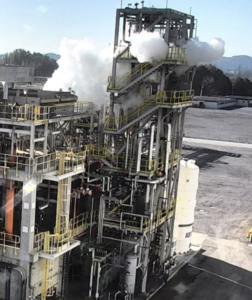
CSB and Wacker determined that the fatal HCL release was due to improper TORQUING on nozzle assemble
PTFE-lined piping, such as the equipment installed in the HCl regeneration unit, requires a retorquing of flange bolts to minimize leakage from bolt relaxation. The retorquing involves bringing the processing unit to operating temperature, allowing it to cool to ambient temperatures, and retorquing to the set value. As the original equipment manufacturer (OEM) describes:
A retorque should be applied...
Read More
At 1:00 p.m. on December 16, 2022, an employee monitored the start-up and operations of a high-pressure Water Tube Generator Boiler in preparation for an anticipated winter storm. A threaded plug on the boiler wall failed during the boiler’s start-up as system pressure was building, allowing the release of high-temperature and high-pressure steam. The steam sprayed the employee and resulted in...
Read More