







In OSHA’s fiscal year 2022, the agency issued over 3,800 LOTO citations. Here is a breakdown of those citations…
Top 10 by # of Citations
Top 10 by Citations $
Full listing of Citations with Number of Citations and $
…
HomeRead More »
Read More
In OSHA’s fiscal year 2022, Management of Change was the #6 most cited element of the PSM standard. Here is a breakdown of those citations…
…
HomeRead More »
Read More
In OSHA’s fiscal year 2022, Contractors was the #5 most cited element of the PSM standard. Here is a breakdown of those citations…
…
HomeRead More »
Read More
In OSHA’s fiscal year 2022, Process Hazard Analysis was the #4 most cited element of the PSM standard. Here is a breakdown of those citations…
…
HomeRead More »
Read More
In OSHA’s fiscal year 2022, Process Safety Information, was the #3 most cited element of the PSM standard. Here is a breakdown of those citations…
…
HomeRead More »
Read More
In OSHA’s fiscal year 2022, Mechanical Integrity (MI), was the #2 most cited element of the PSM standard. Here is a breakdown of those citations…
…
HomeRead More »
Read More
OSHA’s fiscal year 2022 saw a significant change in the leading PSM element for citations. As far as I know, Mechanical Integrity has been the most cited element every year for the past 20 years. And it held that spot convincingly for those years. Last year, SOPs took the top spot with…
…
HomeRead More »
Read More
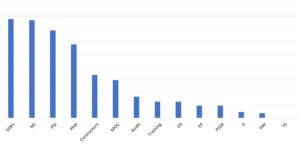
In my earlier post, my data showed OSHA conducted 66 PSM inspections and issued 347 citations. Now that I have all the data in raw form, I saw 430 citations in 2022.
The discrepancy is likely due to one database using the “issuance date” and the other using the “final order” date.
And yes, SOP citations were #1 in 2022, beating the all-time reigning...
Read More
Maybe I’m just old school, but is it just too much to ask for:
a well written safety procedure,
one that is written and analyzed with a safety pro and the worker(s) who do the actual work,
that management will fully support the procedures everyday-everytime, including on holidays that fall on a Sunday, and
employees will follow procedure everyday-everytime, including on holidays that fall on a Sunday?
There...
Read More
Respondent operates an ice rink facility with an ammonia refrigeration system. The System uses or used anhydrous ammonia, a chemical that is listed pursuant to Section 112(r)(3) as an “extremely hazardous substance” and that is subject to the General Duty Clause.
In March of 2022, Respondent’s response to an Information Request issued by EPA revealed that Respondent had failed to...
Read More
Respondent is the owner and/or operator of an animal slaughtering facility where anhydrous ammonia is used in refrigeration systems. The Respondent conducted an offsite consequence analysis in early 2022, showing that the population inside the worst-case scenario radius includes 961 houses, and 2,851 people could be exposed to this release. The Respondent also conducted an alternative release scenario...
Read More