













Whether caused by a natural hazard or some other event, power loss at hazardous chemical facilities can lead to a variety of negative impacts. Pumps and compressors may stop running, stirrers may quit mixing, lights may go out, and instruments and controls may malfunction. These equipment outages can lead to tank overflows, runaway chemical reactions, temperature or pressure excursions, or other process...
Read More
A hazard evaluation is defined as the identification of individual hazards of a system, determination of the mechanisms by which they could give rise to undesired events, and evaluation of the consequences of these events on health (including public health), environment, and property. These evaluations often use qualitative techniques to pinpoint weaknesses in the design and operation of facilities...
Read More
On August 18, 2022, EPA signed the Safer Communities by Chemical Accident Prevention (SCCAP) rule, which proposes revisions to the Risk Management Program (RMP) to further protect vulnerable communities from chemical accidents, especially those living near facilities with high accident rates. The proposed rule would strengthen the existing program and includes new safeguards that have not been...
Read More
The probability that the total system will perform correctly when it is available is the probability that the hardware/ software will perform correctly, times the probability that the operating environment will not degrade the system operation, and times the probability that the user will perform correctly. By defining the total system this way, human performance is identified as a system component....
Read More
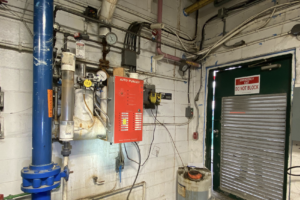
Two workers received 1st and 2nd-degree chemical burns after an ammonia leak at a food processing facility. An employee of the facility attempted to isolate the auto-purger and turn it off but was exposed to ammonia. A refrigeration technician then entered the mechanical room wearing a short-sleeve t-shirt and received chemical burns.
One individual received first and second-degree chemical burns on...
Read More
The Justice Department and the U.S. Attorney’s Office for the Northern District of Alabama announced criminal charges today in a case involving willful violations of Occupational Safety and Health Administration (OSHA) standards that led to a worker’s death. The charges involve an Aug. 16, 2017, incident at an Alabama plant in which a worker was pulled into a cluster of unguarded moving rollers and...
Read More
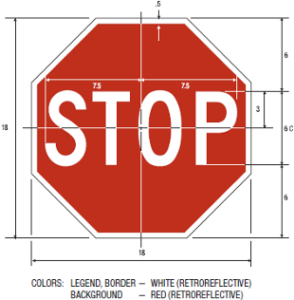
One of the best examples of Human Factors Engineering is seen daily when driving… street signs. We all know a STOP sign when we see one. It may be the most recognized sign in all advanced societies. Did you know that at least 35 countries use a red octagon as their stop sign?
But imagine if some local town decided that they wanted to make their STOP signs:
Round,
Green,
Black...
Read More
Respondent engages in chemical warehousing and storage activities at the Facility. The Warehouse comprises more than 200,000 square feet of space. It is used, in part, for storing hazardous materials, including, without limitation, flammable liquids and other extremely hazardous substances that may be toxic, reactive, flammable, volatile, or corrosive as stored in the Warehouse.
…
HomeRead...
Read More
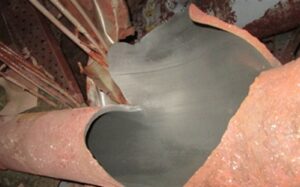
Ruptured pipe due to corrosion under insulation
Corrosion Under Insulation (CUI) is prevalent in major hazard plants both on and offshore, including nuclear and chemical plants, oil refineries, and offshore installations.
…
HomeRead More »
Read More
The skill-based performance involves highly practiced, primarily physical actions in very familiar situations in which there is little conscious monitoring. Such actions are usually executed from memory without significant conscious thought or attention. Behavior is governed by preprogrammed instructions developed by either training or experience and is less dependent upon external conditions. Information...
Read More
Human nature encompasses all the physical, biological, social, mental, and emotional characteristics that define human tendencies, abilities, and limitations. One of the innate characteristics of human nature is imprecision. Unlike a precise machine—each time, every time—people are imprecise, especially in certain situations. For instance, humans tend to perform poorly under high stress and time pressure....
Read More
Here are the five principles of Human and Organizational Performance (HOP) explained:
People make mistakes
Blame fixes nothing
Context drives behavior
Learning is vital
Response matters
…
HomeRead More »
Read More