













Gas Station Attendant scrubbing with gasoline!! It may be kerosene, but it is a fuel that is he spraying (splashing) onto the pavement and then spreading it out with a broom which in all likelihood is creating static. How and Why it did not ignite makes me wonder if he was using some other fuel than gasoline. But this is not the fist time we have seen gasoline used to clean up diesel...
Read More
Traditional, static exit signs have been a staple in buildings for decades, but some safety experts are beginning to advocate for newer, more dynamic technologies to help us exit buildings safely during emergencies. In this episode of Learn Something New by NFPA Journal®, we explore the new concept of dynamic exit signage.
Subscribe to this NFPA YouTube feed
Read More
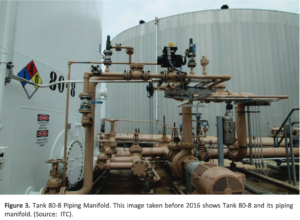
This past week we got a “Factual Update” from the CSB on the Storage Tank Fire at Intercontinental Terminals Company (ITC) Terminal. After reading this update I was puzzled as to why the facts as we know them to date did not drive OSHA to open a NEP PSM inspection of the facility. Granted their tanks are atmospheric storage tanks and thus exempted under 1910.119(a)(1)(ii)(B); however, the...
Read More
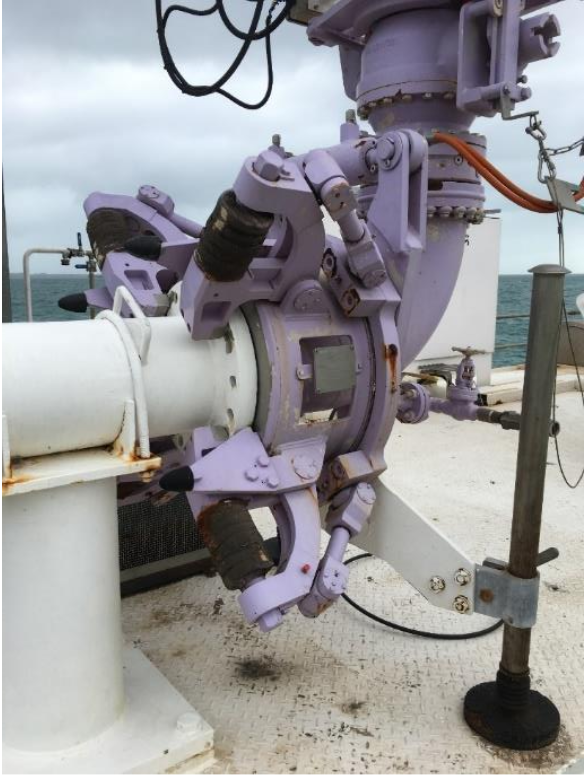
On 21 July 2018, a major release of ammonia gas occurred at a Western Australian port. As part of standard operation, an ammonia tanker vessel was supplying anhydrous ammonia to a process plant. Following the completion of liquid ammonia unloading, purging of the loading arm and pipework was commenced with ammonia gas supplied by the ship via the onboard storage tank headspace. While the purging operation...
Read More
Last week I shared this OSHRC case as a “cultural example” of how a management team tries to move on from a Safety Manager leaving the facility and their duties were passed on to the HR manager who had no S&H experience or training, so they hire an outside safety consultant to help with LOTO citations from OSHA. This is a technical review of the LOTO citations, Egress citations,...
Read More
Last week I shared this OSHRC case as a “cultural example” of how a management team tries to move on from a Safety Manager leaving the facility and their duties were passed on to the HR manager who had no S&H experience or training, so they hire an outside safety consultant to help with LOTO citations from OSHA. This is a technical review of the LOTO citations, Egress citations,...
Read More
Lesson’s learned: A WRONG CHEMICAL – WRONG TANK incident produced a chlorine release and brought EPA to the facility. The EPA inspection does not appear to have looked at the Cl2 incident, but rather stayed focused on the propylene oxide process – their “covered process”. As well, in March of this year both the facility and the trucking company involved...
Read More
Lesson’s learned: A WRONG CHEMICAL – WRONG TANK incident produced a chlorine release and brought EPA to the facility. The EPA inspection does not appear to have looked at the Cl2 incident, but rather stayed focused on the propylene oxide process – their “covered process”. As well, in March of this year both the facility and the trucking company involved...
Read More
Respondent operated an agriculture retail facility and receives, stores, and sells anhydrous ammonia. On or about June 19, 2018, representatives of the EPA conducted an inspection of Respondent’s Facility to determine compliance with Section 112(r) of the CAA and 40 C.F.R. Part 68. Information gathered during the EPA inspection revealed that the facility had ammonia storage capacity consisting...
Read More
Respondent operated an agriculture retail facility and receives, stores, and sells anhydrous ammonia. On or about June 19, 2018, representatives of the EPA conducted an inspection of Respondent’s Facility to determine compliance with Section 112(r) of the CAA and 40 C.F.R. Part 68. Information gathered during the EPA inspection revealed that the facility had ammonia storage capacity consisting...
Read More
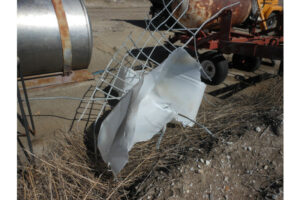
A few years ago I posted a fatal incident involving unloading NH3. The driver made a valving error and left the liquid bleed valve to a plastic tote open while he was transferring liquid NH3 to the storage tank. He was standing ~6-10′ from the tote when it violently ruptured when the liquid NH3 entered the warm water. He did not die of traumatic injuries – he did from...
Read More
A few years ago I posted a fatal incident involving unloading NH3. The driver made a valving error and left the liquid bleed valve to a plastic tote open while he was transferring liquid NH3 to the storage tank. He was standing ~6-10′ from the tote when it violently ruptured when the liquid NH3 entered the warm water. He did not die of traumatic injuries – he did from...
Read More