










There may come a time that we need to pressure test one of our pressure vessels after a repair or alteration and our FIRST CHOICE of methods to use should be Hydrostatic as it is MUCH SAFER than pneumatic. However, in some cases, we may NOT be able to perform a hydrostatic test for a couple of common reasons:
the vessel is not capable of holding the weight of our hydrostatic test media, typically...
Read More
Some processes have a relief system that includes a rupture disk below the relief valve. This is done for several reasons, but the two most common reasons are:
The process is corrosive and can cause issues with the Relief Valve leading to failures and a shortened life span
The process contains a Category M fluid and any leakage, ever how minor can lead to serious hazards
But...
Read More
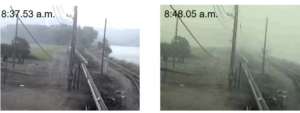
On August 27, 2016, about 8:26 a.m. EST, a railroad tank car sustained a 42-inch long crack in its tank shell shortly after being loaded with 178,400 pounds of liquefied compressed chlorine at a chlorine manufacturing plant in West Virginia. Over the next 2.5 hours, the entire 178,400-pound load of chlorine was released and formed a large vapor cloud that migrated south along the Ohio River valley....
Read More
One of the recent amendments of EPA’s RMP rule impacted our Incident Investigation procedures/practices and most likely any report forms we had been using for years and years. The RMP and PSM Incident Investigation elements used to be very similar and thus most of us used the same procedure/practices and forms when trying to comply with the two (2) elements. But now, since EPA had to implement...
Read More
Respondent owns and operates a chemical facility which had Chlorine (Cl2) as its “regulated substance”. On or about January 23-24, 2018, representatives of the EPA conducted an inspection of Respondent’s Facility to determine compliance with Section 112(r) of the CAA and 40 C.F.R. Part 68. Information gathered during the EPA inspection revealed that Respondent had greater than...
Read More
I like direct statements and clear concise rules when it comes to drawing the lines of safety and production and maintenance. But too often, these lines get drawn in the wrong spot and cause safety all kinds of issues and let’s admit it… gives safety a bad name. One such line is when lockoout/tagout (LOTO) applies. We can not just state that LOTO applies for all “servicing...
Read More
It is important to emphasize that the machine guarding requirements of 29 CFR Part 1910, Subpart O standards COMPLEMENT THE REQUIREMENTS for LOTO. In some instances, an employer may avoid the requirements of the LOTO, if they ELIMINATE exposure to servicing and maintenance hazards by using machine guarding techniques compliant with those standards.
It is also important to...
Read More
Lockout/Tagout (LOTO) STARTS WITH machine gaurding. Yes, MACHINE GAURDING – we can not even begin to speak of LOTO until we first have the forms of hazardous energy properly gaurded for our NORMAL OPERATIONS. Because when the machine/equipment is being used for its inteded purpose(s) (e.g. Normal Operations) we are FIRST REQUIRED to ensure that all forms of “hazardous energy”...
Read More
The state of NJ has developed a Toxic Catastrophe Prevention Act (TCPA) Program Update intended to assist regulated TCPA facilities in understanding how they are impacted by the January 13, 2017, amendments to EPA’s RMP Rule, 40 CFR Part 68. The table indicated the effective dates of the amendments, which provisions are incorporated by the TCPA Program, the actions required by TCPA registrants,...
Read More
This Consent Agreement and Final Order serves as notice that the EPA has reason to believe that Respondent violated the General Duty Clause set forth in Section 112(r)(1) of the CAA and the Chemical Accident Prevention Provisions in 40 C.F.R. Part 68 and that Respondent violated Section 112(r) of the CAA. Respondent’s Facility has ceased all operations. On or about May 15 -17, 2017, the EPA conducted...
Read More
Download CAMEOfm 3.5.1 at https://www.epa.gov/cameo/cameo-software
Note: If you’re upgrading to CAMEOfm 3.5 from a previous version of CAMEOfm, follow the instructions in the guidance document (provided on the download page) to ensure that you don’t lose your current data.
What’s changed in CAMEOfm 3.5.1?
Version 3.5.1 resolves an issue in which the program could not import an XML...
Read More