








Imagine having a pressure vessel that has a MAWP of 300 psi and yet there is no high-pressure alarm before 300 psi is reached. How would an operator know he/she is approaching their consequence limit? As I wrote about earlier this year, a well-designed process will have both alarms – BEFORE the safe upper/lower operating limit is achieved so that the operator(s) can “AVOID the deviation”...
Read More
Any individual or facility that possesses 10,000 lb. or more or more of ammonia (anhydrous)—expected to be less than 10% water—must report their chemical holdings to DHS. DHS regulates security at high-risk chemical facilities under the Chemical Facility Anti-Terrorism Standards (CFATS) program (6 CFR Part 27). CFATS ensures high-risk facilities have security measures in place...
Read More
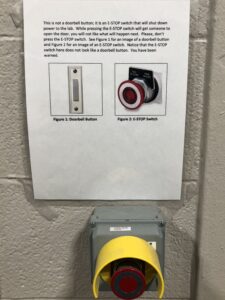
Incident summary
A worker was completing a pressure test on the coil tube connector. The worker was positioned over the well head and was inadvertently contacted in the face by the test pipe, sustaining fatal injuries.
Sequence of events
…
HomeRead More »
Read More
On July 31, 2016, a contract employee at an automobile manufacturing facility was replacing a motor on a robot on the first floor of the facility. While he did so, three maintenance technicians were performing a preventive maintenance inspection on a conveyor on the upper level of the facility. When the contract employee completed his task, he restarted the conveyor from the master control panel. The...
Read More
For those who work and live in the world of Process Safety Management, the abbreviation MOC may make you and your colleagues cringe. And when some “consultant” tells you that using the Management of Change (MOC) process for changes to our Emergency Response Equipment, especially PPE, you are probably thinking… SERIOUSLY? I cant keep track of the ones I have open now! (that...
Read More
The definition of a “hazardous chemica” l under OSHA HCS includes “combustible dusts”. So, if the facility accumulates 10,000 lbs of dusts at any one time, it is reportable under Sections 311 and 312. Facilities may want to consult FDA regulations to determine if certain food dusts would be covered under their regulations as food or food additive. If FDA regulates...
Read More
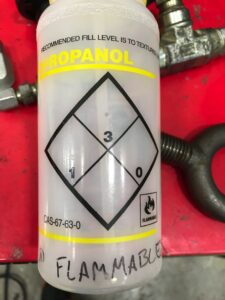
In the past several years the use of NFPA’s 704 “Diamond” as a means for secondary labeling has seen much scrutiny; however, even OSHA has stated that this label can be used as an in-house secondary label under the GHS labeling requirements. (SAFTENG members can see my earlier articles on this topic in the OSHA Compliance Section). But the use of the “Diamond” comes with...
Read More
For those of us in the process safety arena, we hear about “pre-planning” almost daily (or maybe we should hear it that often!). But when we actually start looking into what “preplanning” looks like, most facilities are lost at what they should be doing. Once again, I turn to the International Fire Code (IFC) to establish a baseline of activities that should be done...
Read More