










For years, PHA’s seemed to always list vessel “relief systems” as a “safeguard” for ALL the HIGH-PRESSURE scenarios involving the vessel. In this article I want to challenge this practice; but to be up front, if you were to look at all my PHA’s I was guilty as sin for doing this very thing. But as I do more and more PHA’s on all kinds of interesting...
Read More
As I have stated already this week, I am a HAZOP kind of guy. I have used just about every methodology under the sun over the past 25+ years, and I have come to a personal conclusion that in almost every occasion, a HAZOP would have been the best methodology to utilize for a correct Process Hazard Analysis. My next favorite tool is to use a Failure-Modes-Effect-Analysis (FMEA) on specific...
Read More
Earlier this week I posted about how a PHA should document its consideration of the engineering controls and administrative controls failing. And I said back in the 2013 posting; this little requirement is intended to make facilities dig past a single layer of protection and maybe even identify a lack of engineering and/or administrative controls for a process deviation. But let’s be clear, a...
Read More
This is a follow-up to a previously posted case. An electrical contractor at a steel mill was in a danger zone when the mill technician began locking out the equipment. The LOTO procedure required some counterweights to be lowered to the ground (i.e., ZES). When the mill technician released the counterweight, an apprentice with the electrical contractor was standing underneath it...
Read More
With all the recent attention being paid to EPA and it’s Risk Management Plan amendments and many of those amendments being rescinded by the new administration, I thought it would be a good time to remind those in the PSM/RMP world, that OSHA has their own wish list (my phrase – not theirs) and some of their proposed changes could have MUCH larger impacts on businesses than any of...
Read More
In the RMP Amendments rule, EPA added three major provisions to the accident prevention program of Subparts C (for Program 2 processes)and D (for Program 3 processes). These included:
A requirement in § 68.60 and § 68.81 for all facilities with Program 2 or 3 processes to conduct a root cause analysis using a recognized method as part of an incident investigation of a catastrophic release...
Read More
EPA monetized both on-site and off-site damages. EPA estimated total average annual on-site damages of $265.8 million. The largest monetized average annual on-site damage was on-site property damage, which resulted in average annual damage of approximately $205.5 million. The next largest impact was on-site fatalities ($49.8 million) and injuries ($10.5 million).
EPA estimated total average annual...
Read More
Over the years I have facilitated and participated in hundreds of PHAs from toxics to flammables and even some explosives (although not my thing!). And in doing so, one thing that drives me crazy is the lack of structure in how process deviations are identified and studied/analyzed. I love the HAZOP methodology and hate the What-if methodology for this very reason. But I also go crazy...
Read More
This is a common question we get when we are working at facilities where there is a mechanical refrigeration system…
Do my refrigeration technicians have to be “qualified electrical workers”?
Because that question is so broad, we always answer “Yes”, based on our experience around these types of processes, but it depends and here are the details of the “depends”.
In...
Read More
In the EPA Office of Inspector General’s Semiannual Report to Congress: Oct 1, 2017 – March 31, 2018 we see two “recommendations” regarding the manner in which EPA conducts their Risk Management Plan (RMP) audits and how the OIG feels the process could be improved upon. These are a continuation of improvement from the 2013 OIG report where it was recommended EPA inspectors...
Read More
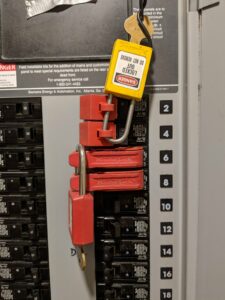
With this week’s flash fire that sent over 20 workers to the hospital, I thought this video would be timely. This is a demo video by an FRC maker, and it shows us how the vapor and flame interact.
Read More