









For some reason, we have seen a spike in questions and request to assess the applicability of PSM/RMP covered process(s), and this is beyond the typical “can use the Meer decision to get our flammable process out of PSM?” questions. So I thought it would be helpful to publish OSHA’s official interpretation and explanation of the phrase “on site in one location” as...
Read More
Respondent owns and operates a food service distribution facility that handles approximately 12,000 pounds of anhydrous ammonia at the Facility. EPA conducted an inspection of the Facility on October 18, 2017 (“Inspection”) to determine Respondent’s compliance with CAA Section 112(r)(7) and the Chemical Accident Prevention Provisions at 40 C.F.R. Part 68. Respondent submitted...
Read More
This week I have been working with a new member who has become frustrated with all the different directions and “interpretations” regarding OSHA’s and EPA’s Maximum Intended Inventory requirements. This is my e-mail response – names and titles have been changed to protect the innocent! (LOL)
I feel your pain, this one small topic has cost the NH3 refrigeration industry...
Read More
In FY 2017, OSHA conducted 32,408 inspections, including 18,031 (about 56 percent) unprogrammed inspections, which includes employee complaints, injuries/fatalities, and referrals. The high percentage of unprogrammed inspections indicates that OSHA continues to devote considerable resources responding to referrals and complaints. Of the 32,408 inspections, 14,377 (about 44 percent) were programmed...
Read More
The purpose of the information collection requirements specified in the Permit-Required Confined Spaces Standard (29 CFR 1910.146) is to ensure that employers systematically evaluate the dangers in permit spaces before entry is attempted, and to guarantee that Start Printed Page 23725adequate measures are taken to make the areas safe for entry. Section 1910.146(c)(2) requires the employer to post danger...
Read More
Hollywood has made a mockery of fixed fire protection systems. From showing sprinklers going off when the fire alarm is pulled to all sprinklers seemingly being “deluge systems“!!!! Well, finally we have footage of how a sprinkler system behaves. If you’re like me, you’ve sat in these restaurants and watched all the fires rage and wondered… “how...
Read More
In January 1998, OSHA published the final Respiratory Protection standard (29 CFR 1910.134). In the final revised respirator standard, OSHA established a mechanism to accept new fit test protocols under Mandatory Appendix A. Any person may submit to OSHA an application for approval of a new fit test protocol, and if the method meets specific criteria, OSHA will initiate a rulemaking proceeding under...
Read More
Recent technological advancements that employ computer-based controls of hazardous energy (e.g., mechanical, electrical, pneumatic, chemical, and radiation) conflict with OSHA’s existing lock-out/tag-out standard. These computer-based controls have become more prevalent as equipment manufacturers modernize their designs. Additionally, national consensus standards and international standards harmonization...
Read More
OSHA currently regulates aspects of emergency response and preparedness; some of these standards were promulgated decades ago, and none were designed as comprehensive emergency response standards. Consequently, they do not address the full range of hazards or concerns currently facing emergency responders, nor do they reflect significant changes in performance specifications for protective clothing...
Read More
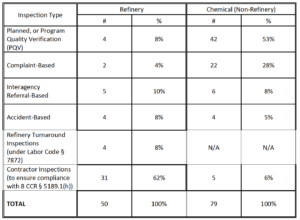
The PSM Unit enforces occupational safety and health standards applicable to 14 petroleum refineries and 1,940 chemical plants in California. The chemical plants handle or process 50 million to 120 million pounds of hazardous chemicals every year. Inspections target high-risk facilities and focus on timely, effective abatement.
Table 1. Inspections completed during the calendar year 2017
…...
Read More
EPA is proposing changes to a final rule, the Risk Management Program (RMP) Amendments (82 FR 4594, January 13, 2017) to better address potential security risks and reasonable consideration of costs. The proposed changes are intended to promote better emergency planning and public information about accidents and maintain the trend of fewer significant accidents involving chemicals regulated under the...
Read More