














After last weeks tragic triple fatality ammonia refrigeration accident in Canada, this weekend’s database work really caught my attention when I saw who holds the #1 spot for “# of deaths”. It seems that a food plant in Indiana with an ammonia refrigeration process with 16,000 pounds of NH3 had a release in August 2015 that killed six (6) workers; at least that’s what...
Read More


My “attention getter” for my HAZMAT classes! This is one amazing piece of footage that every responder needs to see.
PLEASE NOTE that my YouTube Channel is now “private”, seems there was one individual who was easily offended. YouTube support suggested that I go private and manage the subscribers.
Read More
It is not hard to find people who complain about government regulations, but the regulations often exist because people do not take optimal precautions on a voluntary basis. This case illustrates that problem.
Honorable Diane P. Wood, Chief Judge
This case arose after toxic fumes in a large container (i.e. tanker truck) knocked out a man who was working inside it. Fortunately, he was rescued...
Read More
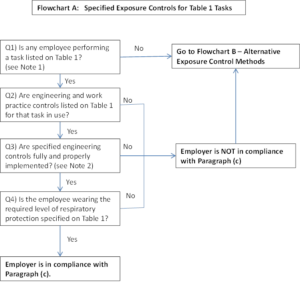
October 19, 2017
MEMORANDUM FOR:REGIONAL ADMINISTRATORS
THROUGH:THOMAS GALASS, Acting Deputy Assistant Secretary
FROM: PATRICK J. KAPUST, Acting Director, Directorate of Enforcement Programs
SUBJECT:nterim Enforcement Guidance for the Respirable Crystalline Silica in Construction Standard, 29 CFR 1926.1153
This memorandum provides interim enforcement guidance to Compliance Safety and Health Officers...
Read More
Operations at this installation, which featured a recent design, had been partially started in 1996; the latest in a series of plant extensions, including space designated for ammonia storage, was authorized on January 9, 1997. This plant processed 150 tonnes/day of meat (animal slaughter and production of vacuum-sealed meats, frozen ground beef, both frozen and fresh meats), with a total slaughter...
Read More
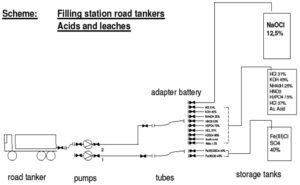
This accident happened at a site of a distributor of bulk chemicals such as acids, bases, aqueous solutions of detergents, etc. The chemicals are delivered by tanker truck or railcars and put into tanks. The chemicals are then filled in drums or cans which have a volume ranging from 5-gallon cans to 55-gallon drums. At the site, there is also a company administration building, a laboratory, small-scale...
Read More
This summary report was established based on information collected from 557 French accidents (251 cases) or foreign accidents (306 cases) which took place between January 1917 (not a type-o) and May 2003. This document should be of specific interest to installations implementing large quantities of chlorine (chemical plants, paper mills, metallurgy…), as well as companies involved in its transport....
Read More
This study essentially concerns refrigeration installations using ammonia as a refrigerant. However, to better understand and to place the risks associated with these installations in perspective, quantified information has also been collected on numerous accidents, both French or foreign, in other industrial or agricultural activities and the field of transport. The processing...
Read More
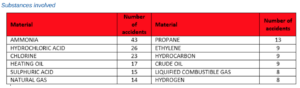
In early March 2017, the ARIA database identified 349 events involving fittings and seals/gaskets. These elements are often encountered on pipe flanges and are also essential sealing components for valves or other equipment. Insufficiently tightened flange bolts and deficient leak inspections on seals/gaskets are often the cause of an accident.
Equipment involved, the...
Read More
A chemical plant for the production of fertilizer was built in 1969 and located over 7 miles from the town of Jonova which had a population of 40,000. The plant employed 5,000 people and was positioned inside a military zone with controlled access. The ammonia tank involved in the accident was a cryogenic storage vessel with a capacity of 10,000 tons (t) (inside diameter...
Read More
As many continue the debate around energy isolation methods associated with entry into a Permit-Required Confined Space, I offer another example of why getting the energy isolation plan RIGHT is SO IMPORTANT. I know there are safety professionals out there who feel strongly that single valve isolation or the use of an “automated valve” being controlled by a PLC is perfectly safe and...
Read More