








This year the OH Fire code is undergoing revisions to bring it up to the 2015 IFC requirements. In this process, there is a comment period in which anyone with interest can make comments on the proposed revisions or ask questions. One such question was asked about the revisions to
5704.2.7.3.2. Vent Line Flame Arresters and Pressure-Vacuum Vents
Is the intention to require flame arrestors...
Read More

Those of you that follow me know my love for the International Fire Code and Mechanical Code, as well as how each state utilizes these codes. I use these codes daily in my process safety and fire safety work as I truly believe they provide us an excellent baseline in our risk reduction efforts. This year the state of OH has been working to revise it’s state fire code to the newer...
Read More
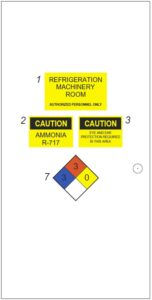
In the past several weeks I have received inquiries regarding NFPA 704, 4.2.3.2 so I figured I should put it in writing so that others can understand this single clause which apparently has become a “whipping boy” for a particular hazardous material. The quick answer is YES, but apparently, there is some confusion on why NFPA 704, 4.2.3.2 permits this. This is what it says:
4.2.3.2* It...
Read More
OSHA has cited a Nebraska grain-handling cooperative for failing to protect workers from grain bin entrapment and engulfment hazards. The company faces $373,911 in proposed penalties. On May 4, 2017, OSHA responded to reports of a worker partially entrapped in a grain bin. Investigators found the worker had entered the bin to clear clumps of soybeans while the auger was running. As the clumped beans...
Read More
This is another example of how a “process” can be classified as a Program 2, based NOT on the hazards but merely because it is a public utility in a Federal OSHA state. Had this process been in a private business, it would have been a RMP Program 3 as it would have been a PSM Covered process. But since the process was located in a state covered by federal OSHA AND the process...
Read More
The U.S. Environmental Protection Agency, Region 10, has reached a settlement with a seafood cold storage facility in Unalaska, Alaska, for violations related to a 125-pound ammonia release on December 3, 2016 that seriously injured one of the facility’s workers. The facility’s failure to provide timely information about the ammonia release also put first responders at risk.
…...
Read More
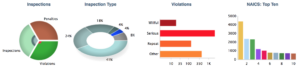
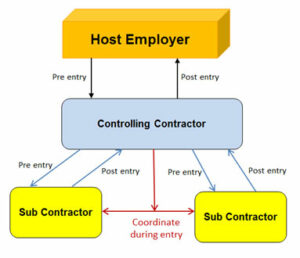
On May 4, 2015, OSHA issued a new standard for construction work in confined spaces, which became effective August 3, 2015. And now that we are two (2) years into this new Confined Space standard I thought a follow-up on how it is to be applied in GENERAL INDUSTRY workplaces might be helpful. We are still getting a lot of pushback from clients who have “contractors” entering their PRCS...
Read More
SAFTENG Members can see my SCBA Hydro cheat sheet if you have questions about the frequency of your testing frequency of your SCBA cylinders. This video does a nice job explaining the hydro testing process. The second video walks us through a nice monthly inspection of an SCBA. The inspection was done per the manufacturer’s procedures. CLICK HERE for a detailed inspection...
Read More
The standard specifies several information collection requirements. The following sections describe who uses the information collected under each requirement and how they use it. These requirements aim to control the release of hazardous energy while workers service, maintain, or repair machines or equipment when activation, startup, or release of energy from an energy source is possible; proper control...
Read More
At 3:10 p.m. on February 7, 2017, an employee was making preparations to replace the relief valve of 1,000-gallon ammonia (NH3) nurse tank. The incident investigation reported that the tank was empty of liquid NH3. However, it contained approximately 80 psi of vapor pressure. The employee set up a 30-gallon drum that held water and affixed it to the nurse tank by way of a hose. He then turned the relief...
Read More