













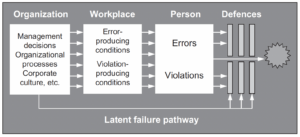
Since the 1980s, Active and Latent failures have been a major part of Human Factors Engineering, we have all done it at some point in our careers… an accident happens, and we go straight to the obvious ACTIVE FAILURES and point to those as the sole cause of the incident; until one day a more senior safety engineer schools you on the LATENT FAILURES involved in the accident. There is a ton...
Read More

This week EPA issued two letters explaining the changes to the local coordination requirements and they will advance local preparedness and assist local response officials, as well as the Local Coordination requirements that are included in the final rule. Here’s what EPA said:
…
HomeRead More »
Read More
EPA clarifies the new "public information" requirements for their FINAL amendments of their RMP Rule
EPA issued several letters this week clarifying the NEW “public information” requirements in their FINAL AMENDMENTS of their RMP rule. Here are the questions that EPA answered in their letters:
What is the process for responding to information requests from the public?
How does EPA’s final rule preserve security while enhancing the ability to local communities to be prepared...
Read More
EPA issued a letter explaining what incident investigations and root cause Analysis requirement changed from the proposed to final rule and what the final rule requires with regards to incident investigations. Here’s what EPA said:
…
HomeRead More »
Read More
“Safer Technology And Alternatives” (STAA) refer to risk reduction strategies developed using a hierarchy of controls that are considered inherent, passive, active, and procedural. This strategy can be applied initially to all design phases and then continuously throughout a process’s life cycle. STAA includes concepts known as inherently safer technologies (IST) or inherently safer...
Read More
EPA has issued two letters that better clarify what the “Third Party Audit” requirements changed from the proposed to final rule and what the third-party audit requirements actually are. Here’s what EPA said:
…
HomeRead More »
Read More
EPA has established the following dates for facility owners and operators to comply with the revised rule requirements:
…
HomeRead More »
Read More
EPA issues “letters” on their website that helps clarify many of their rule requirements, much like OSHA’s Letters of Interpretation. This week OSHA issued twenty-one (21) such letters following their FINAL amendments to their Risk Management Plan rule. These two (2) letters address what EPA has done to further the safe storage and handling of Ammonium Nitrate and...
Read More
OSHA cited a refinery in 2008 for failing to inspect a piece of equipment known as the positive pressurization unit (PPU). The refinery contends that this citation is unlawful because the PPU is not encompassed by the relevant regulations. Because this dispute involves the interpretation of a binding regulation promulgated by the agency, we defer to the agency’s interpretation if the text is...
Read More
Delek purchased an oil refinery located in Tyler, Texas from Crown Central and took possession on April 29, 2005. Beginning in February 2008, OSHA conducted a four-month inspection of the refinery and issued a citation on August 18, 2008, finding violations of 29 C.F.R. § 1910.119 and other regulations that are not at issue here. Delek petitions for review of citation Items 4 and 12. Item...
Read More
Safeguarding is the provision of protective measures to minimize the risk of accidental damage to the piping or the harmful consequences of possible piping failure. In most instances, the safeguarding inherent in the facility (the piping, the plant layout, and its operating practices) is sufficient without the need for additional safeguarding.
In some instances, however, engineered safeguards...
Read More