









As the car industry learns that the “mildly flammable” refrigerant (per ASHARE 34) HFO-1234yf is actually a Category 1 Extremely Flammable Gas (per the manufacturer’s SDS and 1910.1200) and those facilities who have over 10,000 pounds of HFO-1234yf fall under PSM (1910.119), it is becoming a less and less attractive global warming (GW) alternative. And those who have been following...
Read More
With all the recent changes in the Process Safety community within the USA, I have been getting a lot of questions regarding pressure vessels and what to expect when it comes to how they play a role in PSM/RMP programs. These vessels pose our greatest risk within our process as they contain the majority of our HHCs/EHSs. Now I am not saying that these vessel’s failing is a “high...
Read More
What’s changed in MARPLOT 5.0.3?
…
HomeRead More »
Read More
In case you missed it, NFPA published their new COM DUST standard last month. This FIRST edition of NFPA 652, Standard on Combustible Dusts (link to free access), was issued by the Standards Council on August 18, 2015, with an effective date of September 7, 2015. NFPA 652, Standard on the Fundamentals of Combustible Dust, provides the general requirements for management of combustible...
Read More

Over 12,500 exclusive unsafe acts/conditions and accident/injuries photosand over 1,300 ppt’s & doc’s from more than 2,797 contributors!
2015 Fatality Tracker
Electrical
38
(2014 =55)
(2013 = 32)
(2012 = 68)
Forklift/Aerial
48
(2014 = 60)
(2013=62)
(2012 = 52)
Mining*
21
(2014 = 401)
(2013=87*)
(2012 = 92*)
*ONLY developed nations and legal mines
Explosions
135
(2014...
Read More
MIOSHA issued citations for alleged violations of worker safety provisions totaling $357,000 in penalties. MIOSHA conducted a fatality inspection at a Warehouse from June 16, 2015 to August 19, 2015. During the inspection, six alleged violations were identified. As a result of inspection #1071586, a total of one serious and four willful serious citations were issued. The citations are for violations...
Read More

On the night of October 23, 2009, a large explosion occurred at the Caribbean Petroleum Corporation (CAPECO) facility in Bayamón, Puerto Rico, during offloading of gasoline from a tanker ship, the Cape Bruny, to the CAPECO tank farm onshore. A 5-million gallon aboveground storage tank (AST) overflowed into a secondary containment dike. The gasoline spray aerosolized, forming a large vapor cloud,...
Read More
A couple of weeks ago, I wrote about how the Process Safety Information (PSI) “Safe Upper and Lower Limits” will differ from those “Safe Upper and Lower Operating Limits” found in our Operating Procedures. The article needed to be written as it received over 10,000 hits, and the e-mails continued with positive comments and more questions. Several have asked for a real-life example of how...
Read More
PSM Retail Exemption Interim Enforcement Policy
Employer(s) with employee(s) exposed to PSM-covered processes formerly exempted under OSHA’s 1992 interpretation of “retail facility” now must comply with the requirements of 29 CFR 1910.119 if the facility, or portion of the facility processing the highly hazardous chemical, does not fall into the North American Industrial Classification...
Read More
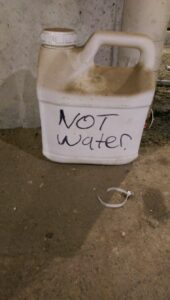
HAZCOM labeling is not intended to be a “process of elimination”!!!!
Read More