









Respondent owns and operates a natural gas processing well site and facility, which includes a separator used for separating well fluids produced from the natural gas well into gaseous and liquid components and a tank battery which consists of interconnected storage tanks situated to receive output from the natural gas well and separator. Natural gas is a highly flammable gaseous hydrocarbon mixture...
Read More
The Department of Homeland Security (DHS) continues to strengthen security at the Nation’s high-risk chemical facilities through the Chemical Facility Anti-Terrorism Standards (CFATS) program. Chemical Security Program Statistics as of January 5, 2015:
More than 48,000 preliminary assessments were reviewed by DHS from facilities with chemicals of interest
3,598 facilities are currently...
Read More
Question: How may a corporation with multiple facilities regulated under CFATS request the corporate approach and what benefits does this provide the corporation?
…
HomeRead More »
Read More
A question I am asked nearly each month is… do I have to have a person dedicated to operating the boiler and is this person restricted from performing any other functions while acting as the “boiler operator”? While I am not a “boiler expert”, most of my clients have industrial size boilers associated with their chemical process(s) so I deal with boiler compliance, as...
Read More
The 1st Michigan worker death of 2015 occurred on January 15, 2015. Employers and employees are urged to use extreme care and safety diligence in all work activities.
Summary of incident: On January 8, 2015, a 37 year old sheet metal worker was in the process of torch cutting and welding when it is believed he had ignited the flame-retardant insulation between the hopper and building structure. The...
Read More

Over 12,000 exclusive unsafe acts/conditions and accident/injuries photos
and over 1,100 ppt’s & doc’s from more than 2,782 contributors!
2015 Fatality Tracker
Electrical
6
(2014 =55)
(2013 = 32)
(2012 = 68)
Forklift/Aerial
2
(2014 = 60)
(2013=62)
(2012 = 52)
Mining*
2
(2014 = 401)
(2013=87*)
(2012 = 92*)
*ONLY developed nations and legal mines
Explosions
46
(2014...
Read More
Please use the comment section below to respond…
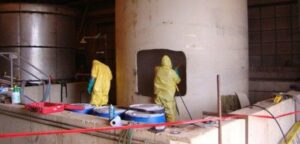
Tip: This is a general industry facility. The workers are contractors. The vessel is part of a PSM/RMP covered process. The vessel manway is only 16″ in diameter.
Here is your scene:
…
HomeRead More »
Read More

Inorganic Arsenic Standard requires employers to:
Monitor workers’ exposure to inorganic arsenic and notify workers of exposure-monitoring results;
notify anyone who cleans protective clothing or equipment of inorganic arsenic exposure;
develop, update and maintain a housekeeping and maintenance plan;
monitor worker health by providing medical surveillance;
post warning signs and apply...
Read More
The flash fire that burned seven workers, one seriously, in 2012 resulted from the accumulation of combustible dust inside a poorly designed dust collection system that had been put into operation only four days before the accident. The CSB investigation team concludes that the system was so flawed it only took a day to accumulate enough combustible dust and hydrocarbons in the duct work to overheat,...
Read More
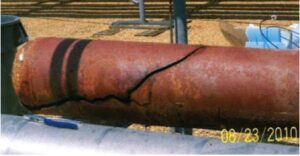
The U.S. Chemical Safety Board released a safety bulletin intended to inform industries that utilize anhydrous ammonia in bulk refrigeration operations on how to avoid a hazard referred to as hydraulic shock. The safety lessons were derived from an investigation into a 2010 anhydrous ammonia release. The accident occurred before 9:00 am on the morning of August 23, 2010. Two international ships...
Read More