








One of the best explanations on a very subjective topic from the National Safety Council’s Safety & Health Magazine…
…
HomeRead More »
Read More
This is a PERFECT EXAMPLE of how a “non-covered” chemical within a PSM Covered Process can impact that PSM/RMP covered process. This can happen to any type of covered process; just not in a refinery! I have personally experienced a single acid line (not covered in the PSM program) leak over another pipe in a pipe rack that was carrying a PSM/RMP covered chemical, corrode the...
Read More

Recently, I spent some time with a new (and unlisted) client who experienced a severe LOTO accident, resulting in a severe injury to an employee. I was asked to review their programs and practices related to the control of hazardous energy (e.g., LOTO). Everything looked good until we got to the “periodic inspection” requirement. As is the case most of the time, the employer...
Read More
Yep, this unsafe act has its own very name – “Ladder Hopping”. Not sure if this is an official name, but I am sure this guy is not the first to practice this. Something tells me this is not proper ladder safety protocols! However, with that said can anyone point to an OSHA violation that this worker is committing (either 1926.1053 or 1910.26). I was unable...
Read More
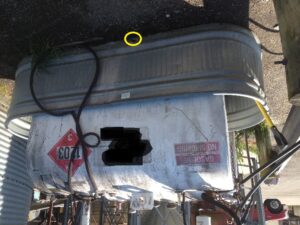
A facility was told they needed secondary containment around their fuel tank. No one was given any specifics, just that they needed secondary containment. This was the result.
…
HomeRead More »
Read More
The recently released AIHA white paper addresses OSHA’s current approach and opportunities for improved effectiveness in key areas enumerated in the agency’s strategic plan and the 2011–2016 Strategic Plan of the Department of Labor (DOL). While AIHA believes in the mission of OSHA as originally envisioned, it recognizes the need for adaptations built upon OSHA’s history of successful programs and...
Read More

Ohio EPA issues RMP NOV’s to a company that stocks a complete line of industrial chemicals for distribution to municipalities. During an inspection last year, Ohio EPA noted five violations, three of which were repeated from a 2003 inspection and resolved in 2004. The repeated 2011 violations included:
…
HomeRead More »
Read More

OSHA is updating the references in its standards to recognize the 2009 edition of the American National Standard for Industrial Head Protection, and is deleting the 1986 edition of that national consensus standard because it is out of date. OSHA also is including the construction industry in this rulemaking to ensure consistency among the Agency’s standards. OSHA is publishing a proposed rule...
Read More
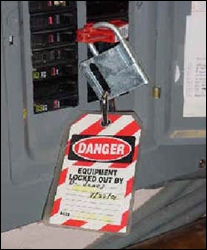
Some of you may recognize these suggestions, but for those unfamiliar with them, I will wait and surprise you at the end of this article to find out where these “suggestions” came from! Nonetheless, any workplace utilizing Lockout/Tagout (LOTO) should consider implementing these into their existing program. For those in the General Industry, many facilities struggle with these...
Read More
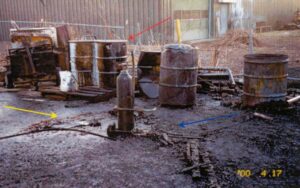
On April 17, 2000 at approximately 7:00 a.m., the worker started his shift at the work site. The total number of workers on shift the day of the incident was 16 and the worker’s crew comprised of 6 workers. The worker was employed as a general labourer. He performed various work activities on a GYP Crete crew, with his main function being the operator of the Crete Pump, during the building, restoring,...
Read More
An Israeli safety study looked at a practice termed “Management by walking around” (MBWA). This practice has aroused much interest in management science and practice. The purpose of this study is to demonstrate the adaptation of this practice to safety management. We describe a three-year-long case study that collected empirical data in which a modified MBWA was practiced to improve safety in...
Read More