











A little laugh at our profession!!!
…
HomeRead More »
Read More
OSHA has a long and consistent history of interpreting its standards and other requirements to require employers to present information in a manner that their employees can understand. See, e.g., CPL 2-2.38(D)(1998) (“[i]f the employees receive job instructions in a language other than English, then training and information to be conveyed under the [hazard communication standard] will also...
Read More
Paragraph (c) of 29 CFR 1910.151 requires that suitable facilities for quick drenching or flushing be provided within the work area for immediate use if an employee’s eyes or body may be exposed to corrosive materials. The OSHA standard does not set specifications for emergency eyewash and shower equipment, but we agree that equipment that complies with ANSI requirements would usually meet...
Read More
MultiVapor is a computer tool for estimating breakthrough times and service lives of air-purifying respirator cartridges manufactured to remove toxic organic vapors from breathed air. It can also be used for larger filters and for carbon beds of any size prepared for laboratory studies. MultiVapor replaces the program, Breakthrough, which performs the same function for only one organic vapor at all...
Read More
If you have ever walked the stairs of a highrise building or the halls of a large hotel you have seen a “Standpipe System”.
Many industrial facilities have these systems in place as well. In fact some state fire and building codes REQUIRE these systems be “installed”. Notice I emphasised “installed”, as most were installed, but have not been maintained,...
Read More
One of EPA’s most often cited issues with a facilities Risk Management Plan (RMP) revolves around “updates to the plan”. Most, but not all, know that the plan has to be updated every five years; but did you know there were other triggers that require a RMP to be updated more often than every five years. Here are the changes that would REQUIRE an UPDATE to an RMP:
…...
Read More
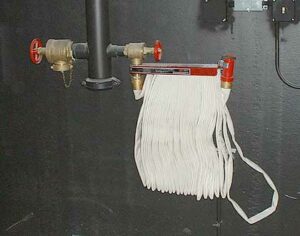
Does your facility have a standpipe system? Does the facility test the hoses and nozzles on these systems annually? Does the facility inspect them montly?
BEFORE I even say anything, let me say my DISCLAIMER…check with your local fire department(s) AND your property conservation insurer BEFORE you remove the first hose or nozzle!
Now that I have said that, you will want to...
Read More
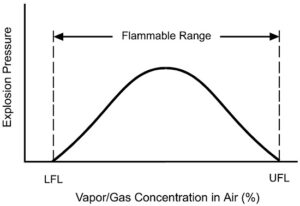
In this article I would like to lay the foundation for future discussions on one of my favorite topics…Flammable Liquids. I will try to explain flammable liquids at their very basic level. There is MUCH MORE to learn about flammable liquids, but this will get us off to a good start with the fundamentals.
Let’s start by discussing the term Flash Point. We could say...
Read More
We are never quite sure how these myths get started, but my team and I hear some doosee’s from time to time. The “myth” I am going to discuss today is one we actually see more often than not. We see this even in facilities that have a good grasp of their Hazardous Locations and of course we see it most often in facilities that are struggle with classifying thier hazardous...
Read More