









At 7:00 a.m. on October 31, 2022, an employee, 36, was brazing a copper line in an electrical equipment room that was equipped with a carbon dioxide fire extinguishing system. The fire extinguishing system activated, discharging and flooding the room with carbon dioxide. The employee was unable to escape the room and was overcome and asphyxiated by the carbon dioxide. The employee was transported to...
Read More

In response to a report of a fatality at Respondent’s place of business, Complainant initiated an inspection that concluded with Complainant issuing a four-item Citation and Notification of Penalty. For the most part, the specifics of the alleged violations—which include:
a failure to train,
a failure to cover floor holes, and
a failure to properly guard a chop saw
are not particularly complicated....
Read More

“Why did they have a Rupture Disc and a Relief Valve together?”
As I alluded to in my post regarding CBS’s update, this arrangement is fairly common but comes with some very SPECIFIC requirements. These requirements can be found in:
ASME Section VIII, UG-127
National Board, Part 4, 2.5.4
API 520, Part II, 9.1
But the top four (4) requirements, we as safety engineers should...
Read More
I have shared the ASME and NBIC “code” requirements for these arrangements and it has already stirred a number of debates/questions; of which the API has offered some excellent guidance on this design.
(emphasis by me)
…
HomeRead More »
Read More
It has grown tiresome, but it remains a teachable moment, to debate “engineers” who want part of ASME/NBIC to be the gospel and other parts not so much. The ammonia refrigeration industry just can’t seem to grasp the critical need in their “Common PRV Header Design” v.s. having more “holes in the roof” (as they like to point out). And today, I got word a...
Read More
Recently I was asked if “torquing” threaded pipe is required by code. I answered the inquiry by referring the client to ASME B1.20.1-2013, which states:
1.4 Sealing (NPT and NPSC Only)…1.4.3 Tightening Torque.Due to application-specific variables such as materials, wall thickness, operating pressures, etc., no guidance is given in this Standard regarding joint-tightening torque. However,...
Read More
Another incident where the lack of respect for static electricity and flammable atmospheres results in severe injuries. A Teflon bristle brush generates a lot of static electricity; coupled with the low flashpoint of Naptha (73F) and we have a serious hazard.
At 5:30 a.m. on February 24, 2020, an employee, 42, was scrubbing interior surfaces of a mix tank with 1-2 gallons of petroleum naphtha using...
Read More
FACT: Most flammable liquid vapors have a Minimum Ignition Energy (MIE) of less than 1 millijoule (mJ). Most of us do not even feel static which is less than 15 mJ. So the amount of energy necessary to ignite most flammable vapor atmospheres is not even observable by humans.
At 6:15 p.m. on October 30, 2020, an employee, 38, working for a natural gas distributor was using a hand hose to transfer...
Read More
At 2:45 p.m. on May 31, 2024, Employee #1, 39, was performing welding work on a diesel fuel tank. During the welding process, an explosion occurred, resulting in the employee’s fatal injuries. The explosion was caused by overpressure inside the tank, which caused metal parts to be ejected. Emergency services responded to the scene, but the employee was pronounced dead from injuries sustained...
Read More
There’s a massive difference that may require massively different approaches in how we respond to failures in administrative controls such as LOTO.
Scenario #1: a worker with less than a year of experience, is tasked with isolating a PRCS that has 29 isolation points. It was his first time to do this isolation and was asked to “step up” by his supervisor since they were “short-handed” and dealing...
Read More
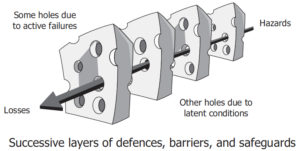
In memory of James Reason, I thought it would be fitting to share, in my professional opinion, one of the greatest safety models of my career. If businesses could just embrace this model when it comes to how they investigate events, we could move workplace safety forward a couple of decades. The model is quite simple and has proven to make sense of people’s errors, mistakes, and violations. I...
Read More
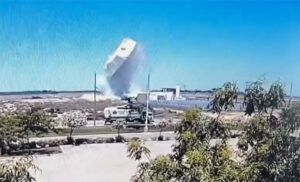
Back in June of 2021, a 1.5 million gallon water tank exploded just as a contractor began to perform hot work on it. Now most people would think a water tank would not have explosive properties; thus, the workers, nor the deceased contractor with 16 years experience, did not sample the atmosphere within the tank. The explosion sent the massive tank 70′ into the air. But Methane gas can be...
Read More