












This Service Advisory is to inform you of actions you need to take regarding your MSA SENTRY io controllers if your unit is installed in an outdoor location or other environment subject to water ingress. If your unit is not installed in either of these conditions, no action is needed. Potentially affected models were manufactured between March 1, 2023, and February 14, 2025, and are listed in Table...
Read More

Source: Norfolk Nebraska Fire and Rescue Facebook Page https://www.facebook.com/NorfolkNEFireRescue?__tn__=%2Cd-UC*F
Read More
Today, the CSB released a second update on its ongoing investigation into the fatal hydrogen sulfide (H2S) release that occurred on October 10, 2024, at the PEMEX Deer Park Refinery in Deer Park, Texas. Two contract workers died during the incident, and over 27,000 pounds of toxic hydrogen sulfide gas were released. Local authorities issued shelter-in-place orders lasting several hours for the neighboring...
Read More
We see this far too often… a management system failure related to 3-year PSM/RMP audits. A company with multiple facilities should be “trending” its 3-year audit findings to IDENTIFY opportunities for improvement across the company. I did this years ago when I was a member of the Corporate EHS Team for a semi-conductor. And was it ever eye-opening? Just simply doing a number...
Read More
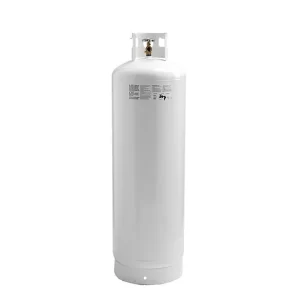
The explosion at an auto repair shop in Hillsboro, OH that claimed the lives of three (3) workers, aged 19, 33, and 47 in 2023 has been determined to have been caused by a rupture to an LPG cylinder that had been overfilled and past its requalification date by 33 years.
I would also like to make note of the following facts, as stated in the SFM report, that could have played a role in this tragedy....
Read More
The Ohio Department of Commerce, Division of State Fire Marshal (SFM) is in the process of updating all chapters of Ohio Administrative Code sections 1301:7-7-01 – 1301:7-7-80, collectively known as the Ohio Fire Code (OFC). When the update process is complete, the new 2025 OFC will be adopted and is currently anticipated to take effect in late summer 2025.
Most recently the Comment Period was completed...
Read More
Chemical Process Safety (PSM/RMP)
Emergency Response
Flammable Liquids
Flammable Liquids Videos
Free
Hazardous Materials
Human Factors Engineering
OSHA Compliance
Safety Management System
Videos
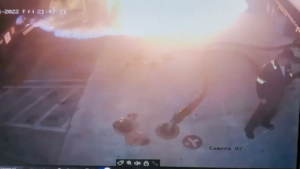
A video I posted over two years ago has come full circle. A citizen (some may call him homeless) was allowed to sit (and smoke) within 20′ of a gasoline tanker unloading operation at a gas station. His actions may not have been his sole demise, as we can see in the video evidence that the two workers charged with unloading the tanker FAILED to follow their procedures and PROPERLY VENT the vapors...
Read More
Back in 2010, I posed the question… do the oxygen and acetylene cylinders that are being used to perform the Hot Work need to be 35′ away from the point of the Hot Work? For those who commented, it was clear they thought I was crazy. “It has never been enforced”, “I have been welding/cutting for 35 years, and never once was I concerned with those cylinders”, and...
Read More
If you have read any of my posts about safety management and what a safety management system should look like, you know I am all about “walking the talk” and how this simple failure of the senior leadership team is the most effective manner of destroying TRUST and CREDIBILITY within the safety movement. Workers, especially the safety professionals on the front line of developing, implementing,...
Read More
On February 19, 2025, a court sentenced a construction company owner to 48 months’ incarceration and to pay more than $55 million in restitution. Also, he will forfeit real estate and cash/bank accounts. He pleaded guilty to a wire fraud conspiracy, conspiracy to defraud the United States, and a willful violation of the Occupational Safety and Health Administration Act for causing the death of an employee...
Read More
I have uploaded both my 2023-2024 and the 2025 editions of the PowerPoint presentations “Culture of Safety”. These are the presentations I use at the C-Suite Level and when presenting at Company EHS Conferences. Feel free to revise to meet your needs. The presentations were developed using materials from OSHA, The UK’s HSE, and Scotland’s NHS.
Members can download from the...
Read More

The recent news of Boeing announcing its selection for the Chief Aerospace Safety Officer who has been an executive with over 36+ years with the company. He is not a safety professional nor did the announcement indicate any specialized training or experience in building a culture of safety or even rebuilding a Safety Management System (SMS). News reports state he joined Boeing in 1989 and was most...
Read More