













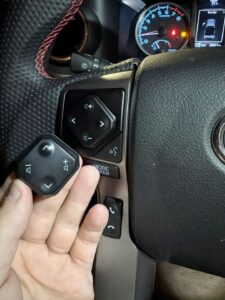
I am a Toyota Tundra loyalist, but every vehicle has “quirks” that make me scratch my head and wonder, “What were they thinking”?
As a side note, I drove many rental vehicles when traveling a lot at the peak of my consulting. It would take me 1-2 minutes to get my seat and mirrors set; however, it could take me 5-10 minutes to figure out where and how to operate the wipers...
Read More

The report indicated that the driver of the refrigerated truck had poor safety and legal awareness. He allowed eight female workers to ride in the truck, which carried packaged beef with dry ice. The dry ice sublimed into carbon dioxide gas, which rapidly filled the confined space inside the truck.
…
HomeRead More »
Read More
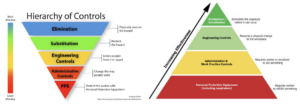
Which model do you prefer?
The Classic Inverted PyramidThe conventional representation of the hierarchy of controls is an inverted pyramid structure conveying the prioritization of strategies. Current versions orient the pyramid differently, depending on the agency or application of the controls. The clearest conflict in visual representation between the inverted and typical pyramid is found in the...
Read More
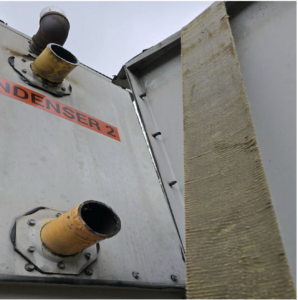
Up to 100 pounds of ammonia was released outside a public athletic club with indoor ice facilities. The leak happened during decommissioning work of an ammonia refrigeration condenser by a refrigeration contractor and resulted in the facility enacting their Ammonia Release Emergency Protocol. Multiple workers and members of the public were in the area at the time of the leak. One bystander experienced...
Read More
The revised Code of Practice for Safety and Health at Work in Confined Spaces (CoP) will officially take effect tomorrow (November 30). The CoP was gazetted on May 31 this year, and a grace period of six months was provided to allow sufficient time for the industry to understand and prepare for the revised requirements.
During the grace period, the Labour Department (LD) has strengthened its publicity...
Read More
Respondent operated a facility that manufactures ammonium phosphate fertilizers and sulphuric acid. EPA conducted an on-site investigation of Respondent’s operations at the Facility pursuant to CAA Section 112(r), EPCRA Sections 304-12, and CERCLA Section 103 on January 30, 2020 (the “Inspection”). Respondent has informed EPA that the Facility no longer has any ammonia onsite as of...
Read More
Any safety pro with one week of experience in the field will understand the abuses of “extension cords.” These cords may be the most common finding of any organization, and often, the professional may not be fully versed in the OSHA and NFPA 70 requirements. So, once again, I turn to the IFC for some easy and very straightforward requirements that can be used as a “quick check”...
Read More
The day has arrived! The 2024 IFC recognizes the new GHS for Flammable Gases by breaking down CAT 1 Flammable Gases into 1A and 1B Flammable Gases. it also uses the phrase “Burning Velocity” (BV) which are defined and quantified as…
…
HomeRead More »
Read More
As we have discussed, the Chemical Safety Board (CSB) issued a Safety Study (CSB Safety Study: No. 2024-01-H, Remote Isolation of Process Equipment) discussing the untapped advantages when Remote Emergency Shut-Off Valves are used in hazardous processing. I have written about these requirements for all types of hazardous materials; this post is for Flammable Gases and Flammable Cryogenic Fluids.
A...
Read More
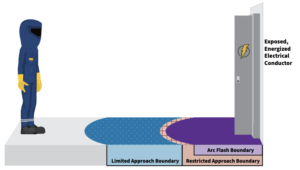
Arc flash incidents pose significant risks to worker safety. However, there are three types of boundaries to consider when approaching energized electrical equipment. It is important to know all approach boundaries and who may cross them and remain safe.
CLICK HERE for OSHA4474
Read More
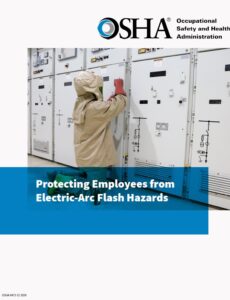
According to OSHA’s 29 CFR 1910.333 standard, “Conductors and parts of electric equipment that have been deenergized but have not been locked out or tagged … shall be treated as energized parts.”
Even below 240V, arc flashes can occur.
The clothes you wear under your PPE are equally important. Molten metal –or the arc flash itself– may get beneath your PPE, only for a moment,...
Read More
Those who follow my posts closely know I am a massive fan of bollards for physically protecting hazardous materials processes. These simple and inexpensive posts have saved my butt over my career more times than I can count, and yet so many still are unaware of their need and requirements. But these bollards are for “ground-level protection” from powered mobile equipment.
Recently,...
Read More