
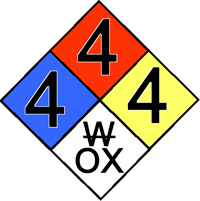
On July 9, 1959, the Charlotte Fire Department responded to a fire at the former Charlotte Chemical Company on West Templeton Avenue, just off South Boulevard. The building, then under demolition, still housed a large vat of chemical material in the basement. Believing the substance to be kerosene, firefighters fought the fire with standard tactics—until they switched to foam, triggering a powerful explosion. Thirteen firefighters were injured, several seriously. One sustained life-altering facial injuries and was forced to retire; another, tragically, later took his own life.
This devastating incident exposed critical gaps in hazardous material identification and emergency response. In its aftermath, Charlotte Fire Marshal J.F. Morris led efforts to establish a clear and visible system for marking chemical hazards in buildings. His work laid the foundation for what became the NFPA 704 diamond—a now-standard symbol displaying levels of flammability, health hazard, and reactivity, adopted nationwide to protect first responders.
Source: https://www.linkedin.com/company/the-interagency-board/posts/