
OSHA’s Lockout/Tagout (LOTO) standard is pretty clear… ALL servicing and maintenance activities that require the control of hazardous energy require a machine/equipment-specific written procedure. (e.g. 1910.147(c)(4)
1910.147(c)(4)(i) Procedures shall be developed, documented and utilized for the control of potentially hazardous energy when employees are engaged in the activities covered by this section.
So does this mean that EVERY SINGLE maintenance/servicing task that involves the control of a hazardous energy source has to have a written machine/equipment-specific procedure? YES – with one (1) exception:
Note: Exception: The employer need not document the required procedure for a particular machine or equipment when all of the following elements exist: (1) The machine or equipment has no potential for stored or residual energy or reaccumulation of stored energy after shutdown which could endanger employees; (2) the machine or equipment has a single energy source which can be readily identified and isolated; (3) the isolation and locking out of that energy source will completely de-energize and deactivate the machine or equipment; (4) the machine or equipment is isolated from that energy source and locked out during servicing or maintenance; (5) a single lockout device will achieve a locked-out condition; (6) the lockout device is under the exclusive control of the authorized employee performing the servicing or maintenance; (7) the servicing or maintenance does not create hazards for other employees; and (8) the employer, in utilizing this exception, has had no accidents involving the unexpected activation or re-energization of the machine or equipment during servicing or maintenance.
So if the machine or equipment does NOT meet ALL EIGHT (8) of these criteria, the energy control procedure MUST BE WRITTEN/DOCUMENTED.
Some may ask, “Does this mean every machine and piece of equipment in the workplace”?
OSHA provided a list of the types of machine/equipment they would expect to have a written/documented procedure for controlling the hazardous energy:
a) Amusement and recreational service machinery and equipment, including large rides and other amusement (e.g., bowling machines) equipment;b) Apparel manufacture machinery and equipment, including industrial sewing machines;c) Automotive repair, service, and garage machinery and equipment, including automobiles, trucks, material handling equipment, tire repair machines, hoisting equipment, and automotive lifts;d) Chemical process systems and piping networks;e) Communications industry machines and equipment, including telecommunication towers;f) Elevators, escalators, and passenger conveyors;g) Fire alarm and extinguishing systems and their components;h) Food store machinery and equipment, including packaging machinery, conveyors, meat cutting and bakery equipment; i) Gas and sanitary service machinery and equipment, including water, steam, irrigation, and sewage pipelines; j) Heating, ventilating, and air conditioning systems; k) High-intensity electromagnetic field machinery and equipment (regulated by 29 CFR §1910.97, Non-ionizing radiation); l) Ionizing radiation machinery and equipment (regulated by 29 CFR §1910.1096); m) Laundry and dry cleaning machinery and equipment; n) Manufactured home builder - manufacturing activities; o) Pipelines transporting hazardous substances; p) Railroad machinery and equipment, including railroad cars; q) Transportation machinery and equipment, including airplanes, helicopters, mobile passenger loading tunnels, and baggage handling equipment, including conveyors; and r) Trucking and warehousing, including freight elevators, trucks, material handling equipment, and cranes.
Source: CPL 02-00-147
A perfect example of equipment that most would not have a written procedure for could be:
i) Gas and sanitary service machinery and equipment, including water, steam, irrigation, and sewage pipelines;
and
j) Heating, ventilating, and air conditioning systems;

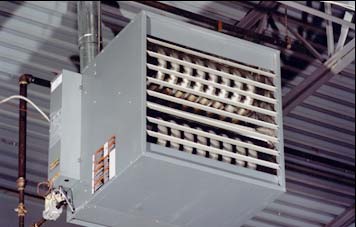
This would include the steam or gas heater in the building, up in the ceiling area, and over in the corner. These units would normally not qualify for the “exception” as they have more than one (1) isolation device. Both steam and natural gas have “stored energy” that must be relieved and require a means to ensure these sources do not re-accumulate during the maintenance/servicing task(s).
So the question is, does the facility’s written LOTO program have a means to “document” the energy isolation plan for this type of equipment?
Here is how we met these needs in the chemical industry:
We used an “energy isolation plan” worksheet for every isolation that did not already have a documented and annually certified written isolation plan. In a complex chemical process, a few pieces of equipment had a written plan already in place, but we did have some; however, the bulk of our LOTOs were done with developing an energy isolation plan using this worksheet.

The key here is… OSHA says the written procedure must be in place BEFORE starting the maintenance/servicing work – OSHA does not say how long it must be in place BEFORE the work begins. Thus, it is accepted to generate the energy isolation plan “just in time” for the scope of work that will be taking place. But the work is done UNDER the energy isolation plan! 1910.147 also does NOT require these written procedures to be “certified”, nor does the standard limit who can write LOTO procedures. So, training our operators in how to identify:
- types of hazardous energy in the workplace
- the magnitudes of these energy sources
- the means/methods to safely isolate these energy sources – based on the scope of work (e.g., LOTO for entry into a PRCS requires special isolation methods)
- the means to verify the isolation means/methods achieved a Zero Energy State (ZES) for EACH energy source
OSHA recognizes that many portions of an energy control procedure may be standardized for an entire facility. However, it is necessary to supplement the generic procedure with checklists or other supplemental means (e.g., a checklist, work authorization permit system, or manufacturers' servicing and maintenance guidelines) to provide the required specificity – pursuant to paragraph (c)(4)(ii) – when variations (e.g., differences in the machines/equipment, types of energy, energy isolation devices, or hazards) necessitate additional specificity to enable employees to safely and effectively control hazardous energy when working with particular machines or equipment. The generic procedure and supplemental means must provide authorized employees with clear and detailed guidance so that they can understand how to safely and effectively utilize hazardous energy control measures for the machine or equipment being serviced or maintained. For example, if not apparent, the checklist might address the number and locations of the energy isolating devices in order to achieve total de-energization. If the procedure itself takes the form of a checklist, it must reflect, in part, the sequence of steps necessary to safely and effectively control all hazardous energy sources. The information contained in the generic procedure and supplemental means would, at a minimum, need to meet the performance-oriented requirements of the LOTO standard. NOTE: The use of generic energy control procedures alone are unacceptable, if generic procedures do not meet the provisions set forth in §1910.147(c)(4)(ii). In the chemical process and petroleum refining industries, for example, companies augment generic LOTO procedures with work authorization permit systems to detail the job-specific hazardous energy control measures before employees perform servicing and maintenance work activities. It is recognized that the comprehensive use of such a system is more efficient and relevant to the daily tasks than would a cookbook type procedure, which might not fully account for a specific situation that might have occurred around the time of the servicing and maintenance activity. (Source CPL 02-00-147)
In other words, operators at most chemical facilities are trained to write their own LOTO procedures. In contrast, in most traditional manufacturing environments, the LOTO procedures are written by someone other than the authorized employees who will be applying the procedure to the machine and the scope of work. The authorized employees in these types of workplaces merely follow the written procedure provided to them.
But in these traditional manufacturing environments, we tend to find machinery/equipment that is without a written/documented procedure, AND the authorized employees are not trained, nor provided with a means/method, to develop and document their energy isolation plan for their maintenance/servicing tasks when there is not already a written procedure in place. This leads to a considerable amount of maintenance/servicing work taking place without a written/documented machine/equipment-specific procedure. Suppose a lockout device/lock or a tagout device/tag is going to be applied, AND this application does NOT meet the “exception” stated above. In that case, the application of these LOTO devices MUST be made per a written/documented procedure that identifies:
- types of hazardous energy needing to be isolated
- the magnitudes of these energy sources
- the means/methods to safely isolate these energy sources
- the means to verify the isolation means/methods achieved a Zero Energy State (ZES)
This is a FAR AND WIDE expectation that very few businesses are meeting, but it is the OSHA minimum! Implementing the “energy isolation plan” worksheet with some extensive training will close this gap and ensure that ALL maintenance and servicing tasks will be done with a WRITTEN/DOCUMENTED machine-specific procedure for controlling hazardous energy sources.
Also, please see http://www.safteng.net/index.php/free-section/safety-info-posts/lockouttagout/1072-loto-on-chemical-process-and-piping-systems
