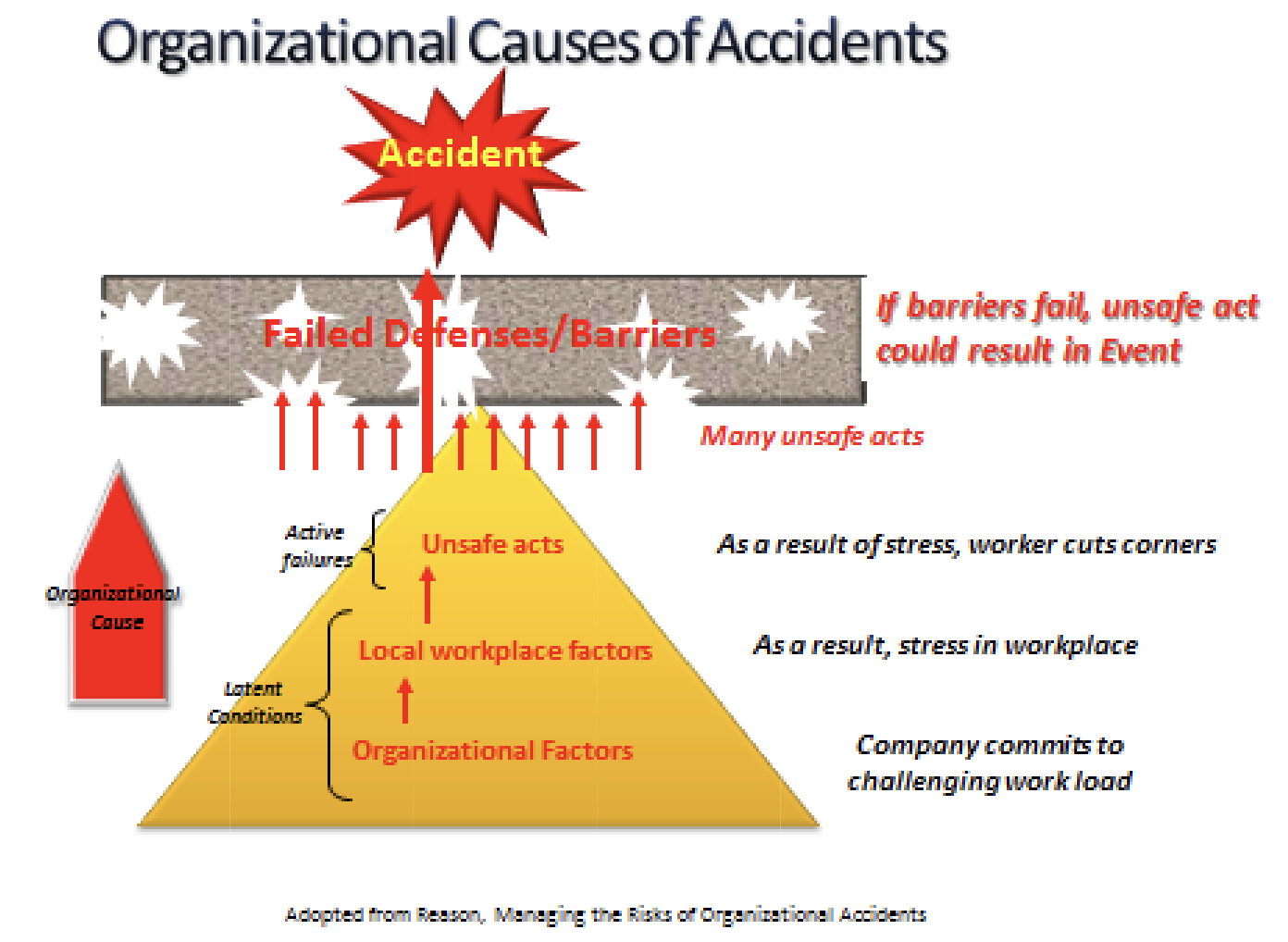
It does not matter how good a facility is in safety; I can assure everyone that within that facility, there are “routine violations.” Even in facilities with a very mature culture where safety has become a value (rather than a priority), we can find “routine violations.” So don’t be surprised or saddened that you discover a few; the important thing is that they were found and, hopefully, before any negative consequences occurred because of them.
The hunt for these “routine violations” is a BIG part of what our Safety Management System should be about. Here is what Dr. James Reason had to say about “routine violations.”
Two factors, in particular, appear to be important in shaping habitual violations:
- the natural human tendency to take the path of least effort; and
- a relatively indifferent environment (i.e., one that rarely punishes violations or rewards observance).
Everyday observation shows that if the quickest and most convenient path between two task-related points involves transgressing an apparently trivial and rarely sanctioned safety procedure, then it will be violated routinely by the operators of the system. Such a principle suggests that routine violations could be minimised by designing systems with human beings in mind at the outset. Landscape architects are forever making the mistake of laying out pathways to satisfy aesthetic criteria rather than human needs; as a consequence, their symmetry is soon marred by muddy diagonal tracks across protected
grassland.
And by the way, we should think twice before issuing discipline for “routine violations.”
Source: Human Error, James Reason, Department of Psychology University of Manchester, 1990