Building trust and credibility in safety does not require some special effort. It just requires a constant message that is backed up with constantly reinforced behaviors from management/leadership. Some may call this “Walking the Talk”; but we have to ensure the TALK is correct before we walk it!
There are two (2) big pieces to a Safety Management System that not ONLY do they usually NOT build trust and credibility; they actually erode trust and credibility in the safety process/SMS. These two (2) elements are:
- Behavior-Based Safety Observations and
- Incident Investigations
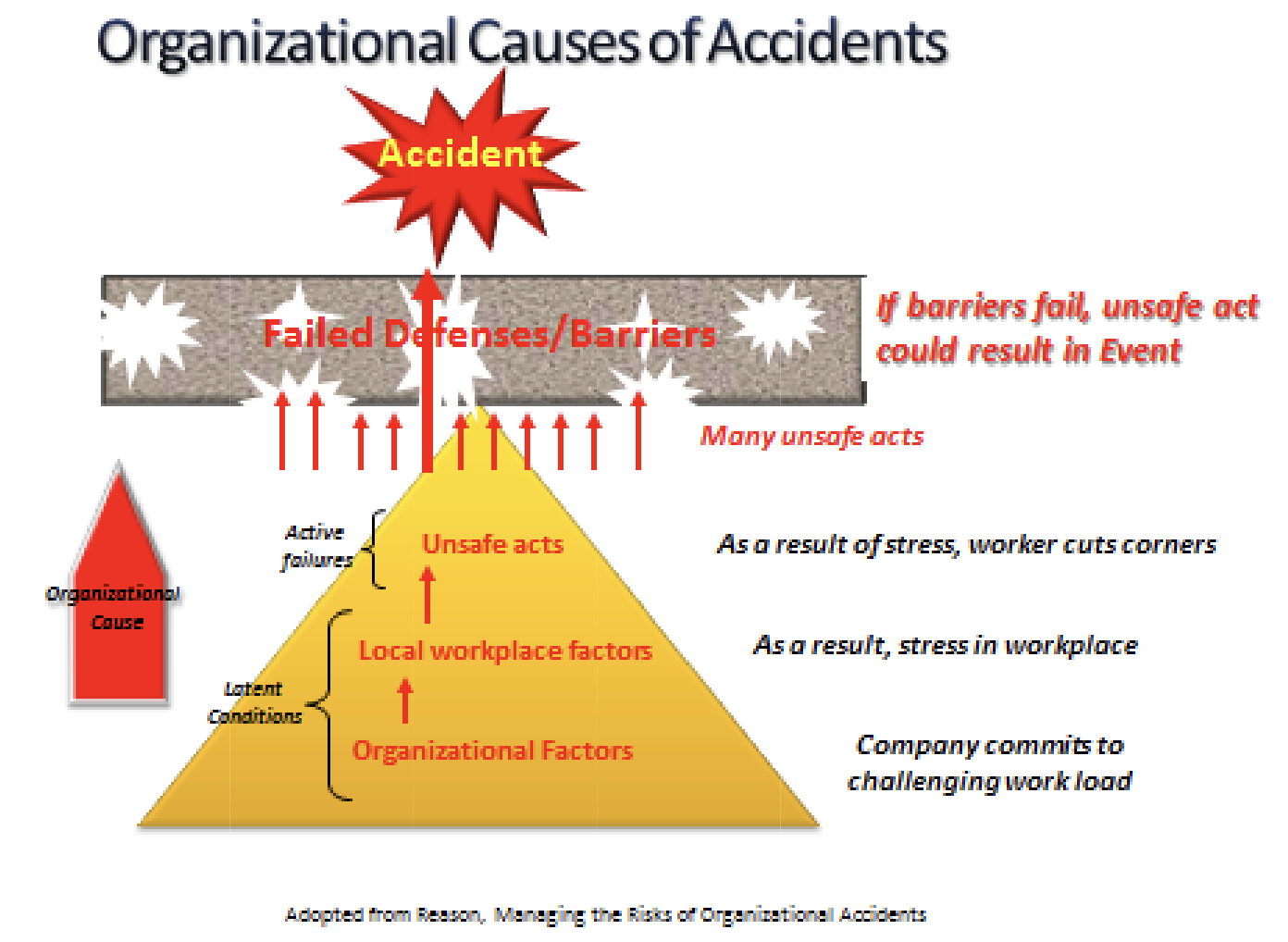
Here is why and how we can reverse the negative trends these two SMS elements can create. And you can probably recognize that both of these elements have the potential to erode trust and credibility as BOTH usually focus on active failures (i.e. human failures) and rarely get into the latent organizational failures.
When workers feel like they are being blamed for all that is wrong with safety, it does not take time to erode trust and credibility. Far too often, management fails to look at their own latent organizational failures that drive the behaviors and attitudes that are displayed in the workplace.
Dr. Clive Lloyd said it best… “Behaviors are not the problem, they are a reflection of the problem“.
NOTE: if you have not read Dr. Lloyd’s Book “Next Generation Safety Leadership: From Compliance to Care” you should pick it up and spend the several hours it will take you to read it. It can be a game changer in your approach to managing safety.
For decades, science has shown us that most unsafe behaviors do not happen within a vacuum; they are a result of many influences over a period of time. There are literally dozens of influences, some right out in the open and some “underground”, but the behavior is often a result of these influences and not usually a true reflection of the employee(s) decision-making.
Once management is mature enough in their understanding of behaviors (safe and unsafe) they can begin to stop focusing on the active failures and begin to have a desire to better understand the latent organizational failures that influence those behaviors. Once the workforce can see and hear that they are no longer a target in accident investigations, trust can begin to build. Please do not think I am giving anyone a free pass – I believe in accountability, but there MUST be accountability for all influences involved.
The same mistakes can be found inside a Behavior Based Safety Process (BBSP). Management truly believes that 88% of accidents are caused by unsafe acts; however, when they have no desire to understand what is driving those unsafe behaviors it again just places the blame on the active failures and not considering the influences that drove those behaviors. Management needs to take the same approach in their BBSP as I discussed above in the accident investigation process. Understand why the behaviors are occurring and intervene in those influences rather than attempting to correct the physical behavior.
When management has a tendency to lay the blame for accidents at the feet of the worker(s) involved and they never want to look at the organizational failures that either influenced or failed to identify the unsafe behavior BEFORE the consequence there will always be an erosion of trust and credibility in the safety process.
This is where HOP (Human and Organizational Performance) can play a key role in culture change. As a reminder, here are the five principles of Human and Organizational Performance (HOP) explained:
1) People make mistakes
2) Blame fixes nothing
3) Context drives behavior
4) Learning is vital
5) Response matters
Please see my 2022 article “The five (5) principles of Human and Organizational Performance (HOP VIDEO w/ Conklin)” for more on these 5 principles and how all five influence Investigations and Behavior Based Safety Processes.
If a management team can just fix how these two (2) SMS elements are managed and executed, it will go a long way in building trust and credibility with the workforce. Failure to heed this advice and continuing to focus on active failures of those involved in the incidents and behaviors will only continue to erode any good faith trust and credibility created through other safety activities.