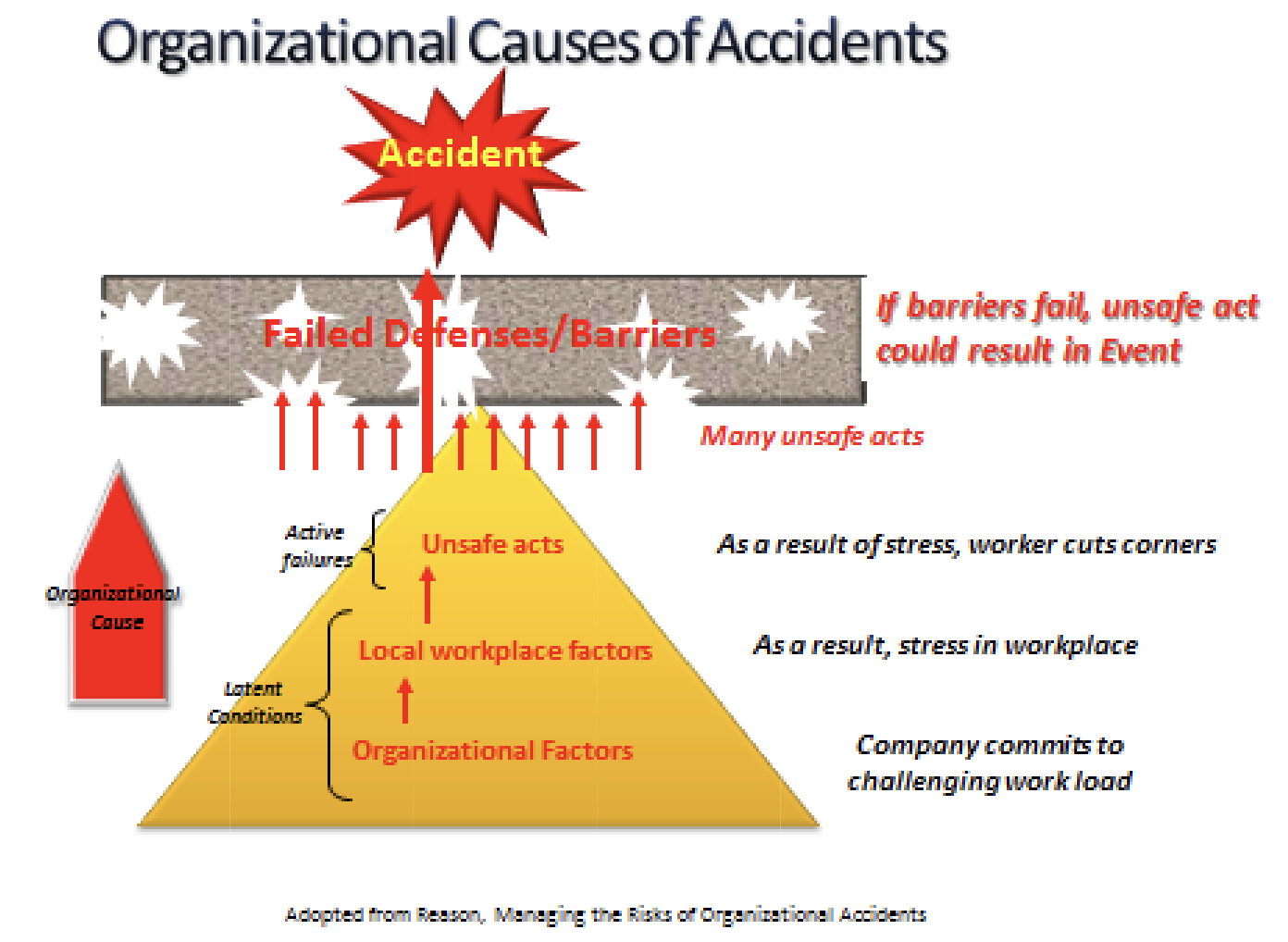
Safety is not the only priority the organization’s leaders have to manage. Within a constrained environment, they must produce products or services that fulfill customer requirements, using specific raw materials, within a given time frame, etc. Accidents are not the only danger that threatens the entity. It can also be jeopardized by customers taking their business elsewhere, shareholders pulling out, short-term profitability pressure, administrative sanctions, public opposition, technical problems, lengthy industrial action, constant staff turnover, etc.
Taking these different challenges on board and deciding on compromises and trade-offs are essential part of the duties of top management, but also of the actors in the company’s many departments, particularly production. At every level, compromises and trade-offs must constantly be made between cost, lead times, quality, safety, etc.
What importance does the organizational culture grant to safety in all of these compromises and trade-offs? How can safety be given more weight in these decisions? These are the two questions raised by a safety culture approach.
It is clear that safety should not be placed in a “bubble” separate from the other priorities and challenges: the safest company would be one at a complete standstill.
The question, then, is this:
- How does an organization, which must produce goods or services within its own specific environment, encourage a satisfactory consideration of safety in all decisions, including those of the company’s executives, its management, the business units, the operational staff, the contractors?
- How is the safety element incorporated into all processes and practices?
Source: The ICSI “Safety Culture” working group (2017). Safety Culture: from Understanding to Action. Issue 2018-01 of the Cahiers de la Sécurité Industrielle collection, Institut pour une Culture de Sécurité Industrielle (ICSI), Toulouse, France.