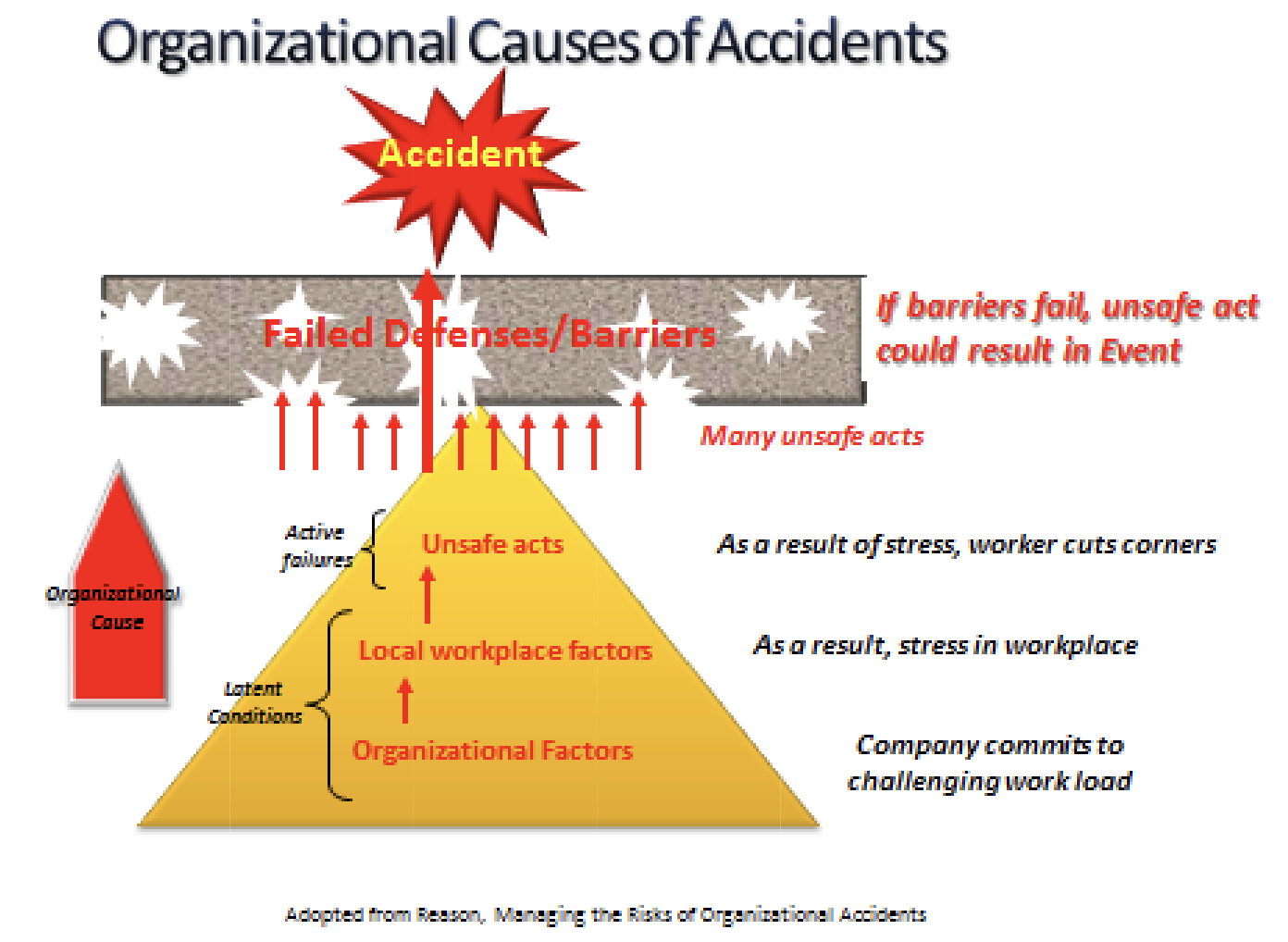
This is a great synopsis of how serious accidents build within an organization over time because of the lack of a functioning SMS. When reading this, think “swiss cheese model” from Reason and the “domino model” from Heinrich.
Disasters are essentially organized events. To occur, they typically require the systemic and prolonged neglect of varying signs and signals of danger, creating deep pockets of organizational ignorance, organizational silence, and organizational blindness. When signals of risk are not noticed or are misunderstood in organizations, then safeguards against those risks can be allowed to degrade – or may never be created in the first place.
Critically, it is the shared beliefs, collective assumptions, cultural norms, and patterns of communications across organizations that shape what information is attended to and how it is interpreted and communicated – and most importantly, what is overlooked, discounted, and ignored.
Organizations can be defined by what – and whom – they choose to ignore. Organizational disasters develop over long periods of time: they incubate in organizations. During this incubation period, events and circumstances that are discrepant [inconsistent] with people’s current beliefs and assumptions about organizational safety gradually accumulate, unnoticed, or misunderstood. That is, disasters develop through sustained patterns of interpretive failure.
Systematic and routine failures in collecting, interpreting, communicating, and understanding information lead, quite simply, to the safety management system losing touch “with its operational realities,” producing failures of foresight.
Macrae, C. (2014). BMJ quality & safety, 23(6), 440-445