I am not quite sure how so many managers/executives came to believe that an improperly maintained fire extinguisher can NEVER be an actual hazard. Most of us in the safety arena have seen the videos and news/case reports of workers dying from a catastrophic failure of a fire extinguisher. But so many managers can not understand the impacts that a failed fire extinguisher inspection/testing program has on a workplace. I did a poll earlier this week of a 18-member management/supervisor group, and only two (2) understand the pressures these extinguishers operate at. And yet they all walk by many of them daily, never once understanding the risks.
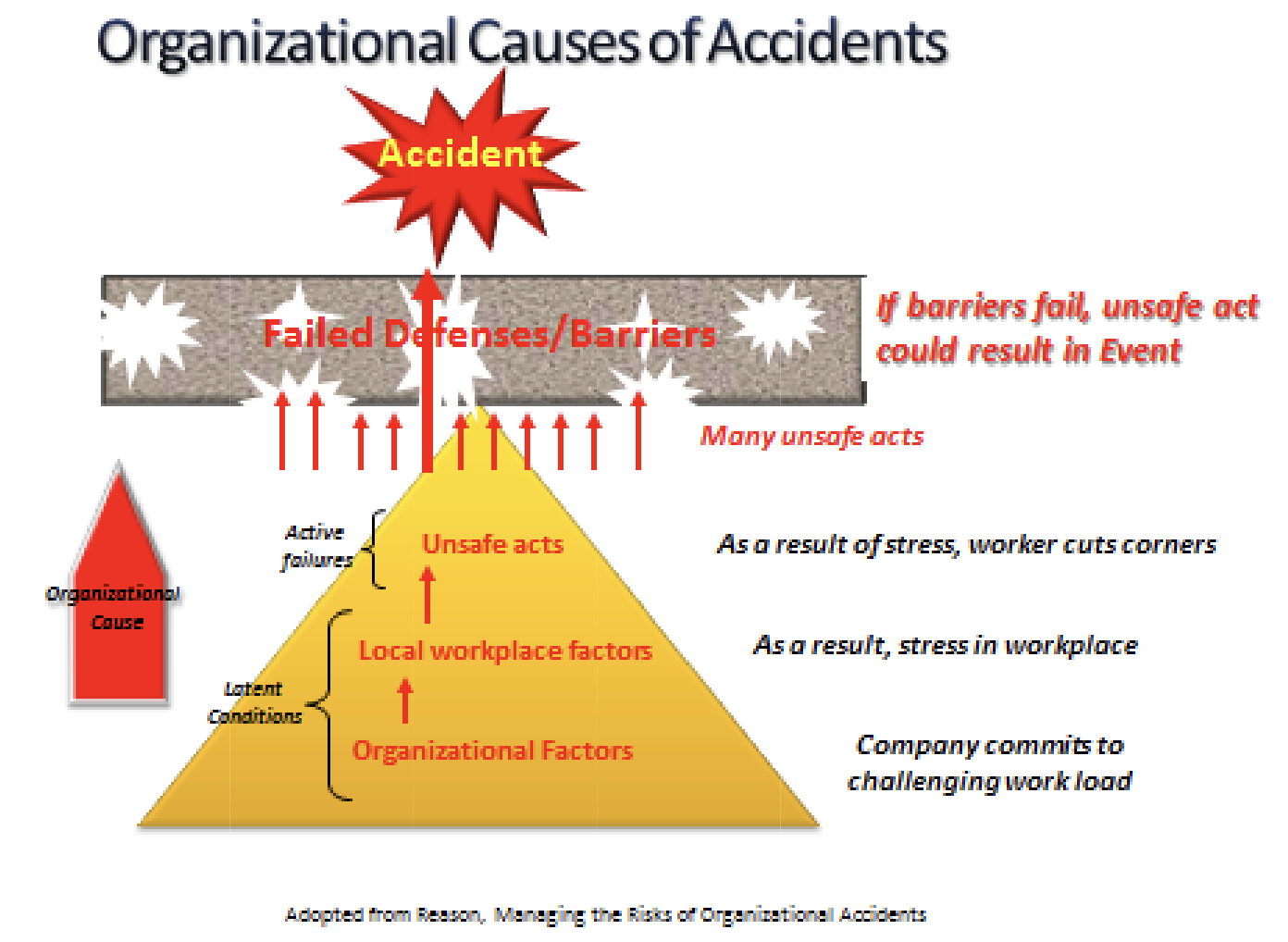
But this problem is larger than a failed fire extinguisher! Management must understand what the MITIGATION LAYER of protection means and its role when all else has FAILED to PREVENT the dominos from falling and PROTECT assets once the sequence has begun.
These MITIGATION devices, such as fire extinguishers, fire exits, eyewashes, safety showers, 1st Aid Equipment, etc., are in place ONLY to LESSEN the severity of the consequences. They are our last line of defense after all else has failed us. And in my career, I have seen firsthand how these mitigation devices can be the difference between a 1st Aid injury and a recordable or between a recordable and a lost-time injury.
So although these devices may not be the object that causes the injury or property damage, our failure to maintain them does, in fact, increase RISKS. Simply stated, severity is one of the two (2) major components of risk; so if we can no reduce the severity of the event because our mitigation layer is in shambles, that corresponds directly to our risks.
So our inspection/testing efforts for these mitigation devices are intended to provide some level of assurance that in the moment of total chaos/emergency, we can have some confidence that these devices will be where they are supposed to be and will perform as they are intended. We (management) must also ensure those who many need to use these devices are actually TRAINED on their locations, operations, and maintenance of the area around them (e.g. not blocking them). In your next “safety contact” or safety observation simply ask your employees:
- where is the nearest FE? Do you know the type it is? Do you know the Type you would need?
- where is the nearest Saefty Shower? Do you know how to activate it? Do you know how long to stay under it? What are you supposed to be doing while your under it?
- where is the nearest eyewash? And I mean a REAL EYEWASH not those silly ass bottles! How do you ensure you get water on a larger surface area of your eyeball? How long do you flush your eyes?
We may be surspised at the responses! These are a FUNDAMENTAL needs in any facility; some facilities, these devices play a major role than at others. But ALL workplaces need to have this layer of protection and with this layer comes a need for inspection and testing. And yes, failure to ensure these devices are ready at a momements notice INCEASES RISKS and pose an actual hazard should they fail.