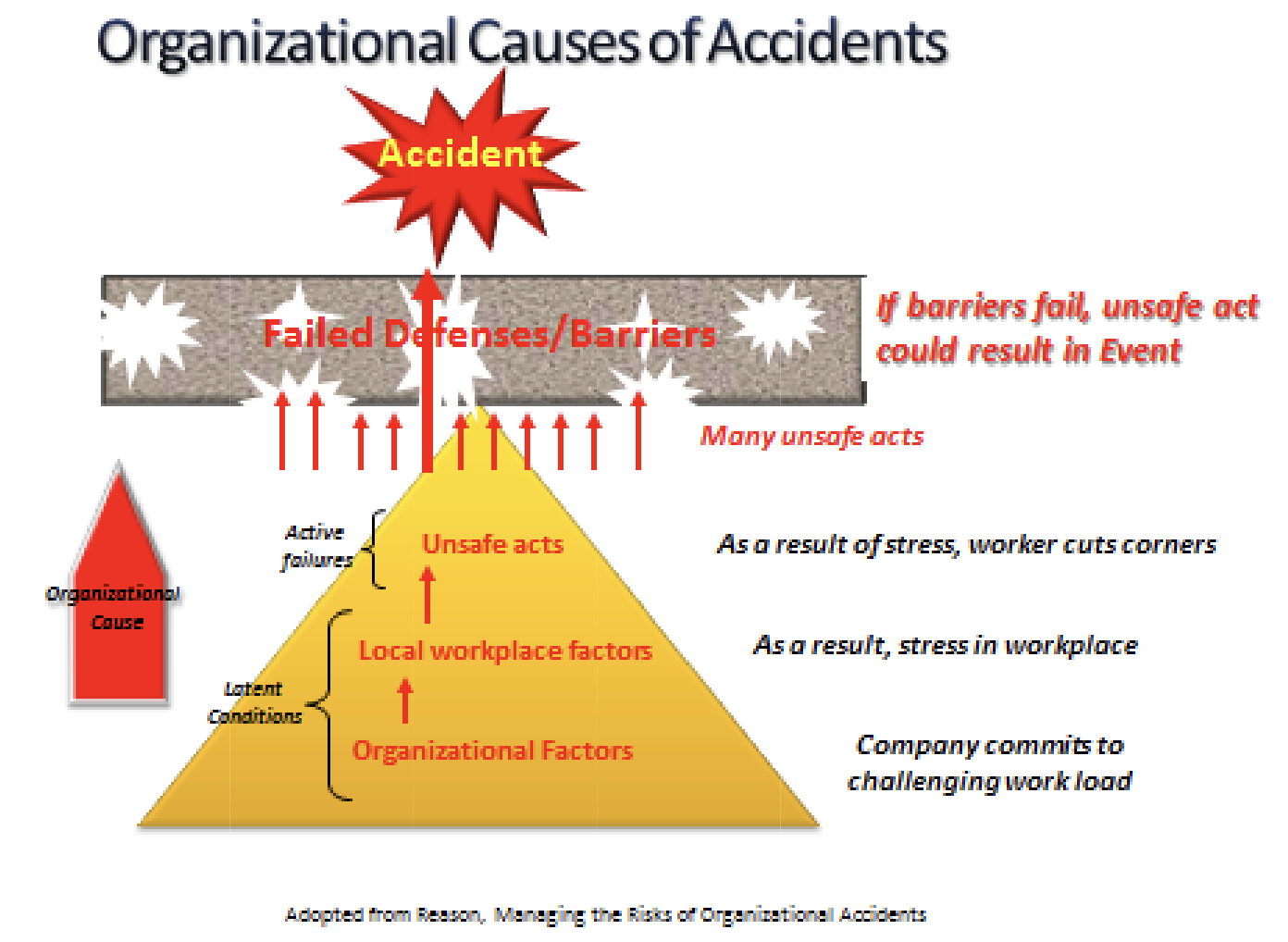
We hear a lot about our biases showing up in many SMS elements and how these biases hamper the SMS and mislead us. But not all biases can be a bad thing. One element where our biases shine brightly is in the Causal Analysis of accidents. For decades now, we have been told over and over that 85% of accidents are due to human behaviors. Most enter into the causal analysis exercise with this bias, whether they know it or not. So when I teach a Root Cause-Corrective Action class, I always try to influence these biases by swinging the pendulum to the other side. Now some of you will gasp at what I am about to say, so you may want to sit down for this…
Enter the analysis exercise with the belief that there will be several causes, any of which are the “root causes.” But ASSUME going into the exercise that the MAJORITY of the causes associated with the accident will be MANAGEMENT SYSTEM FAILURES or, as some call them, “Latent Organizational Failures.” Far too often, the causal analysis is focused on the “Active Failures” of those directly involved in the event. The failures that most likely drove or allowed those “active failures” to occur (i.e., latent organizational failures) go unrecognized and thus not addressed, essentially setting up the next accident sequence to begin.
We almost have to have biases of this nature to overcome the strength in the belief of the old 85% crap we were fed back in the 1990s during the age of BBS. I always tell those around me to ALWAYS look for the latent organizational failures before focusing in on the actions/decisions of those involved. And even once we get to where we are trying to understand the actions and decisions of those involved, NEVER stop looking for the latent organizational failures that either allowed or drove those decisions and behaviors. This approach will surprise many as to what is decided as to the “root” cause(s) of the event.
Remember and believe the following…
“Behaviors are not the problem; behaviors are expressions of the problem.”
Clive Lloyd, Next Generation Safety Leadership: From Compliance to Care 1st Edition